Smartwatch vs. Ring vs. Fitness Tracker: Which One Optimizes Your Health?
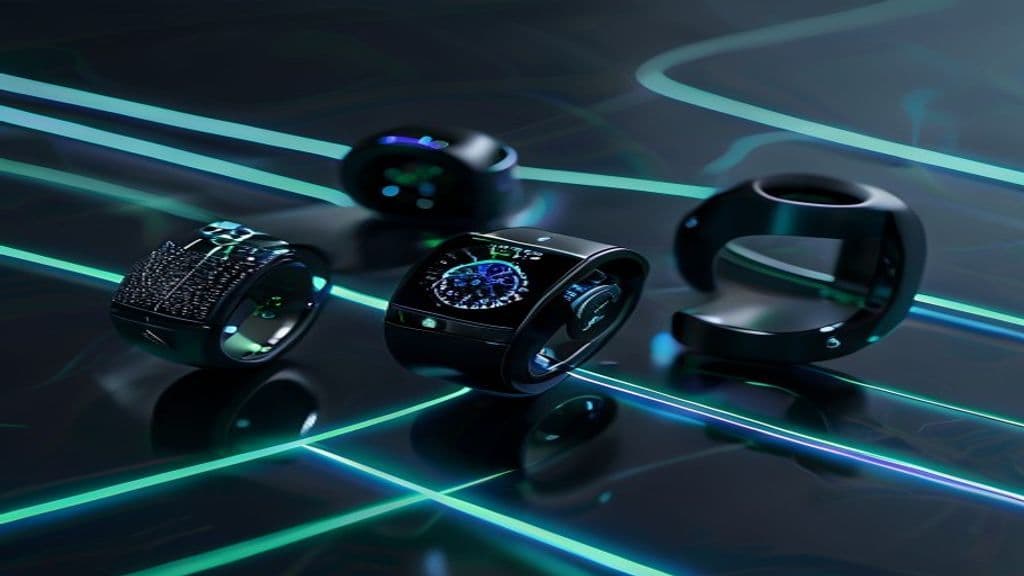
Smartwatch, Ring, or Tracker: Choose the Tool That Controls Your Biology
The obsession with measurement is useless if the data you get is just noise. Many fall into the trap of buying the device with the brightest screen or the most aesthetic design, ignoring that sensor accuracy and ease of use are the only metrics that matter in the long run. In the biohacking ecosystem, your choice should depend on a single factor: what metric do you need to improve to reach your next level?
You don't need a computer on your wrist if your goal is recovery, nor do you need a ring if you require real-time telemetry during an Ironman. Let's break down which hardware actually moves the needle on your performance.
The Smartwatch: The Tactical Command Center
The smartwatch is the ultimate activity monitor. Its advantage lies in the screen and immediate interaction. If your goal is high-intensity athletic performance or you need notifications and GPS without depending on your smartphone, it is the winning option. The ability to process data in real time (heart rate zones, cadence, running power) places it in a superior category for the high-performance athlete.
Pros
- •Real-time data visualization
- •GPS functionality and independent apps
Contras
- •Invasive during sleep
- •Battery life limits 24/7 tracking
The Smart Ring: The Guardian of Sleep and Recovery
The smart ring has dethroned the smartwatch in the realm of rest. By being located on the finger, where digital arteries offer a cleaner photoplethysmography (PPG) signal less prone to motion artifacts, it is the precision tool for measuring Heart Rate Variability (HRV) and nocturnal skin temperature. It is invisible, unobtrusive, and most importantly, it doesn't distract you with notifications. It is the gold standard for passive monitoring.
Pros
- •Superior accuracy at rest
- •Absolute comfort while sleeping
Contras
- •Zero feedback during training
- •No screen for instant data
The Fitness Tracker (Whoop): The Training Load Ecosystem
Trackers like Whoop have eliminated the screen to focus exclusively on "Strain" and "Recovery." Their value is not in the hardware, but in their data interpretation algorithm. They are designed for those who don't want to check the time, but rather know if their body is ready for a high-intensity session or if, conversely, they need a deload day. It is the preferred choice for those who live by the philosophy of data-driven training.
Pros
- •Total focus on training load
- •Discreet and ergonomic design
Contras
- •Total subscription dependency
- •Requires mobile interaction to view data
Putting It Into Practice
If your priority is absolute recovery and nighttime monitoring without interference, your technical choice should be backed by the data from the Oura Ring 4: Comprehensive Analysis of the New Generation.
If, on the other hand, your performance depends on constant tactical monitoring during training and the ability to manage highly complex metrics, you need to dive into the Apple Watch Ultra 3: The Ultimate Smartwatch of 2026?.
Finally, if you are looking to understand the impact of your lifestyle on your physiological response without distractions, analyze the findings in Whoop 5.0 Examined: Is it really necessary to measure every heartbeat 24/7?. Technology is only the medium; optimization is your responsibility.