Muscle recovery: what works and what adds little

In this article
Anyone who trains regularly ends up wondering how to bounce back faster between sessions. The market answers with compression devices, percussion guns, cold plunges and watches that score your "recovery" every morning. Before buying anything, it helps to separate two things: what has solid backing (and costs almost nothing) and what has weak or mixed backing, or is limited to a feeling of less soreness.
This piece sorts the available evidence in that order: the basics first, the tools afterwards. Every claim about effects on the body links to its source, with the study population where it matters. Nothing below replaces the advice of a doctor or a sports professional, and none of the consumer devices mentioned here is a medical device.
What "recovery" means
"Recovery" bundles together different things that do not always move together:
- Perception: muscle soreness (DOMS) and the feeling of fatigue.
- Markers: creatine kinase (CK) or C-reactive protein (CRP) in blood, studied in the lab.
- Performance: being able to jump, run or lift the same in the next session.
- Adaptation: training ending up producing more strength or muscle mass.
A technique can improve the first without touching the others, or even work against the last one. Keep that in mind as you read the rest.
What matters most: sleep
The review by Fullagar and colleagues (Sports Medicine, 2015) on sleep and athletic performance points out that the evidence is mixed: some maximal efforts and gross motor tasks hold up after short sleep, but sport-specific performance tends to get worse, and sleep loss is associated with slower, less accurate cognitive responses. The authors also suggest that poor sleep could alter the autonomic nervous system and raise pro-inflammatory cytokines, and they conclude that the exact relationship remains unclear and needs more research.
On what to do about it, the systematic review by Bonnar and colleagues (Sports Medicine, 2018) included 10 studies with 218 participants aged 18 to 24 (swimming, football, basketball, tennis). Sleep extension was the intervention with the most favourable effect on subsequent performance; sleep hygiene, naps and other strategies contributed less, or less consistently. It is a small, young sample: a guide, not a promise.
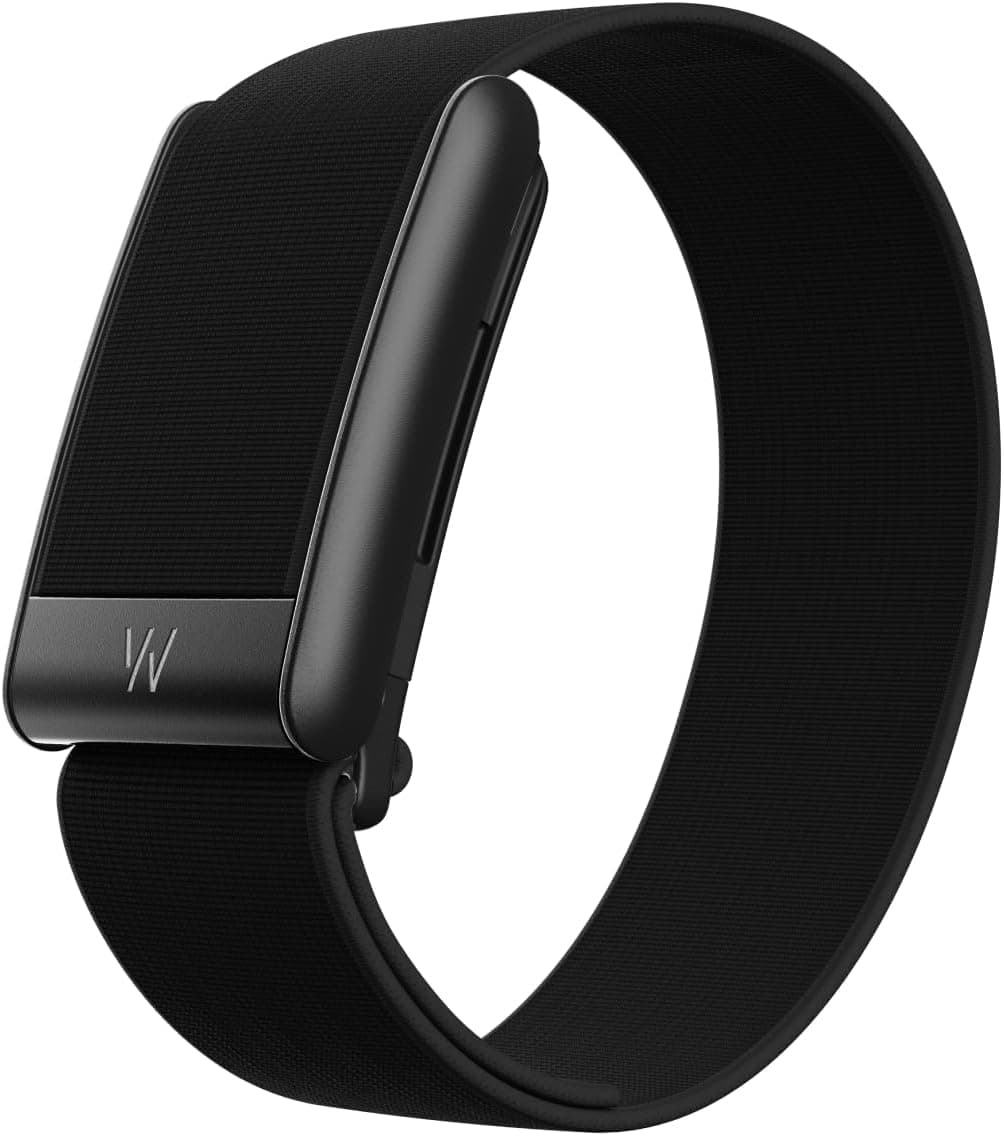
For those who want to measure their sleep, wearables such as the Whoop 5.0 estimate sleep duration with optical and motion sensors. These are consumer estimates, not polysomnography: according to our review, there is no published independent validation of the 5.0 and sleep staging is only moderate in earlier models, so they are mostly useful for spotting duration trends over weeks. If bedroom light is the problem, a sleep mask is a cheap, easy thing to try, although the evidence that it improves athletic recovery specifically is indirect.
Load and rest: dosing your training
The joint consensus of the European College of Sport Science and the American College of Sports Medicine (Meeusen and colleagues, 2013) treats the balance between training load and recovery as the core of overtraining. Two useful messages for the general reader: telling functional overreaching apart from non-functional overreaching or overtraining syndrome is difficult and depends on clinical course and on ruling out other causes, and no hormonal, performance, psychological or immune marker currently meets the criteria to be generally accepted.
A related approach is to adjust training according to heart rate variability (HRV). In a meta-analysis of HRV-guided training, Düking and colleagues (Journal of Science and Medicine in Sport, 2021) pooled 8 studies with 198 participants doing aerobic endurance training. HRV-guided training had a moderate effect on submaximal physiological parameters (g = 0.296), but a small, non-significant effect on performance and on maximal oxygen uptake. This is endurance-training evidence from a small sample, and on its own it does not validate the daily recovery scores that wearables calculate.
In practice, the most robust criterion remains a prosaic one: gradual progression, deload weeks, hard training days separated by easy days, and attention to signs such as stalled performance, worsening sleep or sustained low motivation.
Enough protein and energy
Nutrition is the pillar with the best support and the least glamour. The joint position statement of the ACSM, the Academy of Nutrition and Dietetics and Dietitians of Canada (Thomas and colleagues, 2016) states that well-chosen nutrition strategies improve both performance and recovery from training and competition, and it details the type, amount and timing of food, fluids and supplements. For an individual plan, the statement itself advises seeing a sports dietitian.
On protein, the meta-analysis by Morton and colleagues (British Journal of Sports Medicine, 2018) pooled 49 randomised trials with 1,863 healthy adults and at least 6 weeks of resistance training. Protein supplementation increased fat-free mass by about 0.30 kg on average and maximal strength by 2.49 kg. The authors estimated that above roughly 1.62 g of protein per kilo per day in total, there was no further gain in fat-free mass, but that cut-off is imprecise (95% confidence interval: 1.03 to 2.20) and was not statistically significant (p = 0.079), so it is not a firm threshold. Two caveats: the study measures adaptation to training, not acute recovery, and the benefit was smaller with age and greater in people with training experience.
On energy, the International Olympic Committee consensus on relative energy deficiency in sport (RED-S, 2023) defines low energy availability as not eating enough to cover the energy cost of exercise, and describes it as a cause of detrimental effects on health and performance in women and men. It also highlights the role of low carbohydrate availability. Someone who trains a lot and cuts calories aggressively does not have a "lack of gadgets" problem.
What adds little or is uncertain
Some general context for this section: a network meta-analysis (Jin and colleagues, Frontiers in Sports and Active Living, 2026) pooled 16 trials with 273 endurance athletes and compared several physical recovery modalities against passive recovery. None clearly outperformed passive recovery on soreness, CK or sport-specific performance, certainty was low or very low, and a simulated immersion in thermoneutral water performed as well as or better than the active modalities. Its only moderate-certainty finding is that compression garments did not improve performance; it is not evidence about pneumatic boots. With so few trials per modality, it is best read as a lack of evidence, not as proof of no effect.
Pneumatic compression boots
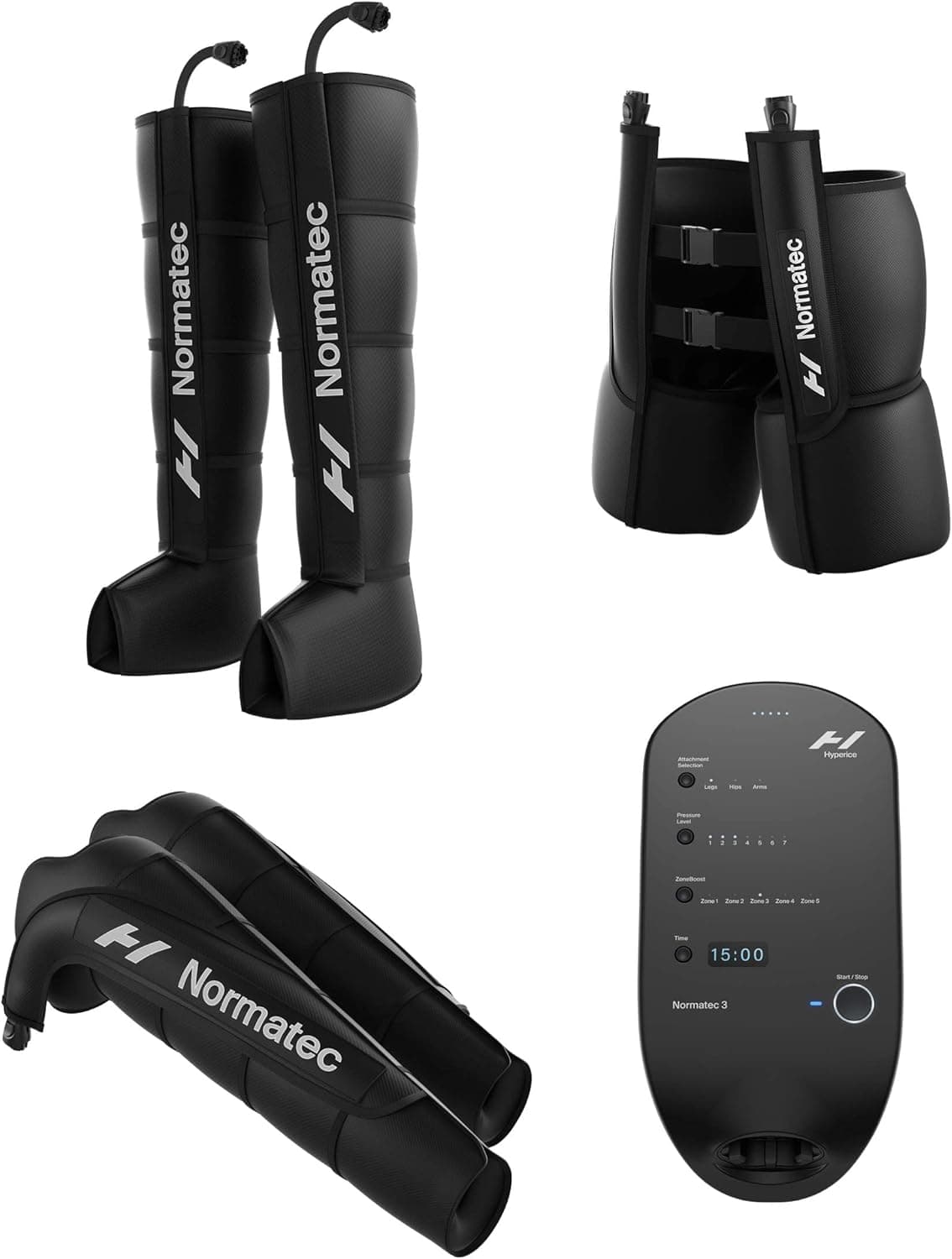
This is the category with the most noise and the tightest evidence. The two reviews below evaluate partly different techniques and we have not checked the overlap between their trials, so they should not be read as independent confirmations. The meta-analysis by Maia and colleagues (Biology of Sport, 2024) included 17 studies with 319 participants and found trivial to moderate benefits on perceived pain, trivial to small ones on muscle function and variable effects on markers of muscle damage; typical protocols lasted 20 to 30 minutes at around 80 mmHg. Its authors conclude that pneumatic compression of the lower limbs still lacks solid scientific support. In the review by Canez and colleagues (Journal of Bodywork and Movement Therapies, 2025), with 19 trials and 672 participants evaluating three techniques, pneumatic compression did not significantly reduce soreness at 24 hours compared with control, with moderate certainty.
The prudent reading: at best, a moderate relief of the "heavy legs" feeling, with no guarantee of better performance. If you are still interested, our reviews of the Normatec 3 and the Therabody RecoveryAir PRO and our compression boots comparison cover specifications, contraindications and who they make sense for.
Massage guns
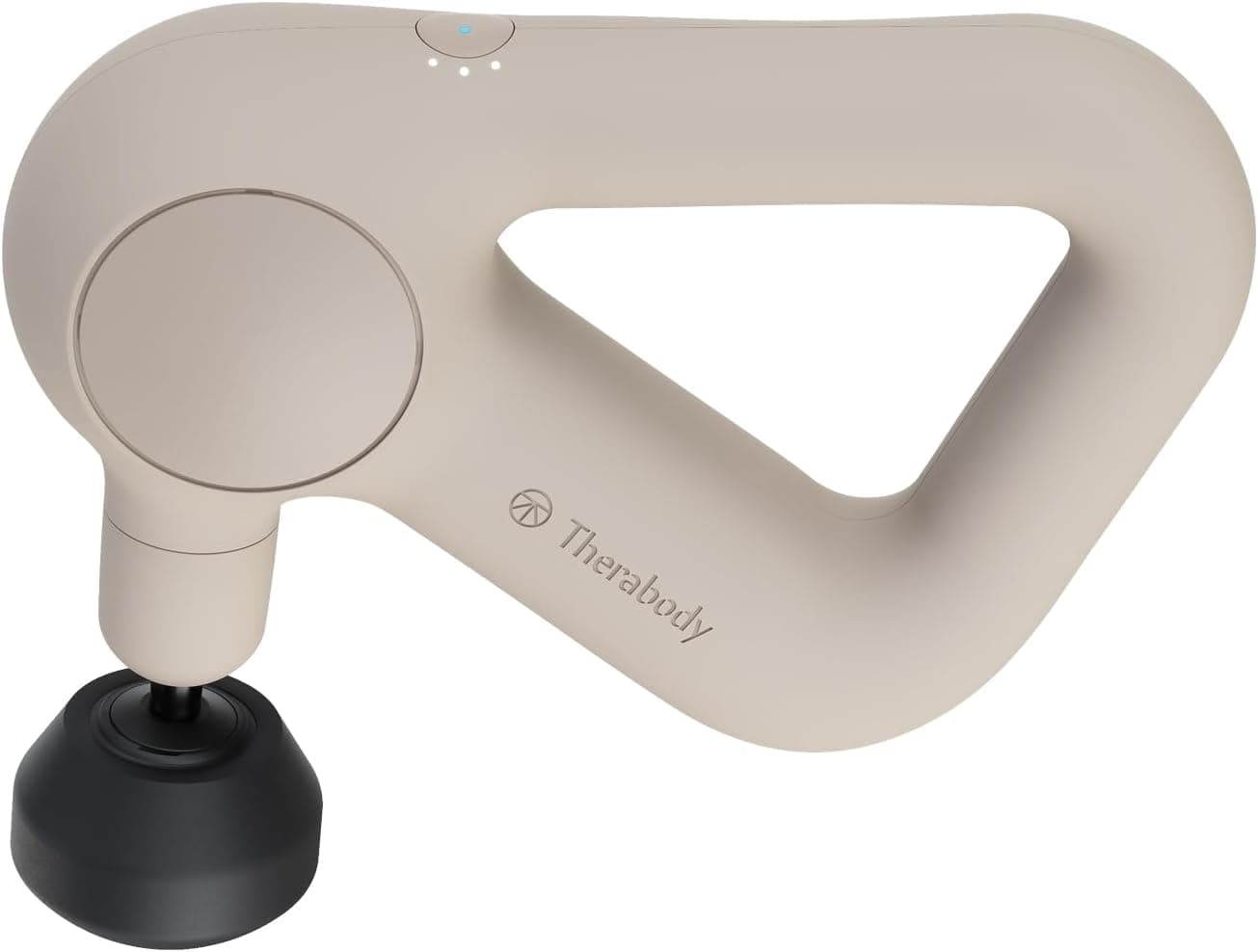
The systematic review and meta-analysis by Zhu and colleagues (Chiropractic & Manual Therapies, 2026) pooled 12 randomised trials on percussion after exercise-induced muscle damage. It observed better recovery of countermovement jump and lower CK, with low to very low certainty, and no clear improvement in maximal voluntary strength or soreness. In a crossover study with 16 trained athletes (Ormeno and Driller, Sports, 2025) with three conditions (dynamic warm-up alone, with a foam roller, or with a massage gun), both the roller and the gun were associated with lower jump height, and the gun with slower sprints; only the roller was associated with less muscle pain. It is a small sample and it measures use during the warm-up, not after training. The available evidence does not allow presenting the massage gun as a proven accelerator of recovery; if you use it to loosen a tense area, that is a comfort decision. The details of the entry-level model are in our review of the Theragun Relief; the reviews cited above do not refer to that specific model.
Cold
The review by Dupuy and colleagues (Frontiers in Physiology, 2018) analysed 99 studies on post-exercise recovery methods. Immersion, cryotherapy and contrast therapy reduced soreness; massage and cold exposure were the most effective against inflammation markers, and massage the most effective for soreness and perceived fatigue. Caveats: the effect of cryotherapy on soreness was seen only in the first 6 hours, not at 24 hours or later; in the temperature analysis, immersion showed an effect on soreness with water at 15 °C or colder, not with warm water. Also, "massage" here does not mean percussion: the article does not mention massage guns, so it does not support their use. And those variables are perception and markers, not adaptation.
That is where the problem appears. In the trial by Roberts and colleagues (Journal of Physiology, 2015), 21 active men did strength training for 12 weeks; those who sat in cold water for 10 minutes after each session gained less strength and muscle mass than those who did active recovery. The authors suggested reconsidering cold-water immersion as a routine strategy after training. A recent narrative review (Tornero-Aguilera and colleagues, Experimental Physiology, 2026) agrees that cold speeds up parasympathetic recovery and reduces pain, but may blunt hypertrophy if repeated after strength training; it proposes reserving it for when speed takes priority over muscle gain (for example, several competitions in a row). The Roberts sample is small and male, so it is a signal to take into account, not a verdict.
Continuous monitoring
A wearable can help you see sleep and load trends. What the cited evidence does not show is that reacting to a daily score speeds up recovery in strength or hypertrophy. If you are interested in the membership model and how it estimates recovery, we cover it in the Whoop 5.0 review.
Summary by method
| Method | What the cited evidence supports | What is missing | | :- | :- | :- | | Sleep | Extending sleep favoured performance in young athletes (10 studies) | Small samples; exact relationship unclear | | Load and rest | Consensus: load-recovery balance; no accepted marker | HRV evidence mostly in endurance and modest | | Protein | More mass and strength with strength training | Measures adaptation, not acute recovery | | Enough energy | Energy deficit associated with harm to health and performance | No single "dose" | | Pneumatic compression | Possible trivial to moderate relief of perceived pain | Scientific support still limited; no reduction in soreness at 24 h in another review | | Percussion | Possible better jump and lower CK (low to very low certainty) | No clear improvement in strength or soreness; used in the warm-up, it was associated with a worse jump | | Cold | Less soreness (cryotherapy, only up to ~6 h; immersion in water at 15 °C or colder) | May blunt strength gains | | Massage (not percussion) | Best result for soreness and perceived fatigue (Dupuy); does not include massage guns | Effect on performance and adaptation not established |
How to prioritise
- Regular, sufficient sleep, with stable schedules. It is the thing most likely to make a difference.
- Enough food and adequate protein, without aggressive calorie cuts when training volume is high.
- Programming: lighter weeks, hard sessions kept apart and objective signs of stalling.
- Optional tools: compression or percussion for comfort, cold only if the goal is not to gain mass or strength, and any spending kept in proportion to what they actually add.
Any persistent pain, one-sided swelling, dizziness or fatigue that does not go away is not solved by a device: book an appointment with a healthcare professional. Pneumatic compression also has contraindications (for example, circulatory problems), which are detailed in the linked reviews.