In this article
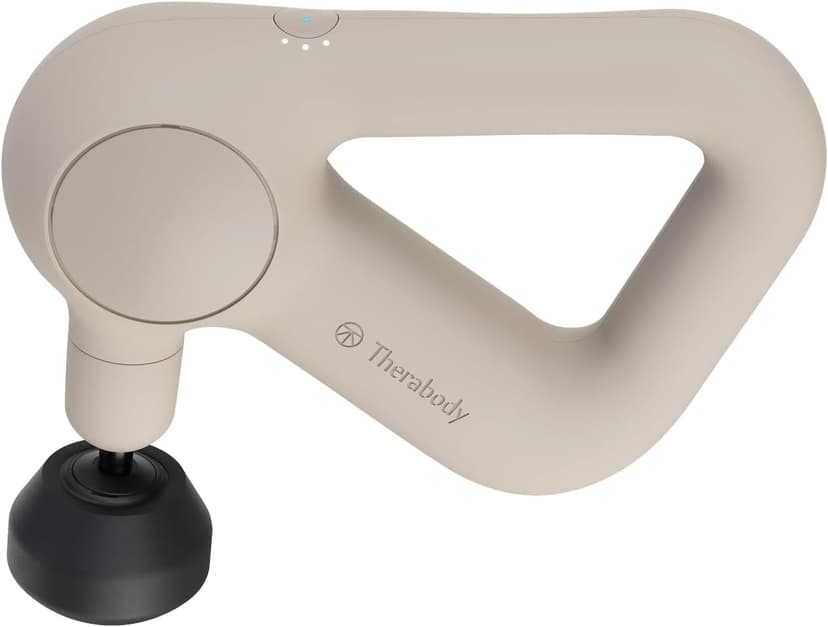
The Theragun Relief is the entry point to percussive therapy from Therabody, the brand that popularized massage guns. It keeps the range's triangular grip, weighs just over 600 grams, has a single button and three speeds, and gives up the power and attachments of the higher-end models. People who land on this page usually ask three questions: what you get for paying less than for a full-size Theragun, whether the evidence supports the idea that these guns help you recover, and whether something else would suit your case better.
This review draws on Therabody's official product pages, its precautions and contraindications page, two systematic reviews on massage guns and percussion and what buyers say in store reviews. The site does not physically test products: what follows is a documented reading, with sources cited, and any figure that could not be verified is stated as such.
Theragun Relief
Therabody's entry-level massage gun: 10 mm amplitude, three speeds and a triangular grip.
What the Theragun Relief is and where it sits in the range
Therabody organizes its Theragun guns in tiers: Mini (travel format), Relief (entry), Prime, Prime Plus and PRO Plus (the most powerful, with the most features). By position and by specifications, the Relief is the simplest model. According to a comparison by the specialist retailer Synced, the practical difference from the models above it is that the Relief offers a gentle, everyday percussive massage, while the Prime Plus adds a more intense massage, heat therapy and cold and vibration options.
That position shapes everything else. The Relief is not designed for someone who trains with heavy loads and wants a deep massage, or for a physical therapist who would use it many hours a day. It is designed for home use: a while in the evening on the neck, back, glutes or legs when you feel stiff.
Specifications according to the manufacturer
The figures below come from Therabody's official product pages. Some vary by market, and this is noted where it applies.
- Amplitude: 10 mm.
- Speeds: three levels, with LED indicators. The pages consulted do not publish revolutions per minute (RPM), so this review does not give that figure.
- Battery life: up to 120 minutes per charge, according to the manufacturer.
- Weight: 0.621 kg (1.37 lb on the US page).
- Dimensions: 9.66 x 2.58 x 1.37 inches (about 24.5 x 6.6 x 3.5 cm), according to the US page.
- Attachments: three: standard ball, dampener and thumb.
- Controls: a single button.
- Charging: USB-C cable included. No indication that the battery is replaceable was found on the pages, and from the design it is understood to be internal.
- App: according to Synced, the Relief is not Bluetooth-enabled (the Prime Plus is); the mention in the comparison section of the US page does not seem to refer to it, and the European page only mentions guided routines in the app. Check it on the purchase page.
- Warranty: two years on the European page consulted and a one-year limited warranty on the US one. Check the one offered by the seller in Spain.
- Noise: Therabody describes it as very quiet (whisper-quiet) but does not publish a decibel figure. It does not publish the stall force either.
Any specific noise or stall force figure circulating in videos and review sites could not be checked against the manufacturer, which is why none is given here.
What a 10 mm amplitude means
Amplitude is the distance the head travels with each stroke. A greater amplitude is usually associated with a deeper massage, and a smaller one with a more superficial, gentler massage, which fits the Relief's entry-level positioning. But the available science does not allow us to say which configuration is best: the review cited below points out that studies on massage guns report parameters such as frequency, amplitude or duration incompletely. In other words, there is no basis for claiming that 10 mm is the ideal value or that it is insufficient. What the specifications do suggest is that the Relief is a device of moderate intensity.
What the evidence says about massage guns
Caution is needed here, because the marketing in this category promises far more than the studies support.
The most useful reference is the systematic review by Ferreira and colleagues, published in 2023 in the Journal of Functional Morphology and Kinesiology. It searched six databases, after removing duplicates, screened 281 records (out of 8,586 found) and included 11 studies, with 281 participants in total (77% men, mean age 24). Ten studies had a moderate risk of bias and one a high risk. Its conclusions:
- Flexibility and range of motion in the short term: massage guns could be effective at improving the flexibility of muscles such as the iliopsoas, the hamstrings and the posterior chain, and at helping improve range of motion in the short term.
- Strength and power: for strength, balance, acceleration, agility and explosive actions there were no improvements, or even performance declines. The authors do not recommend using them for that purpose.
- Recovery after fatigue: they observed improvements in stiffness, range of motion and strength after a fatigue protocol, but found no differences in contraction time, perceived exertion or lactate concentration.
- Long-term effects: unknown, because the studies measure immediate outcomes.
The authors themselves point out important limitations: moderate study quality, few studies, young and homogeneous samples (no older or injured people) and incomplete information on the devices' parameters. In addition, this review groups massage guns in general: it does not study the Theragun Relief specifically, so its conclusions cannot be attributed to this model.
Percussion after muscle damage: the Zhu review (2026)
The systematic review with meta-analysis by Zhu and colleagues, published in 2026 in Chiropractic & Manual Therapies, focuses on a different question from Ferreira's: whether a percussion session right after exercise that causes muscle damage helps recovery. It included 12 randomized trials (search up to November 2025) with 393 participants, healthy adults who were mostly men (286 men and 107 women), aged roughly 18 to 37, including recreational runners and athletes. In the trials, percussion was applied in a single session, within the hour after exercise, and compared with passive rest, with doing nothing or, in a single trial, with placebo. The devices were massage guns from various brands, including, in one trial, a Theragun G2PRO; the Theragun Relief is not among them. For the model in this review, these results are a reference by analogy, not a measurement of the Relief.
What it found, with follow-up of up to 72 hours (only three trials measured at 72 h):
- Countermovement jump (CMJ): an effect favoring percussion (Hedges' g 0.78; 95% CI 0.26 to 1.29), with low certainty. There is high heterogeneity between studies, and the authors themselves point to possible publication bias: when it is corrected for, the estimate is no longer statistically significant.
- Creatine kinase (CK), a blood marker of muscle damage: lower with percussion (g of −0.87; 95% CI −1.57 to −0.17), with very low certainty.
- Maximal voluntary strength: no clear difference (g of 0.12; 95% CI −0.10 to 0.34), with moderate certainty. It is the most solid result in the review, and it is a null result.
- Delayed-onset muscle soreness (DOMS): no clear difference (g of 0.14; 95% CI −0.19 to 0.48), with very low certainty.
The authors conclude that percussion might favor recovery of explosive performance and reduce early CK, but that the evidence does not clearly support a benefit for recovery of maximal strength or for relief of soreness. All the trials were rated as having "some concerns" about bias, largely because participants cannot be blinded to whether or not they receive the massage. The observations on treatment duration and percussion frequency (in hertz) are exploratory, and the authors warn that they should not be taken as thresholds; the data on amplitude were incomplete and were not analyzed, so this review also cannot say whether the Relief's 10 mm is adequate.
It is best to stick to what was measured. The study does not evaluate everyday use for stiffness, repeated sessions over several days, older or injured people, or performance in a competition. An effect on jumping in a low-certainty meta-analysis is also not the same as "recovering faster" in the sense marketing suggests. For more context on how this fits with other methods, see the article on muscle recovery.
Muscle soreness and recovery
On delayed-onset muscle soreness (DOMS), the 2023 review does not offer, in what was consulted, a result of its own that can be cited, and the Zhu (2026) review finds no clear difference with percussion, with very low certainty. For manual massage there is a meta-analysis by Guo and colleagues (2017) with 11 trials and 504 participants, which found lower pain ratings after intense exercise with massage compared with doing nothing at 24, 48 and 72 hours. But that is manual massage, not percussion, and it cannot simply be transferred to a massage gun. For that reason, this review does not attribute to the Relief any effect on soreness.
Mechanisms that are often cited
It is common to read that percussion "increases blood flow", "releases knots" or "blocks pain signals". This review does not take those explanations as true: in the sources consulted, no sufficient support was found to attribute them to the Relief, and the cited review measures outcomes (range of motion, stiffness), not mechanisms. What can be said with caution is what was observed: an improvement in flexibility in the short term and, in some studies, in stiffness after fatigue.
In short, what the evidence allows us to state is modest: it may help an area feel less stiff and gain some range of motion for a while, and there are signs of better jump recovery (low certainty) and lower CK (very low certainty) after exercise that damages muscle. It does not clearly support the idea that it restores maximal strength or relieves soreness, nor that it improves next-day performance, and certainly not that it corrects injuries. The official pages consulted do not describe it as a medical device, and with persistent pain the sensible course is to consult a healthcare professional.
Who it's for and who it isn't
It fits if:
- You spend many hours sitting, you feel stiffness in your neck, back or hips, and you want a simple tool to use for a few minutes.
- It is your first massage gun and you would rather not pay for power you will not use.
- You value the range's low weight and triangular grip, designed to reach your back without help.
- You want an easy device: one button, three speeds and three attachments.
It does not fit if:
- You train with heavy loads and want a deep massage: the 10 mm amplitude and the range of attachments are limited, and several buyer reviews point to a lack of power.
- You expect more recovery or better performance: as seen above, the evidence does not support that for massage guns in general.
- You will use it professionally many hours a day: the Relief is an entry-level model, not one built for intensive use.
- You have any of the conditions in the contraindications section.
Compared with the higher-end models
Moving up the Therabody range gives you more intensity and more attachments, and on the Prime Plus, heat and cold and vibration options. Anyone in doubt should ask whether they will notice that difference: if use will be a few minutes a day for everyday stiffness, the entry-level tier may be enough; if you work quads, glutes or back with heavy loads and need pressure, a more powerful model makes more sense. Check the current product pages before deciding, because the range gets updated.
Is there a newer model?
On the Therabody official pages consulted, the Theragun Relief remains in the catalog and the brand does not present it as replaced by another model. What Therabody has refreshed are other tiers: according to its official announcement, on 14 October 2025 it updated the Theragun Sense (second generation) and the Prime (sixth generation), and launched the Mini Plus. These are models from other ranges, not declared successors to the Relief. The exact availability on Amazon.es could not be checked, so look at the purchase page to see which model appears and what warranty the seller offers.
What buyers say
Information from users about this model was found mostly in US store reviews, not in forums, and it should be read as a sample, not as a consensus. A few ideas recur in them:
- Noise: opinions are split. Some buyers describe it as much quieter than other, cheaper versions, and others find it loud for what is advertised. A metallic noise after a few days of use is also mentioned.
- Power: several buyers miss the force of more expensive models; another finds it intense even at the lowest speed. That is consistent with a device of moderate intensity whose feel depends on how hard you press and on each person's sensitivity.
- Battery: reports are mixed, from someone who says it lasts a long time to someone who says it only covers a few sessions. There is no basis to give a real-world runtime different from the one the manufacturer publishes.
- Quality and value for money: it is described as an affordable option within the brand, with an occasional defective unit or missing accessories, so check the seller's return policy.
- Average rating: high in the stores consulted, with small samples.
Reddit was searched without finding relevant threads, so nothing is attributed to that forum.
Contraindications and precautions according to Therabody
Therabody's precautions and contraindications page includes a section for Theragun devices (all except the PRO Plus, which has its own). Among the contraindications it lists, that is, circumstances in which it should not be used:
- Skin rashes, open wounds, blisters, local inflammation, bruises or tumors in the area.
- Deep vein thrombosis or osteomyelitis.
- Bone fracture or myositis ossificans.
- Uncontrolled hypertension.
- Acute or severe heart, liver or kidney disease.
- Neurological conditions with loss or alteration of sensation.
- Direct application on the face, throat or genitals.
- Clotting disorders and anticoagulant medication or medication that alters sensation.
- Recent surgery or injury, and direct pressure on a surgical scar or implanted hardware.
- Pacemaker, implantable defibrillator or history of embolism.
- Peripheral vascular insufficiency or disease, and connective tissue disorders.
- Scoliosis or severe spinal deformity.
- Extreme discomfort or pain when using it.
Among the precautions (situations that call for care) are controlled hypertension, osteopenia, osteoporosis, pregnancy, diabetes, varicose veins, bony prominences, abnormal sensations such as numbness, sensitivity to pressure, recent injuries or surgeries, scoliosis and medications that alter sensation. The full, current list is on the manufacturer's website, and that is the one to consult, with a healthcare professional if in doubt, before first use. If strong pain or discomfort appears, stop using it.
How it fits with wearables and other recovery options
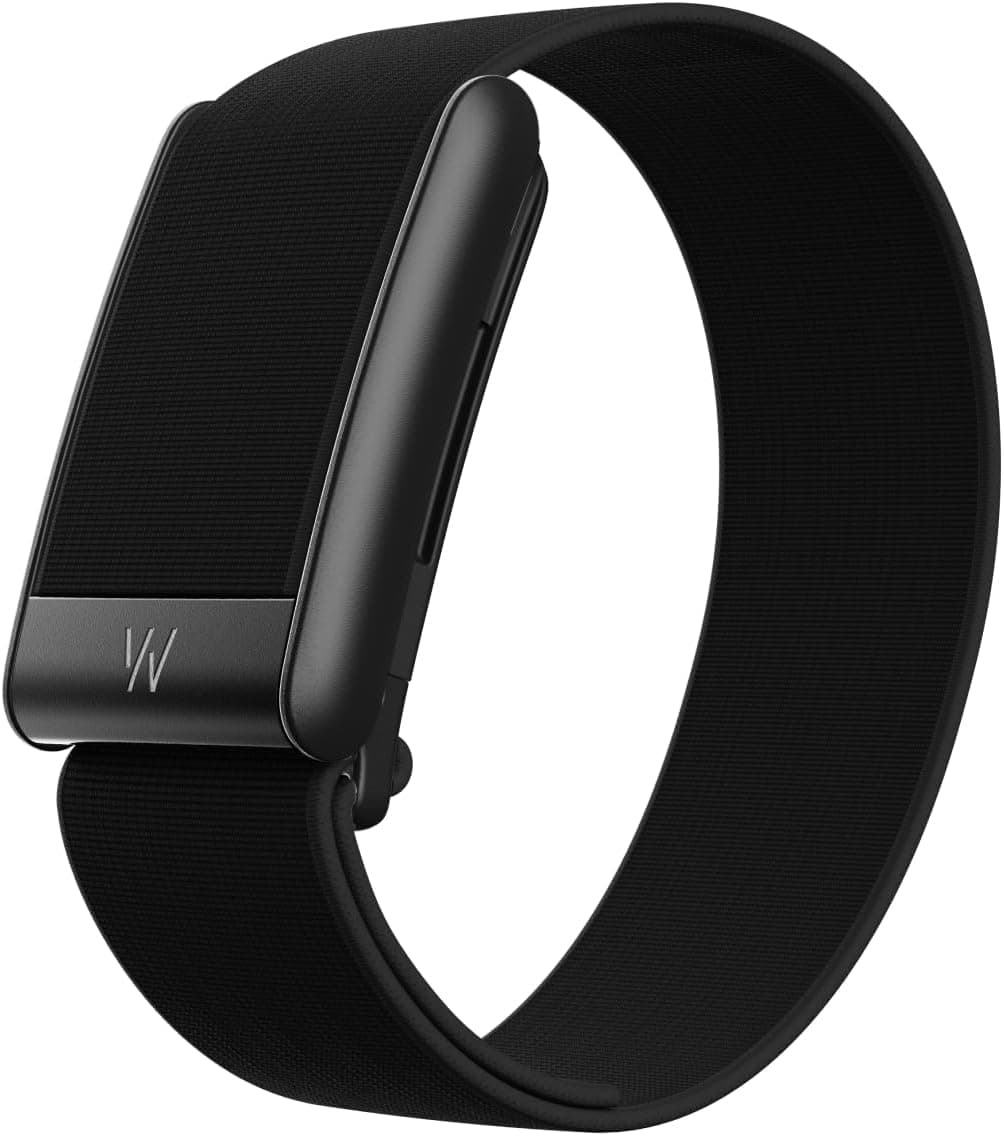
A widespread idea is to use a wearable to decide when to use the gun. It needs some nuance. The recovery score from bands such as the Whoop 5.0 is a proprietary index built from heart rate variability, resting heart rate, respiration and sleep: it is not a validated measure of how recovered the body is, and a low score does not mean a massage is the right answer. It is reasonable to use it as a personal trend, not as a prescription.
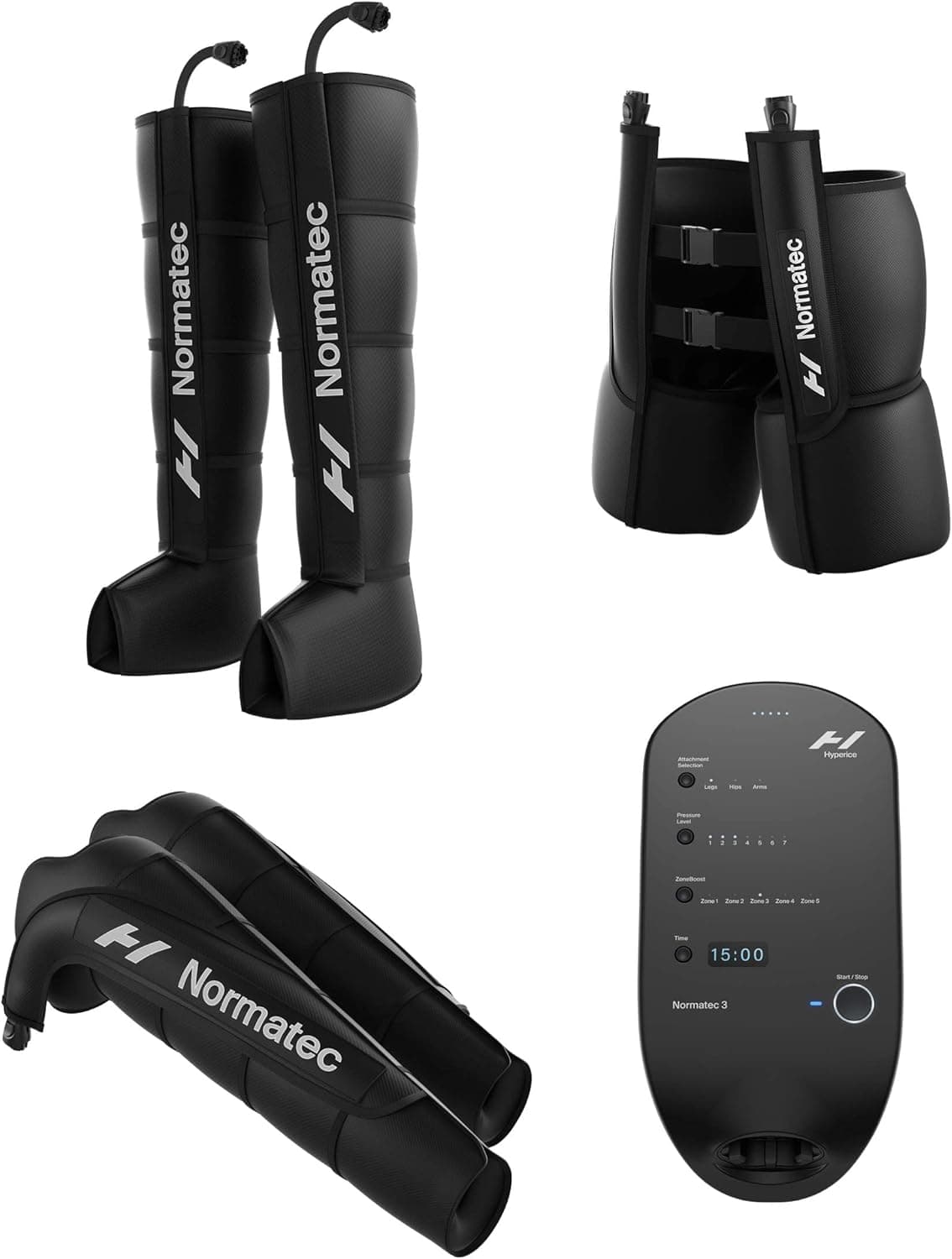
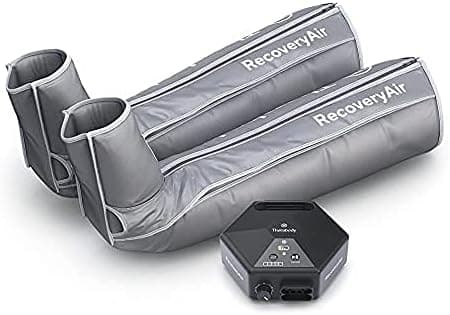
Compared with other recovery routes, the Relief is a localized, manual tool: you decide where and how much. Pressotherapy, by contrast, works on the whole leg with pneumatic compression boots like those of the Normatec 3 or the Therabody RecoveryAir PRO: they are considerably more expensive systems, designed for passive sessions after a lot of leg volume, and with their own evidence, which at most points to a moderate effect on perceived soreness according to a 2024 systematic review with meta-analysis. If the goal is only to loosen up one specific area, the Relief costs much less and takes up little space. If the goal is leg fatigue after heavy training, the compression boots comparison helps you choose. They are neither exclusive nor substitutes: each answers a different need, and neither has solid evidence of improving performance.
How we score the Theragun Relief
Our score weighs, in this order, the accuracy of what it measures, software and subscription, battery life, comfort and value for money. The Relief measures nothing, so the first criterion is judged as the reliability of what it promises: it weighs against it that the evidence on massage guns is modest and centers on short-term flexibility, not on recovery. The software is optional and there is no subscription, a plus. The 120-minute battery life is adequate for home use. Comfort is good on paper (low weight, triangular grip), with doubts in the reviews about noise and power. And on value for money it stands as a reasonable entry-level option within the range, without being exceptional. The result is 72 out of 100: a decent and honest product in its niche, but without the evidence or the features to score higher.
Verdict
The Theragun Relief is a good way to get into massage guns without paying for power you probably will not use. It delivers what it promises if the goal is to loosen everyday stiffness and gain some range of motion on a one-off basis. It falls short if you ask more of it: neither the evidence nor the specifications position it as a tool for accelerated recovery or performance improvement.
Pros
- •Low weight of 0.621 kg and the Therabody range's triangular grip, designed to reach your back without help.
- •Simple to use: one button, three speeds and three attachments, with no subscription.
- •Up to 120 minutes of battery life according to the manufacturer, with USB-C charging.
- •Entry-level model in the range: lets you try the category without paying for features of the higher-end models.
Cons
- •10 mm amplitude and three speeds: moderate intensity, with buyer reviews that miss power.
- •No official noise or stall force data, and mixed reviews on both.
- •The evidence on massage guns is modest: short-term flexibility and stiffness and, with low or very low certainty, jumping and CK after exercise; no clear benefit for maximal strength or soreness, and no support for better performance.
Veredicto Final del Experto
Theragun Relief
Someone with a sedentary job or moderate training who wants a light, simple massage gun for everyday stiffness and accepts moderate intensity.
Compression boots
If you accumulate a lot of leg volume and want passive sessions, you can consider pressotherapy, accepting its cost and evidence that is also modest.
Avoid if…
You need a lot of power, expect to speed up recovery, or have a condition on Therabody’s contraindications list without having checked with a professional.