Red light, mitochondrial melatonin and sleep: the evidence

In this article
The idea of a "solar reset" is going around online: sunlight or red light would trigger melatonin production inside the mitochondria, which would repair cells and improve sleep. Each link in that chain has a different level of evidence, and mixing them up is what turns a hypothesis into a slogan. This piece sorts them into three buckets: what has been measured in humans, what has been seen in the lab or in animals, and what is hypothesis. At the end, what to do about light without buying anything.
Nothing below is medical advice. Consumer light devices are not medical devices unless the manufacturer says so, and anyone with persistent insomnia or a medical condition should talk to a professional.
The three levels of evidence at a glance
| Claim | Level | What's behind it | | :- | :- | :- | | Strong light by day and dim light at night influence the circadian clock and melatonin | Humans (one retrospective analysis, one field study) and expert consensus | Gooley 2011, Wright 2013, Brown 2022 (below) | | Neurons can synthesize melatonin in the mitochondria | Mice and cultured cells | Suofu 2017 | | Red or infrared light acts on cytochrome c oxidase | Mostly cells, animals and one small study on human forearms | Hamblin 2018, Wang 2016 | | Near-infrared light improves sleep | One small human trial with no significant effect on sleep | Giménez 2022 | | The sun "charges" mitochondria with melatonin and a lack of it causes fatigue or aging | Hypothesis with no trials to support it | No published trials support it |
What has been measured in humans: light and the clock
The solid part of the story is not mitochondrial, it is circadian. The circadian system uses the light that reaches the eye as its main signal for setting its time, and the melatonin secreted by the pineal gland is a marker of that clock.
Three studies illustrate what is known:
- Evening light. A retrospective analysis of 116 healthy adults aged 18 to 30 compared normal room light (under 200 lux) with dim light (under 3 lux) in the hours before bed. Normal room light delayed the onset of melatonin in almost all participants and shortened its duration by around 90 minutes, according to the study by Gooley and colleagues published in 2011. The authors suggest possible consequences for sleep and metabolism, but given the retrospective design that is suggestive, not proven: what was measured is the effect on melatonin.
- Natural light versus indoor living. In a 2013 field study by Wright and colleagues (the abstract consulted does not state the sample size or the length of the camping period), a summer camping period with natural light only placed the circadian clock in line with solar time, while the environment with electric light was associated with less daytime light, more light after sunset and a later clock.
- Reference figures. An expert consensus published in PLoS Biology in 2022 proposes targets in units of "melanopic equivalent daylight illuminance" (melanopic EDI): more than 250 lux during the day, less than 10 in the three hours before sleep and less than 1 in the bedroom. These are consensus recommendations for healthy adults, not the result of a specific trial, and the paper itself describes them as realistic targets, not exact thresholds.
Note what is missing: none of these studies measures melatonin inside the mitochondria. What they show is that light, in amount and timing, shifts the clock. That is enough to justify sensible light habits without any mitochondrial theory.
Mitochondrial melatonin: what has been seen (in mice)
The idea that melatonin is produced in the mitochondria is not an internet invention; it has a scientific origin. In 2017, a team of researchers reported in PNAS that mouse neuron mitochondria contain the machinery to synthesize melatonin and MT1 receptors. According to the paper, that melatonin curbed the release of cytochrome c and the activation of caspases under stress, and overexpressing the MT1 receptor in mitochondria reduced damage from cerebral ischemia in mice.
It is an interesting result, but it has to be read for what it is:
- The experiments were done in mice, in cultured mouse neurons and in a mouse cell line. There are no human participants.
- The study did not prove that sunlight or red light increase that synthesis. The link to near-infrared light is not part of what that work showed: it is a hypothesis, with no experimental support in humans.
- Figures such as "thousands of times more melatonin than the pineal gland" are not supported by the PNAS study and should not be taken as established.
So "mitochondrial melatonin" is a real field of basic research, but it does not yet translate into practical guidance for people.
Red and infrared light: proposed mechanisms and limits
Photobiomodulation is the use of low-power red or near-infrared light to influence tissues. The most cited mechanism places absorption in mitochondrial cytochrome c oxidase. A 2018 review by Hamblin presents it as a proposed mechanism: light would release nitric oxide that inhibits that enzyme and restore electron transport. The experiments in the figures of that review come from cultured cells (mouse fibroblasts and neurons, human stem cells), that is, the lab, not treated people.
One detail about the sources is worth keeping in mind. Three reviews that are often cited together in this field share an author: the one already cited from 2018, the 2017 review on anti-inflammatory effects (Hamblin) and the 2018 review on light parameters (Zein, Selting and Hamblin). They are not three independent pieces of evidence, but works with a common author on a shared field, with probable overlap in the studies they cite. The 2016 study by Wang cited below comes from a different group, but it is a small experiment, not a review. Each review contributes something different:
- The 2017 review describes a biphasic response: low doses stimulate and high doses inhibit. It also points to reduced inflammation as a reproducible effect, with evidence in animal and cell models, not in improved sleep.
- The review by Zein, Selting and Hamblin concludes that there is no consensus on clinical parameters (wavelength, energy, power, duration) and attributes part of the contradictory results to that variability; in tissues rich in mitochondria, negative studies were explained more by excess dose than by too little.
In humans, a study with eleven healthy volunteers used infrared spectroscopy to measure that a 1064 nm laser on the forearm increased cytochrome c oxidase and oxygenated hemoglobin in the treated area, compared with placebo. It is a local physiological observation in a small sample. It does not demonstrate a clinical benefit or any effect on sleep, and the laser used is not equivalent to a household panel.
What about sleep? The available human trial
This is where the most exaggeration has happened. A double-blind, randomized, placebo-controlled trial tested 850 nm infrared light in healthy adults with mild sleep complaints: three doses versus placebo, five days a week for four weeks, from 9:30 to 12:30 in the morning. According to the abstract, only the highest dose showed consistent changes, and only in winter: better mood, less sleepiness, lower interferon gamma and lower resting heart rate. They found no significant effects on sleep or on circadian rhythms.
The figures indicate groups of only about six to eight participants per condition and season, so even the positive findings are preliminary. The honest way to put it is that, in that trial, infrared light did not improve measured sleep; the rest are signals that need confirming.
How to apply it with common sense
Leaving the mitochondrial theory aside, what has support is managing light at the right time. Without buying anything:
- Natural light in the morning and during the day. Getting outside in the first hours and working near a window brings exposure closer to the more than 250 melanopic lux proposed by the 2022 consensus.
- Dim it at night. In the three hours before sleep, the consensus proposal is to stay below 10 melanopic lux: low, warm lamps, screens with reduced brightness and fewer overhead lights.
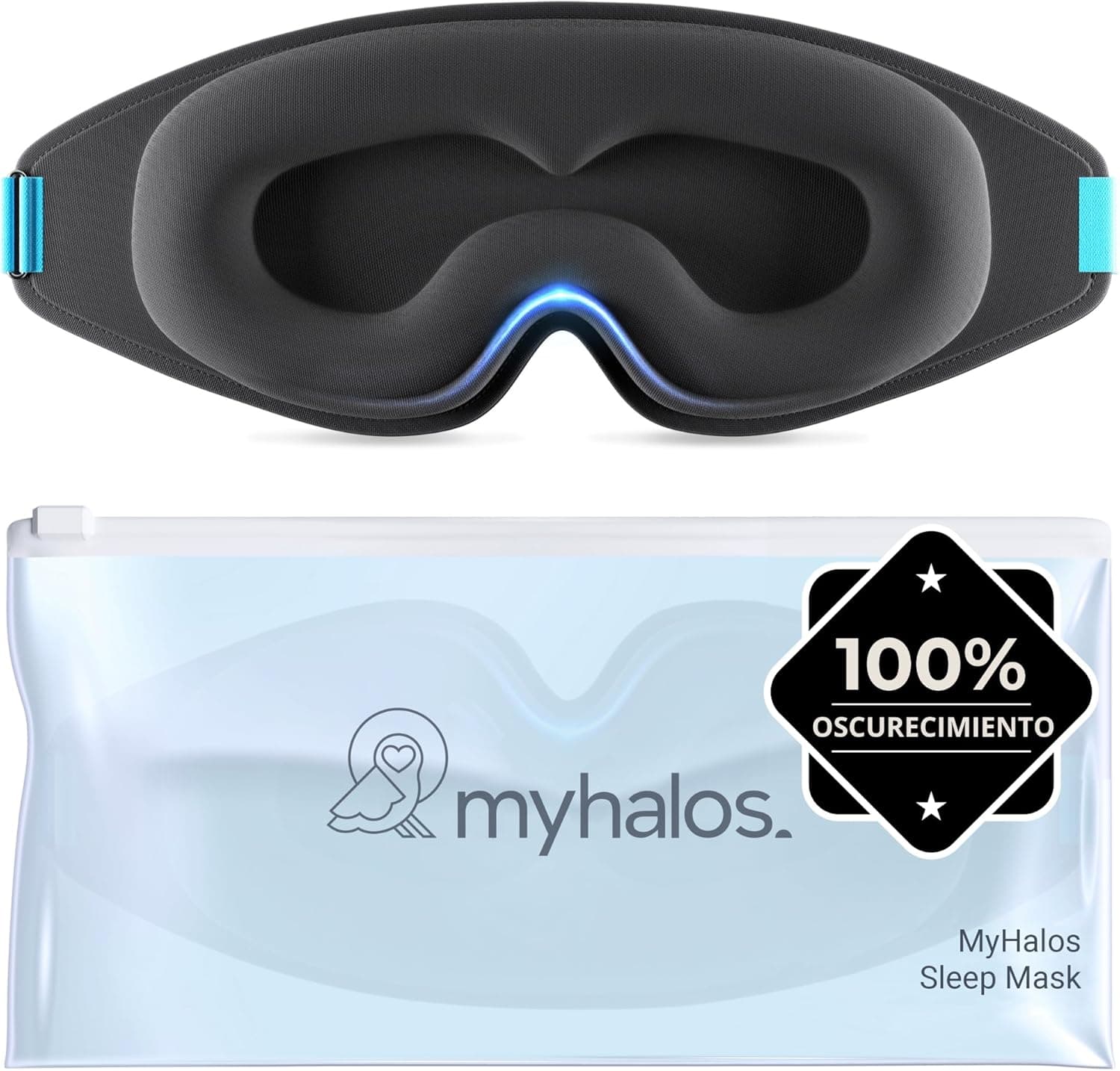
- Dark bedroom. Less than 1 melanopic lux is the target; blackout curtains or a sleep mask such as the MyHalos cover the case of light you cannot control; what the evidence says about sleep masks and sleep is in its review.
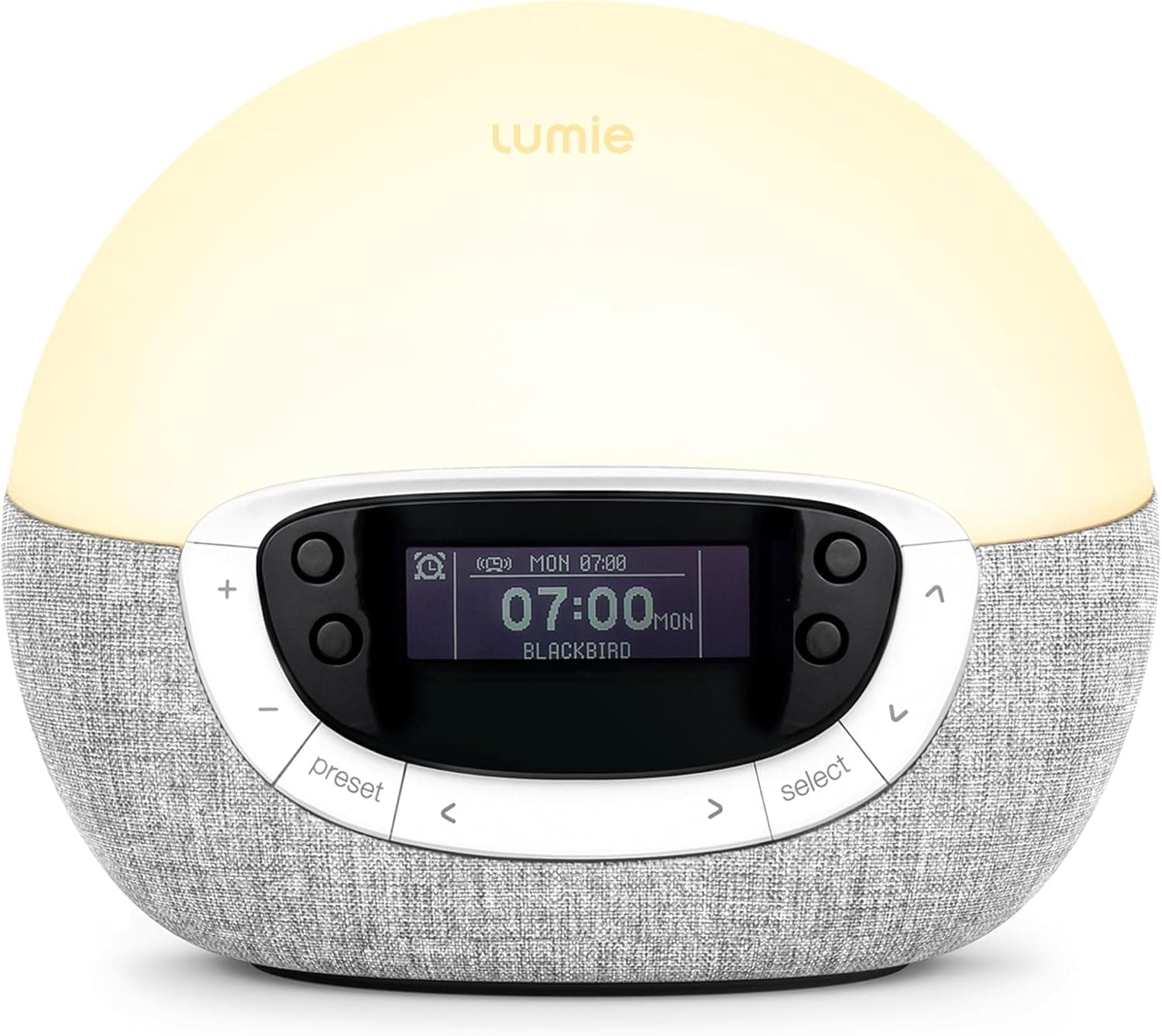
- If the problem is waking up in the dark. In winter, some people turn to a light alarm clock such as the Lumie Bodyclock Shine 300; its review details what has been studied on dawn simulation: small studies, focused on sleep inertia and with mixed objective results.
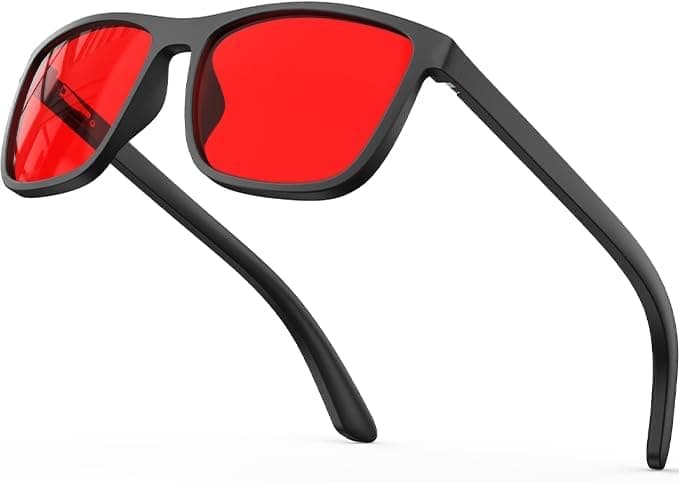
- Glasses at night. Blue-light blocking glasses with red lenses are sold for the hours before bed; the evidence on this type of glasses is limited and it does not replace lowering the intensity of ambient light.
Household red light does not need to be justified with a mitochondrial theory: dim light at night fits the consensus target of Brown 2022 of keeping melanopic illuminance low before sleep. That a specific reddish light helps more is reasoning from that criterion, not the result of a specific trial with red light.
Is it worth buying a red light panel for sleep?
With what has been published, there is no basis to recommend it as a sleep tool. The only human trial cited here found no effect on sleep; the mechanisms rest on cells and animals; protocols are not standardized, and the variability in dose means two different devices may not be comparable. If someone is still interested, the prudent approach is to treat it as a personal experiment: change one variable at a time and check it against your own data, for example with a ring such as the Oura Ring 4, aware that consumer wearables estimate sleep rather than measuring it like a polysomnography.
Before spending on red light, the order with the best support is a different one: strong light by day, low light at night, darkness when sleeping and regular schedules.
Summary
- Measured in humans, in small or retrospective studies: light (amount and timing) shifts the circadian clock and melatonin; indoor light at night delays and shortens it.
- Lab or animals: melatonin synthesis in mouse neuron mitochondria; photobiomodulation mechanisms in cells.
- Hypothesis: that red or solar light triggers human mitochondrial melatonin and that this repairs, rejuvenates or improves sleep.
- Actionable: natural light in the morning, dim light at night, a dark bedroom.