In this article
Glasses that filter short-wavelength light (blue and, in some models, green too) at night are sold with a simple promise: less light "telling" the brain it is daytime, making it easier to fall asleep. This piece reviews one specific model, the Bloomoak Sleep Master in dark red lens, and separates three things that tend to get mixed up: what the product listing claims, what has been studied in blue-light-filtering glasses in general and what we have not found.
A prior notice: the listing does not present them as a medical product, and this site has not tested them physically. The review relies on the public listing on Amazon.es and on the scientific literature cited at the end.

Bloomoak Sleep Master (dark red lens)
Dark red lens glasses with a TR90 frame and anti-reflective coating, intended for night-time use.
What exactly the product is
The buy link on this page leads to ASIN B0DLFKCCMH, a listing from the brand Bloomoak whose title is "Bloomoak-99% Gafas de bloqueo de luz azul-Antideslumbrantes-Antifatiga-TR90-Adecuado para pantallas, juegos, tvs, teléfonos" (in English: 99% blue light blocking glasses, anti-glare, anti-fatigue, TR90, suitable for screens, gaming, TVs, phones). At the date of this review, the variant selected by default is called "Rojo Oscuro - 100% - Sleep Master". It is a dark red lens, not the orange or amber of the trials cited further down.
Data from the listing (this is seller data, not from an independent test):
- Lens: dark red. The listing claims it blocks "todas las longitudes de onda por debajo de 550 nm" (all wavelengths below 550 nm), which includes blue, violet and green, and speaks of "100%". The title, by contrast, says "99%". Two different figures for the same product on the same page.
- Transmittance: the listing states a light transmittance above 22.5% thanks to a double anti-reflective coating.
- Frame: TR90, rectangular, full frame; polycarbonate lenses. Stated dimensions: 58-17-145. Includes a case.
- Type: non-prescription glasses. If you need vision correction, they would only work worn over your own glasses, something the listing does not detail and that we have not been able to check.
- Use recommended by the listing: one to two hours before bed.
The same listing groups other variants with yellow, amber, orange, green, red or light grey lenses and different percentages (65%, 76%, 99%, 43%…). If you choose a different variant, this review does not apply. We have not found an independent spectral transmittance curve for this model, so the listing’s figures should be read as a seller’s statement, unverified.
What has been studied: blue-light-filtering glasses in general
This section is about the category, not this model.
The 2023 Cochrane review (Singh et al.)
The systematic review by Singh and colleagues in the Cochrane Database of Systematic Reviews (August 2023; search through March 2022) compares lenses with a blue-light filter against lenses without one, in 17 randomised trials with 619 adults according to the plain-language summary from Cochrane. Designs and populations vary: from healthy adults to people with mental health or sleep disorders; sample sizes range from 5 to 156 people and follow-up from less than a day to five weeks. Among the included trials, according to the studies table in the full text on PMC (read in part: the table of included studies and the results), there are several tinted night-time glasses (amber, orange, red), as well as other blue-light filters. This matters for two reasons: it is not evidence "from a different type of glasses" and, in addition, the Shechter 2018 and Henriksen 2020 trials, discussed below, are part of this review, so they are not evidence independent of it.
Conclusions according to the abstract published on PubMed:
- Eye strain: little or no difference at less than one week of follow-up (low certainty).
- Visual acuity: probably little or no effect (moderate certainty, a single study of 156 people).
- Sleep: the authors note that they do not know whether these lenses are equivalent to or better than normal ones for sleep quality (very low certainty). Among six trials with 148 participants, three found improvement in sleep scores and three found no differences.
- Macular health, serum melatonin and others: no included trial measured them, so nothing can be concluded.
- Adverse effects: infrequent, including discomfort from wearing the glasses, headache and worse mood; discomfort was also described with non-filtering lenses.
- Trial quality: none had low risk of bias in the seven domains assessed; 65% had high risk because of unblinded assessors. Only 35% were preregistered in a registry.
The absence of evidence of an effect is not the same as evidence of no effect: the authors themselves call for larger, better-quality trials.
The included trials closest to this lens
According to Cochrane’s studies table (we have not read the original articles of these two):
- Burkhart 2009: 20 people with difficulty sleeping, amber safety glasses that blocked wavelengths below 550 nm (the same cutoff the Bloomoak listing declares), worn for three hours before bed for two weeks, versus yellow glasses that blocked only ultraviolet. The review reports an improvement in sleep quality with the amber ones, although with data only in a figure and with imbalances between groups at baseline, which the review rates as high risk of bias.
- Knufinke 2019: crossover trial with 15 recreational athletes, red safety glasses, nine nights. The review reports an improvement in self-reported sleep; we have not been able to see the detail of the comparator here.
It is the closest we have found to a dark red lens, but they are not trials of this model or of a dark red lens of comparable transmittance. And not all were favourable: according to the same table, Esaki 2017 and 2020 (orange versus clear lenses, in depression and in bipolar disorder, two weeks) and Janku 2020 (35 people with insomnia, five weeks, blue-light-filtering glasses versus clear glasses, according to the review’s table) found no significant differences in self-reported sleep.
Amber glasses before bed in people with insomnia
A randomised crossover trial by Shechter and colleagues (J Psychiatr Res, 2018) included, according to its abstract, 14 people with insomnia symptoms (mean age 46.6 years). They wore amber lenses or clear placebo lenses for the two hours before bed, for seven nights in a row, with a four-week washout between conditions. With the amber ones, the insomnia scale score (PIRS) and several subjective measures (total sleep time, perceived quality and depth) improved. With actigraphy, only total sleep time was greater (p = 0.035). The authors declare no conflicts of interest.
Limitations: 14 people, one week per condition, a population with insomnia symptoms (not necessarily a diagnosed disorder) and most measures self-reported, where expectation has an influence. A study with a similar design and 14 participants, titled "A Pilot Randomized Controlled Study", measured cognitive tests: according to its abstract, working memory improved relative to baseline after the week with amber lenses and not after the week with clear lenses; processing speed showed a similar pattern, but the abstract does not specify the direct comparison between amber and clear.
To see the whole picture, a systematic review with meta-analysis by Shechter and colleagues (Sleep Advances, 2020) pooled 12 studies with tinted lenses (orange or amber) and describes inconsistent results: some with benefit, others with no effect. According to its abstract, in non-self-reported measures the pooled g was 0.31 for sleep efficiency (k = 7; 95% confidence interval: -0.05 to 0.66, that is, it includes zero) and 0.32 for total sleep time (k = 6; 0.01 to 0.63). On the Pittsburgh Sleep Quality Index, self-reported and with only three studies, the effect was large but with a very wide interval (-2.39 to -0.11). They conclude that there is some evidence, although mixed, that it may improve sleep, especially in people with insomnia; they also note benefit in bipolar disorder, delayed phase and ADHD. We have read only the abstract of this review, not the full text.
Blue-filtering glasses in bipolar mania
A randomised trial by Henriksen and colleagues in the Journal of Sleep Research (2020) recruited hospitalised patients in a manic phase at five clinics in Norway. They wore blocking glasses or clear placebo glasses from 18:00 to 08:00 for seven nights, as an add-on treatment to medication. Of 32 eligible patients, 10 per group were analysed. Sleep efficiency on the fifth night was higher in the group with blocking glasses (92.6% versus 83.1%, p = 0.027) and they received less sleep medication, according to the abstract.
It is a clinical, supervised context with a very specific population; it cannot be carried over as is to a healthy person who wants to sleep better. In addition, a commentary published in 2026 by the Henriksen group on a later trial (OSAN) points out that that trial had very high loss to follow-up (35 of 42 patients at two weeks) and recommends interpreting its results with caution. We have not read the OSAN trial, only that commentary, and so we do not give its result. Those who sign the commentary took part in earlier work on these glasses, and one declares having contributed to the funding application for OSAN itself.
What we have not found
We have not found trials with this model or with a dark red lens of comparable transmittance; Burkhart 2009 and Knufinke 2019 are the closest, with the caveats noted. It is not known whether dark red behaves like amber or whether it works better or worse. Nor have we seen backing in these sources for the listing’s claims about jet lag, shift work or "deeper sleep".
What the listing claims and what we found
| Listing claim | What we found | | :- | :- | | Blocks 99% or 100% of blue and green light | Seller figure, with two different values on the same listing; we have not found an independent measurement | | Speeds up sleep onset | Shechter 2018 measured, according to its abstract, total sleep time, quality and the insomnia scale; in the sources consulted we have not seen a result on time to fall asleep that we can cite | | Improves the sleep cycle, helps with jet lag and shift work | No studies on jet lag or shift work in the sources consulted | | Anti-fatigue | Cochrane: little or no difference in eye strain at less than one week (low certainty) | | Anti-glare | Cochrane notes that no included trial assessed glare |
Eye strain and use with screens
The listing title says "suitable for screens, gaming, TVs, phones" and "anti-fatigue". For eye strain, Cochrane’s conclusion is little or no difference at less than one week of follow-up (low certainty). The American Academy of Ophthalmology, on its page about computer use, says that "computer glasses for reducing eye strain are not the same as ‘blue light blocking’ glasses", and recommends blinking more, taking visual breaks, adjusting brightness and contrast and placing the screen at a suitable distance.
A practical deduction (not a measured fact): with a dark red lens the colours on the screen change noticeably, so working with design, image editing or graphics while wearing these glasses does not seem reasonable. That is why this model makes more sense, if anything, as night glasses than as office glasses.
Comfort, construction and use
According to the listing, the frame is TR90 and the lenses are polycarbonate; it is a full, rectangular frame measuring 58-17-145 and comes with a case. We have not found official weight data. We have not been able to assess the real fit (which matters if they are worn for hours) or the durability of the coating, so we give no opinion on them beyond what is declared.
The listing recommends wearing them one to two hours before bed. The Shechter and Henriksen studies lasted a week; Cochrane includes follow-ups of up to five weeks (the Janku 2020 trial); we have not seen data on use over months.
Alternatives and complements
There are other, simpler measures that require no glasses, such as lowering the intensity of the lights at home at night or reducing screen use before bed; we have not verified their efficacy in this review.
- If the problem is light coming in while you sleep, a sleep mask such as the MyHalos acts on another point: darkness during sleep, not before it.
- If you want to anchor your sleep rhythm in the morning, there are light alarm clocks such as the Lumie Bodyclock Shine 300, which work on the other end of the day.
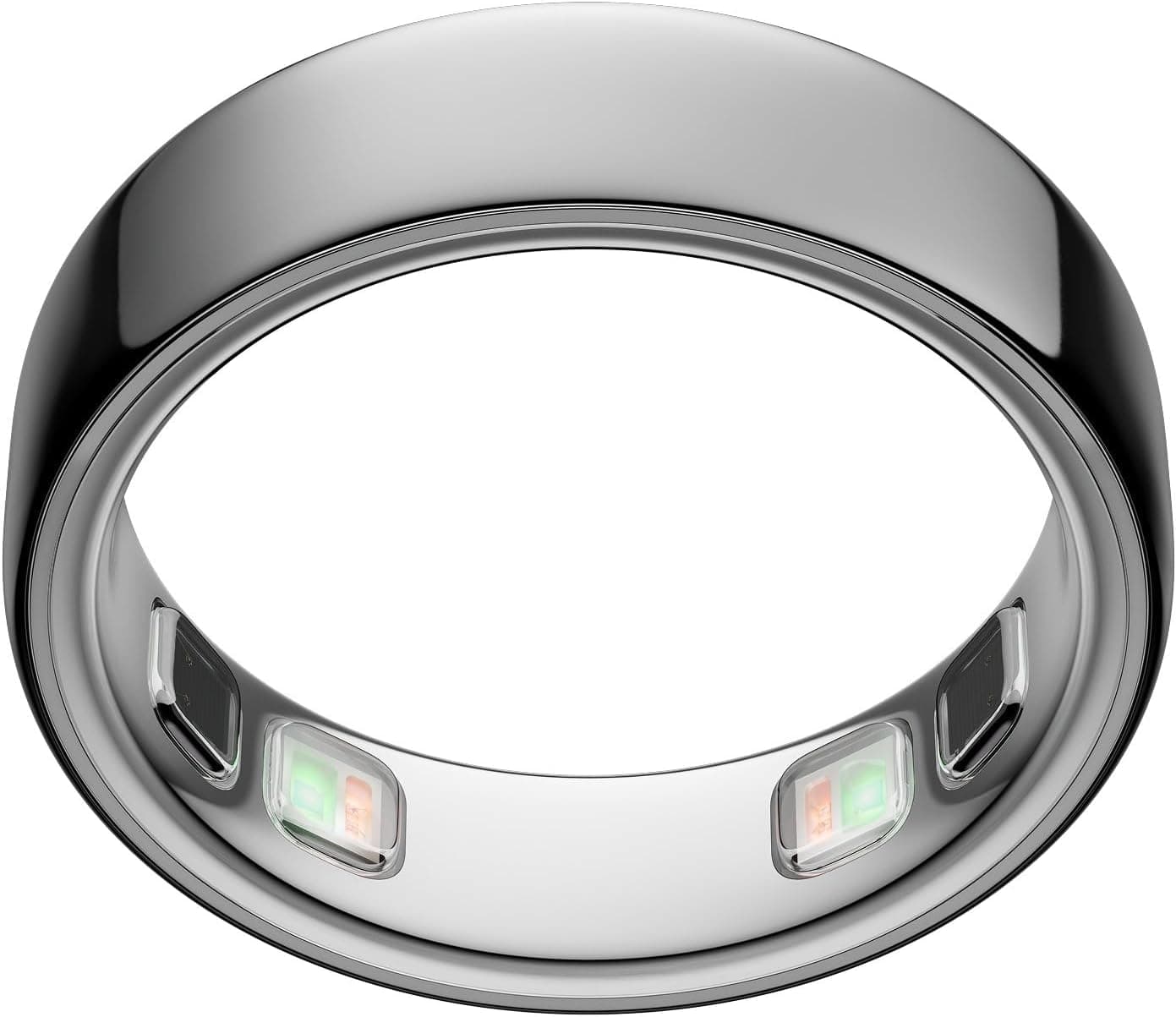
- If you want to check with data whether anything changes in your sleep, a wearable such as the Oura Ring 5 or those compared in the wearables guide can give trends. They are consumer devices, not medical ones, and their sleep stage estimates should be read as approximations.
If insomnia is persistent or affects you during the day, it is worth discussing with a healthcare professional: glasses do not replace an evaluation.
How we score this piece
Our score weighs, in this order, the accuracy of what the product promises or measures, software and subscription, battery life, comfort and value for money. Here there are no sensors, app or battery, so the weight falls on the first (what backs up what it claims) and on construction. Result: 62 out of 100.
- In its favour: it has no fees or maintenance; the listing details frame, materials and the 550 nm cutoff; and, as context for the category (not a merit of this model), there are small trials with favourable results in insomnia and bipolar mania.
- Against: the filtering figure appears as 99% and 100% on the same listing and we have not found an independent measurement; we have not found trials of this model or of a comparable dark red lens; Cochrane rates the evidence on sleep as uncertain; and the listing promises effects (jet lag, "deeper sleep", anti-fatigue) that we have not seen backed.
The listing’s unsupported promises keep us from getting close to 70; a higher score would require verifiable spectral data for the model and more solid evidence.
Pros
- •Dark red lens that, according to the listing, filters everything below 550 nm.
- •TR90 frame and polycarbonate lenses, light according to the listing.
- •No subscription, battery or software: there are no recurring costs.
Cons
- •Contradictory filtering figure in the listing itself (99% and 100%) and no independent measurement found.
- •We have not found trials of this model or of a comparable dark red lens; Cochrane rates the evidence on sleep as uncertain.
- •Alters the colour of what you see: not suitable for screen work that requires colour fidelity.
- •The listing promises effects (jet lag, deeper sleep, anti-fatigue) with no backing in the sources consulted.
Verdict
These glasses may serve as a simple trial for anyone who already looks after the rest of their night-time habits, not as a solution in themselves. They may cause discomfort (Cochrane reports headache or worse mood, infrequent, and in some cases also with non-filtering lenses). Trials with tinted glasses, several of them for night-time use, point to a possible modest benefit in people with insomnia symptoms, with small, short studies and mixed results; the Cochrane review, which includes several of them, leaves the question open. What we have not found is an independent measurement of what this model filters or trials with it, and it is not known whether it works better or worse than amber glasses.
Veredicto Final del Experto
Bloomoak Sleep Master
Someone with an orderly night-time routine who wants to try red glasses in the hour or two before bed, knowing that the evidence is limited and that the studies were short.
Light and darkness measures
Reducing ambient light at night and taking care of bedroom darkness, for example with a sleep mask, requires no glasses; we have not verified their efficacy in this review.
Skip it if…
You want to treat persistent insomnia on your own, need to see colours accurately on screen or want them against eye strain: Cochrane finds no clear differences in that case.
What we have not been able to verify
- The lens’s real transmittance curve: we only have the listing’s figures, which contradict each other (99% and 100%).
- Weight, fit, comfort in prolonged use and durability of the coating.
- Whether the glasses can be worn over prescription glasses.
- The efficacy of a dark red lens compared with an amber one.
- User opinions: we have not been able to read product reviews with sufficient reliability to summarise them, so we do not cite them.
- We have read the full text of Cochrane only in part, and we have not read the original articles by Burkhart, Knufinke, Esaki and Janku: what we say about them (including the size and duration of Janku) is what the review’s table reports.
Main sources
- Singh et al., Cochrane Database Syst Rev 2023 (abstract on PubMed), full text on PMC and Cochrane plain-language summary.
- Shechter et al., J Psychiatr Res 2018 (abstract).
- Zimmerman et al., J Int Neuropsychol Soc 2019 (abstract).
- Shechter et al., Sleep Advances 2020 (abstract).
- Henriksen et al., J Sleep Res 2020 (abstract).
- American Academy of Ophthalmology, computer use.
- Listing B0DLFKCCMH on Amazon.es (seller data).