In this article
A wake-up light replaces the abrupt sound of an alarm with a light that increases gradually over the minutes before wake-up time. The idea is simple and has some experimental backing, although less than the industry’s marketing suggests. This piece reviews the Lumie Bodyclock Shine 300: what it does exactly according to the manufacturer’s manual, what has been studied about sunrise simulation in general, what we do not know about this model and who it makes sense for.
The site has not tested the device physically. The review relies on Lumie’s official manual, the Amazon.es listing, the brand’s own press releases and published studies, and what we have not been able to check is said as such.
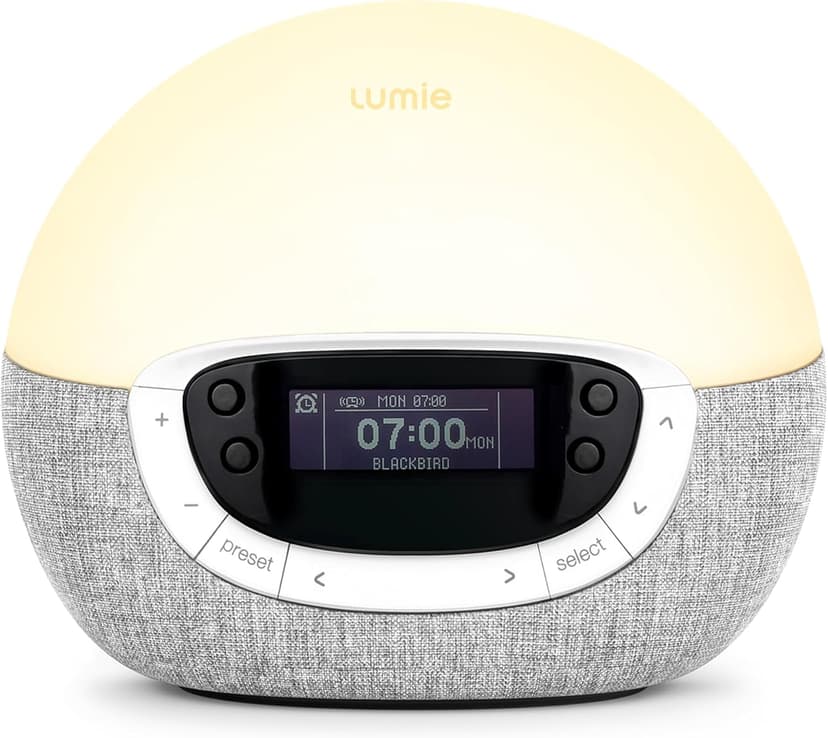
Lumie Bodyclock Shine 300
Wake-up light with sunrise and sunset of 15 to 90 minutes, FM radio and 15 sounds, no app.
What exactly the product is
The buy link on this page leads to ASIN B07HGP33CV on Amazon.es, whose title begins with "Lumie Bodyclock Shine 300 Despertador de Luz con Radio FM" (Lumie Bodyclock Shine 300 wake-up light with FM radio). Brand and model match those of this piece, and the listing is in the wake-up light category. We have not been able to read the full bullet points of the listing or confirm that the header image corresponds to the listing’s variant, so what we say about the device comes from the manufacturer’s manual, not from the listing.
On whether there is a newer model: Lumie’s homepage currently lists the Shine 300 alongside other wake-up lights (Luxe 750DAB, Glow 150, Spark 100 and a basic Sunrise Alarm model), with no successor to the Shine 300 and no launch dates indicated. For example, the Luxe 750DAB is presented as the top model, with DAB radio, a Bluetooth speaker and more than 30 sounds. The website does not say it is later than the Shine 300, and we have not been able to consult the individual listings.
What it does according to the official manual
The data in this section comes from the Shine 300 user manual published by Lumie (August 2022 version according to the file name; the manual states "subject to change without notice"). This is manufacturer data, not independent measurements.
- Sunrise: adjustable duration from 15 to 90 minutes, with a factory setting of 30. The final brightness is chosen on a scale from 1 to 20. At the end of the sunrise a sound or the radio can play.
- Sunset: also from 15 to 90 minutes, with light that fades until it goes out or to a night light of level 1 to 10. It can be accompanied by sound or radio, with volume that lowers gradually if that option is chosen.
- Sounds: 15 wake-up and sleep sounds (including tropical birds, storm, waves, crickets, ping pong and white noise) and FM radio with five presets.
- Alarm: daily or weekly mode; in weekly mode you can set a different time, or none, for each day.
- Snooze: you touch the top of the casing and the sunrise, and the sound if there is one, repeat after 9 minutes. If it is not switched off, the light and sound stop by themselves after 90 minutes.
- Night lamp: it also works as an adjustable bedside light.
- Display: it adjusts by itself to the room’s light level and drops to minimum brightness when going to sleep; a switch on the base allows turning it off completely.
- Power: power adapter included (input of 100 to 240 V, output of 15 V and 1 A). It has no battery: the manual says the clock keeps the time for 30 minutes without power and that the other settings are stored permanently.
- Warranty: three years against manufacturing defects, according to the manual.
- Connectivity: the manual describes no app, Bluetooth or wifi connection, and a third-party specifications site’s sheet does not list them either. It is operated with the buttons on the front.
One piece of data we miss: we have not found any lux figure published by Lumie for the Shine 300. The manual speaks of levels 1 to 20 without translating them to lux, and a third-party specifications database has that field empty. It is relevant because the studies we will see below describe light with values in lux (50, 250), and without that figure we cannot claim that this model reaches what was used in them.
We have not seen the composition of the light in the manual either. A 2018 Lumie press release about the launch, distributed through Cambridge Network, speaks of a combination of warm white, orange and red LEDs.
Class I medical device: what the manufacturer says exactly
The Shine 300 manual includes, in its list of symbols and in the technical description, the formula "European Declaration of Conformity: Medical Device Class I" together with the medical device symbol and the UK conformity mark. The 2018 press release describes it as a "Class I Medical Device". So yes: according to the manufacturer itself, it is a Class I medical device.
What we have not been able to verify is the specific medical purpose that Lumie declares for this model; the manual we read does not state it as such. Nor have we checked what that class implies in practice or who has assessed it. It is best not to read "Class I" as proof of efficacy: it indicates a regulatory framework, not that the effects attributed to it are demonstrated. The manual’s introduction states that waking with light improves mood, energy and productivity, and that it helps people with seasonal affective disorder (SAD) and "winter blues". These are manufacturer claims, backed by references we have not read; below we contrast what we have been able to consult.
The manual also includes precautions: indoor use, do not cover the device because it heats up with the light on, do not use it with unconscious or incapacitated people and only adults or supervised minors should use it. And it says that research shows sunrise simulation is very safe and without serious adverse effects, with an invitation to consult a doctor if in doubt. It is a manufacturer statement that we have not checked.
What has been studied: sunrise simulation in general
None of the following studies used the Shine 300 or, as far as we have been able to check, a Lumie device. They are results about the category, with different devices and light levels.
Sleep inertia: difficulty waking up
Sleep inertia is that clumsiness and drowsiness of the first minutes after waking. There are three small studies that have explored it with sunrise light, all in people who report difficulty waking up: two of them with 8 and 16 participants, and the third with no visible n in the abstract.
- Van de Werken and colleagues (2010): according to the abstract on PubMed, 16 healthy adults with difficulty waking up spent a control night and another with artificial dawn during the last 30 minutes of sleep, in random order. With artificial dawn they reported less sleepiness and more activation, and skin temperature dropped faster after waking. There were no significant effects on task performance, core temperature or cortisol. The authors suggest that the effect is related to light sleep and to the faster drop in skin temperature.
- Giménez and colleagues (2010): according to the abstract on PubMed, a study at home with an alarm clock that simulates sunrise compared 0, 50 and 250 lux in a first study and 0 lux against an intensity chosen by the participant in a second, with two weeks per condition. Artificial dawn significantly reduced complaints of sleep inertia in both studies, but did not significantly shift the dim light melatonin onset (DLMO) at two weeks. The abstract does not give the number of participants, and the authors conclude that mechanisms other than a shift in the circadian rhythm are needed to explain the benefit. It belongs to the same research group as the previous one, so we do not treat them as independent evidence of each other.
- Thompson and colleagues (2014): according to the abstract on PubMed, eight people with difficulty waking up did a control trial and another with sunrise simulation in the 30 minutes beforehand, in random order. With the sunrise, perceived sleep quality was about 1.16 points higher, self-reported alertness was higher and reaction time was faster (0.81 s versus 0.86 s). A cycling time trial was 4.7% faster, but without statistical significance (p = 0.07). With eight participants, the result does not allow generalisation.
The pattern is consistent (a subjective feeling of less inertia), but the objective results are mixed: in one study task performance did not improve and in another some measures did. The samples are small and the population is selected for having difficulty waking up. This does not allow the effect to be extrapolated to just anyone or to say how long it lasts.
A counterpoint: in a 2024 lab study by Campanella and colleagues in Clocks & Sleep with 29 adults who took more than 30 minutes to wake up, a "smart" system that combined light up to 300 lux, a temperature rise, blinds and sounds had little overall impact compared with a traditional alarm on performance, sleepiness and mood, and sleep efficiency was somewhat lower on nights with the system (83.97% versus 86.65%); the authors say it is unclear whether this reflects worse objective sleep and suggest it may have been because participants woke earlier than scheduled. That sleep efficiency was not measured with polysomnography but with a piezoelectric mattress sensor (EarlySense Live), which is less precise, and the authors propose that future studies measure sleep with polysomnography. In addition, the split by light duration was an additional analysis, motivated by the fact that activation time varied, not part of the original design. It is not a wake-up light but a multimodal system, funded by a company in the sector and with limitations that the authors detail; we cite it so as not to present the literature as unanimous.
Seasonal affective disorder
Here the population is different: people with SAD, not healthy people. This evidence, moreover, comes from a single research group.
- Avery and colleagues (2001): according to the abstract on PubMed, 95 unmedicated adults with SAD were split into three groups for six weeks: bright light (10,000 lux, 30 minutes), sunrise simulation (1.5 hours, up to 250 lux) and placebo (dim red light, 0.5 lux). Sunrise produced more remission and more response than placebo, bright light did not differ significantly from placebo and sunrise also outperformed bright light in remission and response. It is a single trial, and the 1.5-hour duration matches the Shine 300’s maximum of 90 minutes, but that does not mean the device reproduces that study, because we do not know its lux.
- Golden and colleagues (2005): according to the abstract of this review with meta-analysis on PubMed, sunrise simulation was associated with a significant reduction in the severity of depression in SAD in five studies, with an effect size of 0.73 (95% confidence interval: 0.37 to 1.08), and the authors call it "efficacious". We have read the full text: its Table 1 includes the 2001 Avery trial (as well as Avery 1992, 1993, 1994 and 1998), and the authors note that "all of the studies of dawn simulation in our meta-analysis came from a single research group" and that it would be especially important for other groups to confirm the results. They are therefore not independent evidence from the 2001 trial, and confirmation from other groups is lacking.
What this lets us say is limited: in people with SAD, sunrise simulation has shown benefit in trials from a single research group, without confirmation from others that we have found, and that is why the manufacturer mentions this condition. It does not let us say that the Shine 300 treats SAD or that it helps anyone with low mood in winter: SAD is a clinical diagnosis and its treatment is for a healthcare professional. Anyone who suspects they have it should discuss it before relying on a lamp.
Sunset
The manual states that the progressive sunset promotes melatonin production and cites a reference in Sleep and Biological Rhythms (2016). We have not read it and have not found other studies on artificial sunsets, so we do not present that feature as backed. What can be said with the manual in hand is the practical side: it lowers the light gradually and can be accompanied by white noise or radio with a progressive switch-off.
What it costs to maintain and what it lacks
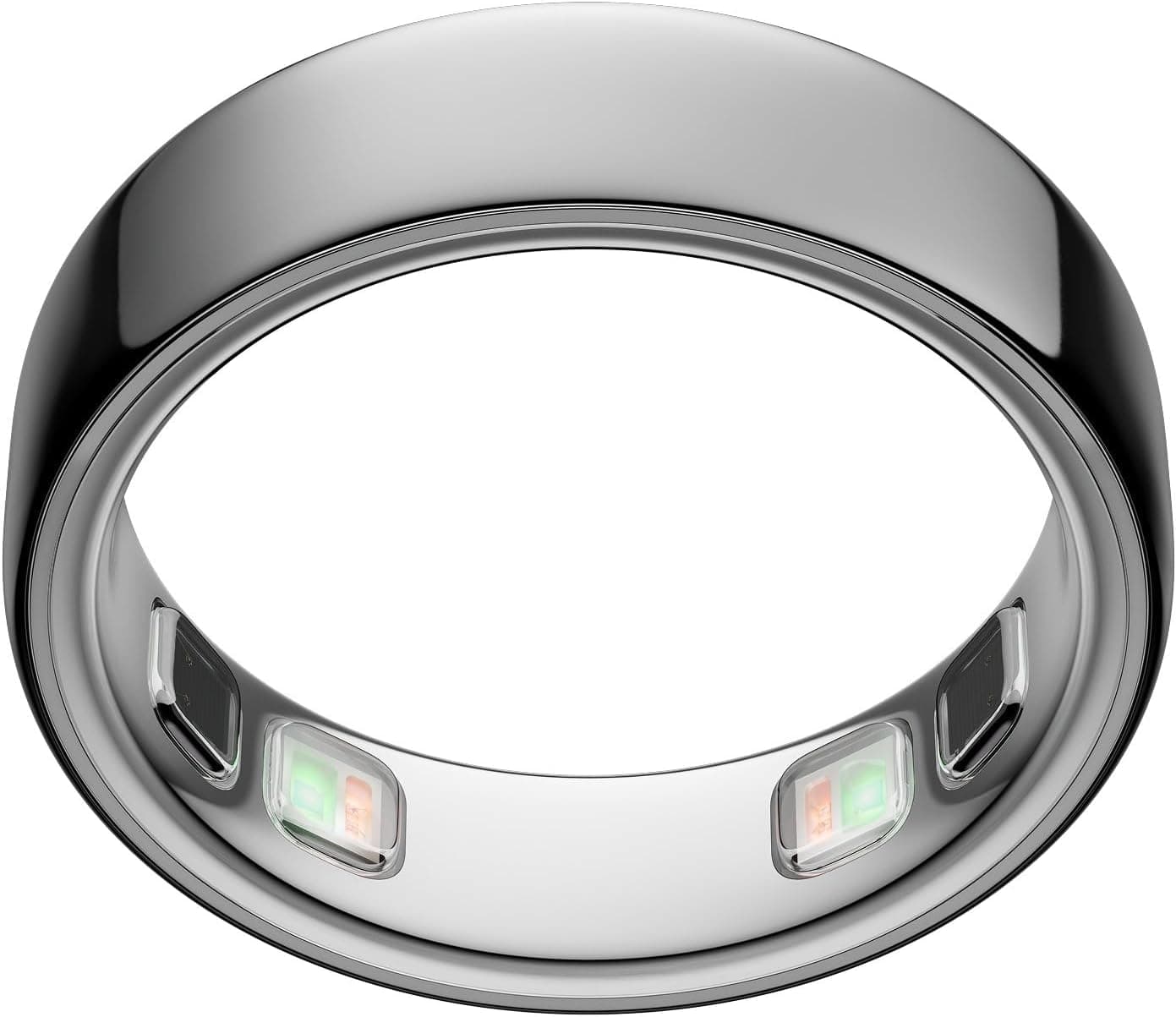
- Software: none to manage. There is no app, so there is no sleep data either. If you want to measure whether anything changes, you need another device: an Oura Ring 5 or one of those compared in the wearables guide can show trends, being consumer devices and not medical ones.
- Consumables: we have not found any. The manual says the LEDs typically last many years and that, if one fails, you have to contact Lumie rather than replace them yourself.
- Power cut: with no battery, the time is kept for 30 minutes, according to the manual. If the power goes out at night, the alarm will not sound.
- Maintenance: cleaning with a dry or slightly damp cloth with the device unplugged.
Practical use and limits
These notes are deductions from the manual, not test results:
- Shared bedroom: the light is chosen on a level from 1 to 20 and the alarm can be programmed only for the days you want (weekly mode). If you live with someone on a different schedule, the light may affect that person. Our deduction.
- Little natural light: in winter, with late sunrises, the lamp anticipates the light. The Avery study was done in SAD; in people without SAD there are only studies on sleep inertia, not on mood.
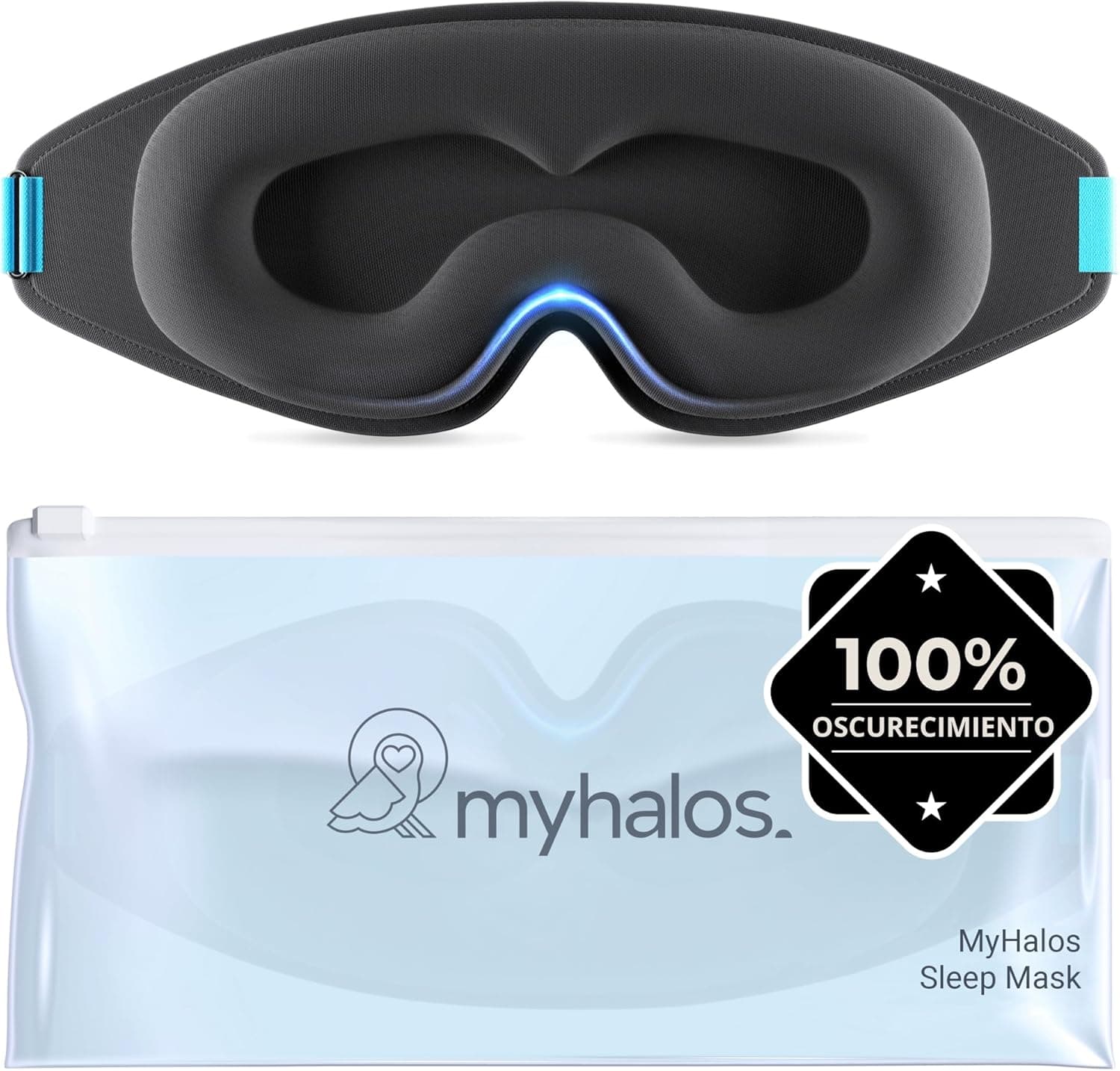
- If you already use translucent blinds or sleep with a mask: the lamp’s effect will depend on the light reaching your closed eyes. A sleep mask such as the MyHalos covers exactly that, and both goals clash, so you would have to choose which to use in the morning. We have not seen studies on combining them.
- Watch out for snooze: according to the manual, it is postponed by touching the top of the casing. We have not been able to verify whether it is easy to trigger by accident; we have no sources to comment on its sensitivity.
- Interface: configuration is done with buttons and on-screen menus. Whether that is comfortable or clumsy is a judgement we cannot make without using it; we will only say that there are many settings (alarm type, duration, brightness, sound, night light), which suggests a learning period.
- User opinions: we have not been able to read reviews or forum threads with sufficient reliability to summarise them, so we do not summarise them.
Alternatives and complements
The Shine 300 acts at wake-up time. Other products work at other times of the day:
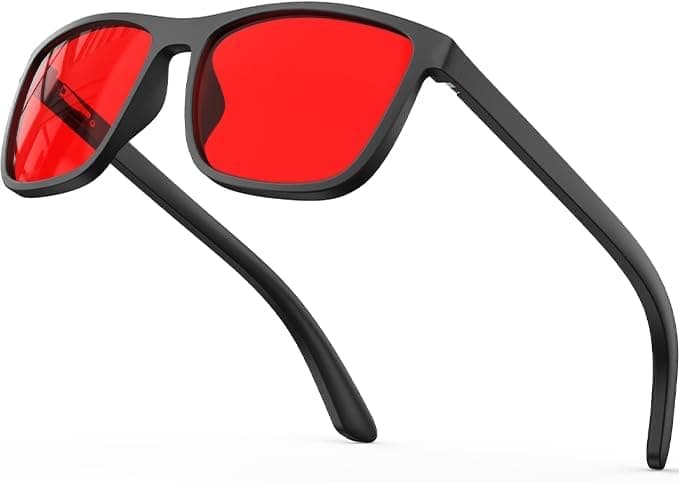
- At night, blue light blocking glasses try to reduce short-wavelength light in the hours before sleep; the evidence on them is limited and mixed, and is in its own piece.
- If the problem is light coming in while you sleep, a sleep mask acts at another point of the day; its evidence is of a different kind and is in its review.
- Within the brand itself there are other models; we have not reviewed them, and the practical difference between them we have not been able to assess.
- Beyond Lumie, there are other wake-up lights from other brands; we have not compared them here.
- Opening the blind on waking is an option without a device that, in seasons with natural light at that hour, pursues something similar; we have not verified its efficacy compared with the lamp.
How we score this piece
Our score weighs, in this order, the accuracy of what the product promises or measures, software and subscription, battery life, comfort and value for money. A wake-up light measures nothing, so the score depends mainly on what backs up what it promises and on how much verifiable information the manufacturer gives. Result: 66 out of 100.
- In its favour: the official documentation is detailed (durations, brightness scale, sounds, radio with presets, weekly alarm and a three-year warranty) and the manual is clear on precautions and operation. Having no app or sensors is normal in a basic wake-up light, not a merit of this model.
- Against: there is no published lux figure, which is the key data point for knowing whether it resembles the light in the studies; there are no studies with this model; objective results on sleep inertia are mixed and with samples, in the two studies whose abstract gives the n, of 8 and 16 people, and a recent lab study with a multimodal system found no clear differences; there is no backup battery; and we have not been able to assess comfort or durability.
It stands at 66 because what weighs most (what light it emits and what backs up what it promises) is unverified for this model: there are no published lux and no studies with it. It sits in the middle range thanks to detailed manufacturer documentation and complete features, and does not rise further because the category’s evidence is not attributable to the model.
Pros
- •Adjustable sunrise and sunset from 15 to 90 minutes, with brightness in 20 levels, according to the official manual.
- •Detailed manufacturer documentation: sounds, radio with five presets, weekly alarm and a three-year warranty.
Cons
- •Lumie does not publish, as far as we have found, the brightness in lux, so it cannot be compared with the light in the studies.
- •There are no trials with this model; the category’s evidence comes from small studies with mixed objective results.
- •No backup battery: the time is kept for only 30 minutes without power.
- •Configuration by buttons and menus; we have not been able to assess its real comfort.
Verdict
The Lumie Bodyclock Shine 300 is a wake-up light with clear documentation and a broad set of features according to the manual: adjustable sunrise and sunset, sounds, radio and a weekly alarm. For anyone who struggles to wake up and wants to swap the sound alarm for a progressive light, it makes sense to try it; the category’s evidence points to a subjective feeling of less sleep inertia in people with that problem, with no guarantee that it will repeat in just anyone or with this particular model. It is not a treatment: if you suspect a seasonal affective disorder or a persistent sleep problem, the right step is to consult a healthcare professional.
Veredicto Final del Experto
Lumie Bodyclock Shine 300
Someone who has difficulty waking up and wants a gradual sunrise on the nightstand with sounds or radio, with no app or data, and understands that the evidence comes from small studies.
Other wake-up light models
Lumie has other models that we have not reviewed; it is worth checking its current catalogue before deciding.
Skip it if…
You expect to treat insomnia or seasonal affective disorder on your own, need a published lux figure or want a connected alarm clock with an app.
What we have not been able to verify
- The Shine 300’s real brightness in lux and its spectrum: we have not found manufacturer data.
- The full bullet points of the Amazon.es listing and whether the header image corresponds to the listing’s variant.
- Whether there is a model later than the Shine 300: Lumie’s homepage does not indicate any, but we have not been able to consult the individual listings.
- The specific medical purpose declared by Lumie and the scope of Class I.
- The references cited by the manual (Acta Psychiatr Scand 1993, J Affect Disord 2015, Sleep Biol Rhythms 2016): we have not read them.
- User opinions, comfort, snooze sensitivity and durability.
- Full texts: Golden 2005 and Campanella 2024 we have read in full text; Van de Werken 2010, Giménez 2010, Thompson 2014 and Avery 2001 only in abstract.
Main sources
- Lumie Bodyclock Shine 300 user manual (Lumie), read in full in its English version.
- Shine 300 launch press release (Cambridge Network, 2018).
- Van de Werken et al., J Sleep Res 2010 (abstract).
- Giménez et al., Chronobiol Int 2010 (abstract).
- Thompson et al., Eur J Appl Physiol 2014 (abstract).
- Avery et al., 2001 (abstract).
- Golden et al., Am J Psychiatry 2005 (abstract) and full text.
- Campanella et al., Clocks & Sleep 2024.
- Listing B07HGP33CV on Amazon.es (title and category).