In this article
This review brings together the specifications on Coros's official product page, reviews from specialist media and what can be checked in the scientific literature. It is not based on hands-on testing of the product. It is worth reading with one thing clear from the start: the Pace 4 is a consumer sports watch, not a medical device, and its recovery metrics are useful for spotting your own trends, not for diagnosing anything.
Notice for buyers: the Pace 4 is no longer the newest model in the range. Coros launched it in late 2025 (November, according to its own timeline for the Pace series and the reviews from that time), and the Pace 4 Pro arrived on 22 September 2026, according to the5krunner and Active. The official Pace 4 Pro page confirms a 1.47-inch AMOLED display, a titanium bezel, a sapphire crystal and up to 60 hours of GPS in high mode. What changes is detailed further down. If budget is not the deciding factor, it is worth comparing the two before buying.
Coros Pace 4
AMOLED GPS watch of around 32 g with up to 19 days of daily battery life, plus built-in HRV and sleep tracking.
What the Coros Pace 4 is and what it offers, according to the manufacturer
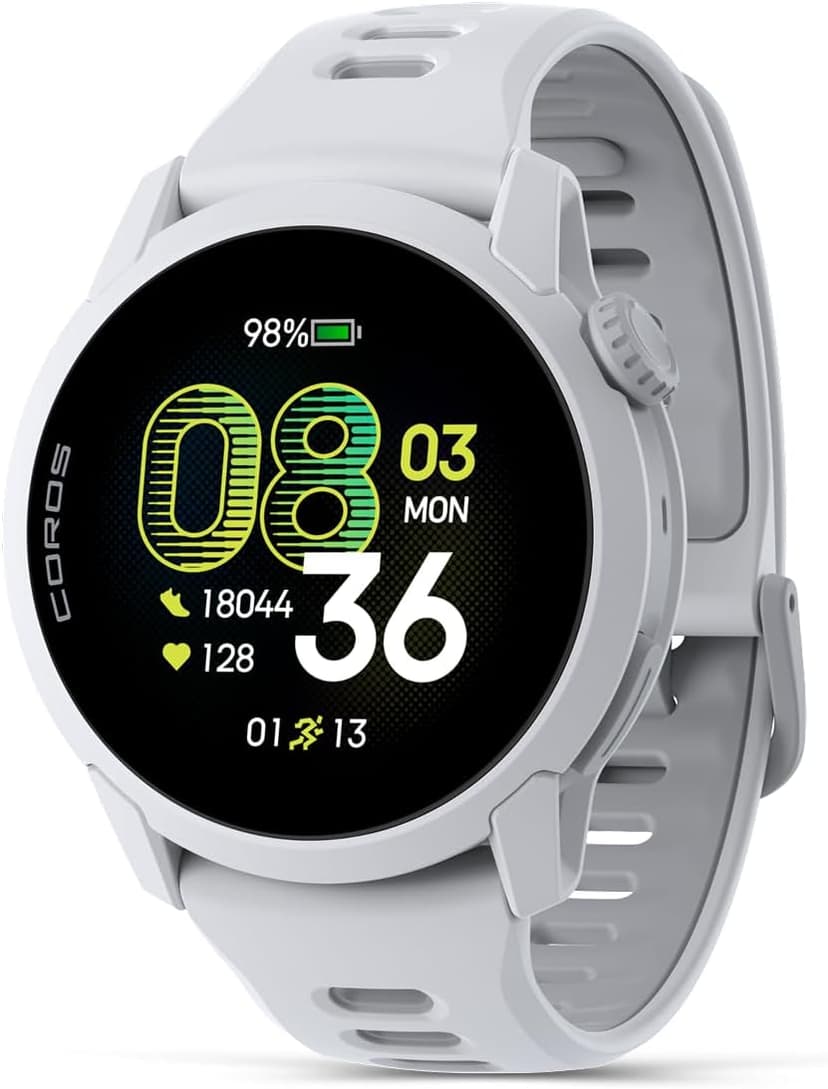
The official Coros page presents it as an ultralight GPS running watch: 32 g with the nylon strap and 40 g with the silicone one, 11.8 mm thick, with a 1.2-inch AMOLED touchscreen. Coros states that its resolution is 164% higher than the Pace 3's. It includes a redesigned optical heart rate sensor, with larger LEDs and a more stable fit, and supports both the All-Systems and dual-frequency satellite modes. It adds a microphone for voice notes, a digital touch dial and an action button.
On the wellness side, the page itself lists HRV tracking within its recovery hub and sleep stage logging. Training features include the race predictor, personalised marathon plans and a virtual pacer. It charges through a USB-C adapter, and the cable is not included in the box, according to the same page.
The official page mentions neither ECG nor a skin temperature sensor. According to the spec sheet at the5krunner, the Pace 4 has a pulse oximeter (SpO2), barometric altimeter, accelerometer, gyroscope, compass and microphone, and has no ECG; that same site says ECG debuts in the Pace 4 Pro. Coros's product page describes only a heart rate sensor and does not mention SpO2; its silence does not prove the sensor is missing, but it does not confirm it either, so that detail is attributed to third parties and is best confirmed on the seller's listing before buying. An Active review mentions SpO2 and ECG in the Pace 4's sensor, but it contradicts both Coros's page and the5krunner's, and we have found no support for the ECG, so we do not take it as true.
Battery life: the strong point
Battery life is what comes up most in reviews. According to the official Coros page, that means up to 41 hours of GPS in high mode (All Systems) and up to 19 days of daily use. Active also reports about 6 days of daily use and 30 hours of GPS with the always-on display, and the5krunner adds 31 hours in maximum dual-frequency mode (24 with the always-on display) and a full charge in under two hours. These are manufacturer or spec-sheet figures, with the caveat that Coros itself makes on its website: results vary with use and settings.
Mantripping reports the case of a tester (Mountaineer Journey) who logged more than 35 hours of real GPS use across more than 50 trail and hiking outings with the always-on display and multi-band GPS, below the official 41 hours, which is to be expected in those conditions. For anyone who wants to track sleep and HRV, battery life matters for a practical reason: if you do not have to take the watch off every night to charge it, overnight records are more continuous. With a stated 19 days, the watch needs charging only occasionally, although anyone who turns on the always-on display should expect much shorter battery life, around six days.
What it measures and how reliably
Heart rate during exercise
Coros presents the redesigned sensor as an improvement over earlier generations, with fewer signal spikes and dropouts. That is a manufacturer claim. In the sources we have been able to read in full, there is no controlled comparison of the Pace 4 against a chest strap, so there is no verifiable accuracy percentage to give.
What we can say is what the general evidence shows. A systematic review published in the Journal of Medical Internet Research (2022), covering 65 articles on wrist-worn bands and watches, could not pool results because of the heterogeneity of the studies. It found a mean percentage error below 10% for heart rate with the Apple Watch (in only two studies) and errors above 30% for energy expenditure across all brands. The cautious reading is twofold: wrist heart rate is usually reasonable, but it depends on the device, the type of effort and the fit, and the calories any watch calculates should be treated as a rough estimate. That review includes devices that predate the Pace 4, so it does not validate this particular model.
In practice, anyone who needs precise data in short, very intense intervals usually turns to a chest strap. According to the5krunner's spec sheet, the watch has Bluetooth but not ANT+, which is worth checking if you already own external sensors.
HRV, sleep and recovery
The Pace 4 records HRV and sleep stages, and its app groups sleep, HRV and resting heart rate into a recovery hub, according to Mantripping, whose author thinks the Coros app is easier to navigate than Garmin Connect for people who are not data-obsessed athletes (a subjective judgement, with no evidence to back it). Active adds that EvoLab, Coros's analysis system, offers running fitness tests, training load recommendations and recovery times.
Something important is missing: we have not found an independent validation of the Pace 4's sleep or HRV against polysomnography or ECG. Without that support, the sleep stages the watch shows are a guide, not a clinical measurement, and Coros does not sell it as a medical device.
Is HRV useful for deciding how much to train? The evidence is nuanced. A 2021 meta-analysis in the Journal of Science and Medicine in Sport pooled 8 studies with 198 participants and compared HRV-guided training with predefined plans: the effect on performance was small and not significant (g = 0.079), with a medium-sized benefit in submaximal physiological parameters and more positive "responders". In other words, measuring HRV may help adjust training load, but there is no guarantee that it improves performance by itself.
What it does not measure
It is best not to attribute functions to it that it does not have. Neither Coros's page nor the sources consulted give it a skin temperature sensor, so the nightly temperature readings that some rings, such as the Oura Ring 4, do offer are not available on this watch. It has no ECG either. And any change in the recovery data the watch shows is a cue to review your habits, not a marker of illness or inflammation: if something worries you, talk to a healthcare professional.
Pace 4 vs Pace 4 Pro
The comparison with the higher-end version is the one that carries the most weight today. The Pace 4 data comes from Coros's page and from Mantripping (storage and navigation), and the Pro's from its official page and the5krunner.
| Aspect | Pace 4 | Pace 4 Pro | | :- | :- | :- | | Display | 1.2-inch AMOLED | 1.47-inch AMOLED, up to 3,500 nits | | Bezel and crystal | Polymer in the Standard version (variants exist, e.g. aluminium according to Active) | TC4 titanium and sapphire crystal | | Weight with nylon strap | 32 g | 43 g | | GPS, high mode | 41 h | 60 h | | Storage | 4 GB | 32 GB | | ECG | No | Yes (according to the5krunner) | | Maps | Breadcrumb navigation | Offline maps with navigation |
The Pro is larger and heavier. It is worth it if the display, the maps or the ECG matter to you. The Pace 4 keeps one clear advantage: weight (11 g less with the nylon strap). For running and sleeping with it, the practical difference is small.
Software, subscription and cost of use
Neither Coros's page nor the reviews we have been able to read mention a monthly fee for the recovery, HRV or sleep features, and the page links to the Coros app and training plans with no subscription conditions. It is a difference in model compared with the Whoop 5.0, whose review revolves around the membership: with Whoop you pay for access to the data, and with Coros you pay for the watch. That said, it is worth confirming the current status of the features in the app before buying, because brands change their policies.
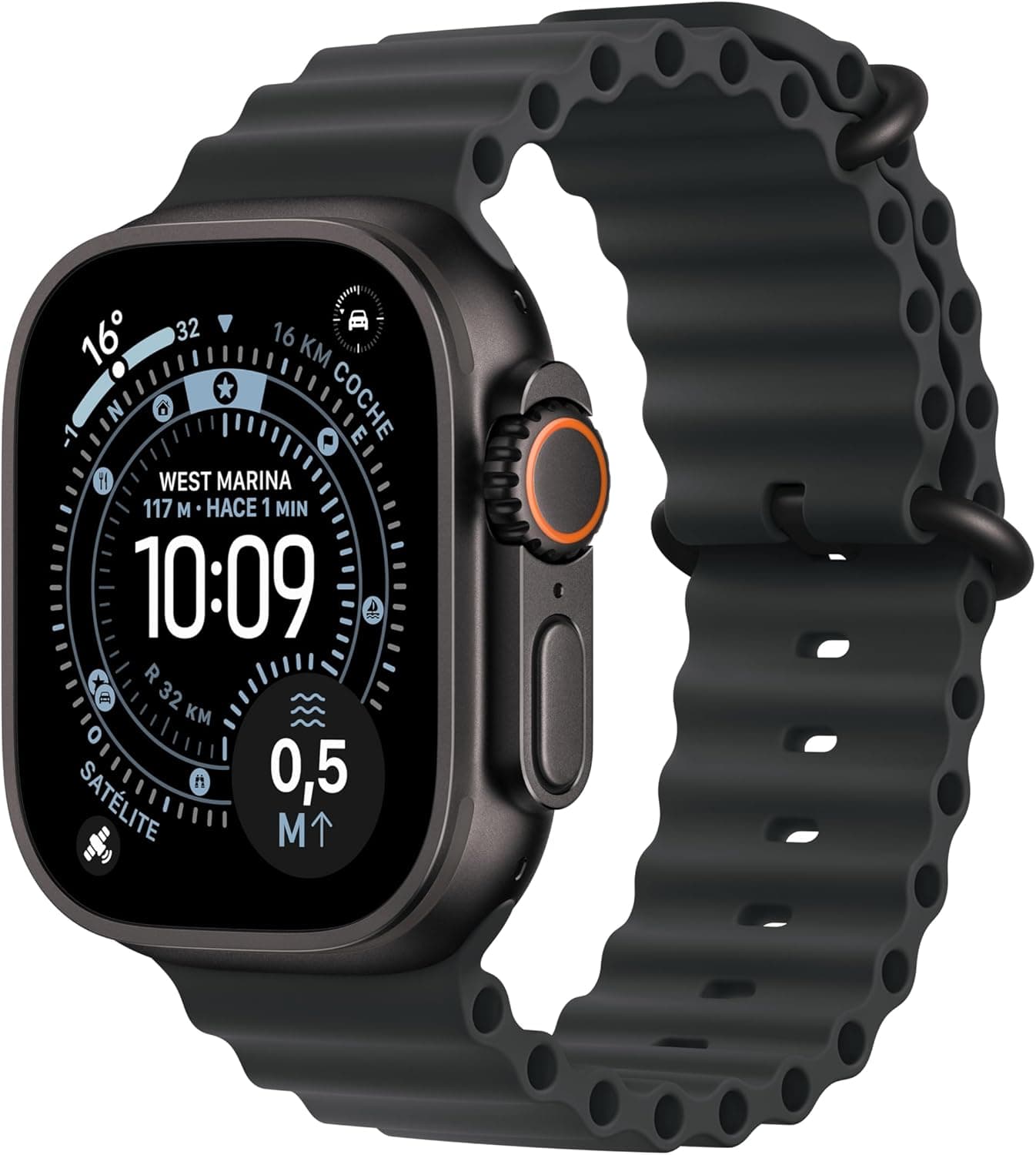
The platform's limits lie in what it does not do. Mantripping notes that the watch has 4 GB for MP3 files but does not support Spotify or Apple Music, and that navigation is limited to breadcrumb routes, with no full offline mapping. Users who want to reply to messages, pay with their watch or install third-party apps are better served by an Apple Watch Ultra 3, a general-purpose smartwatch with an app ecosystem that the Pace 4 does not aim for.
Alternatives depending on what you are after
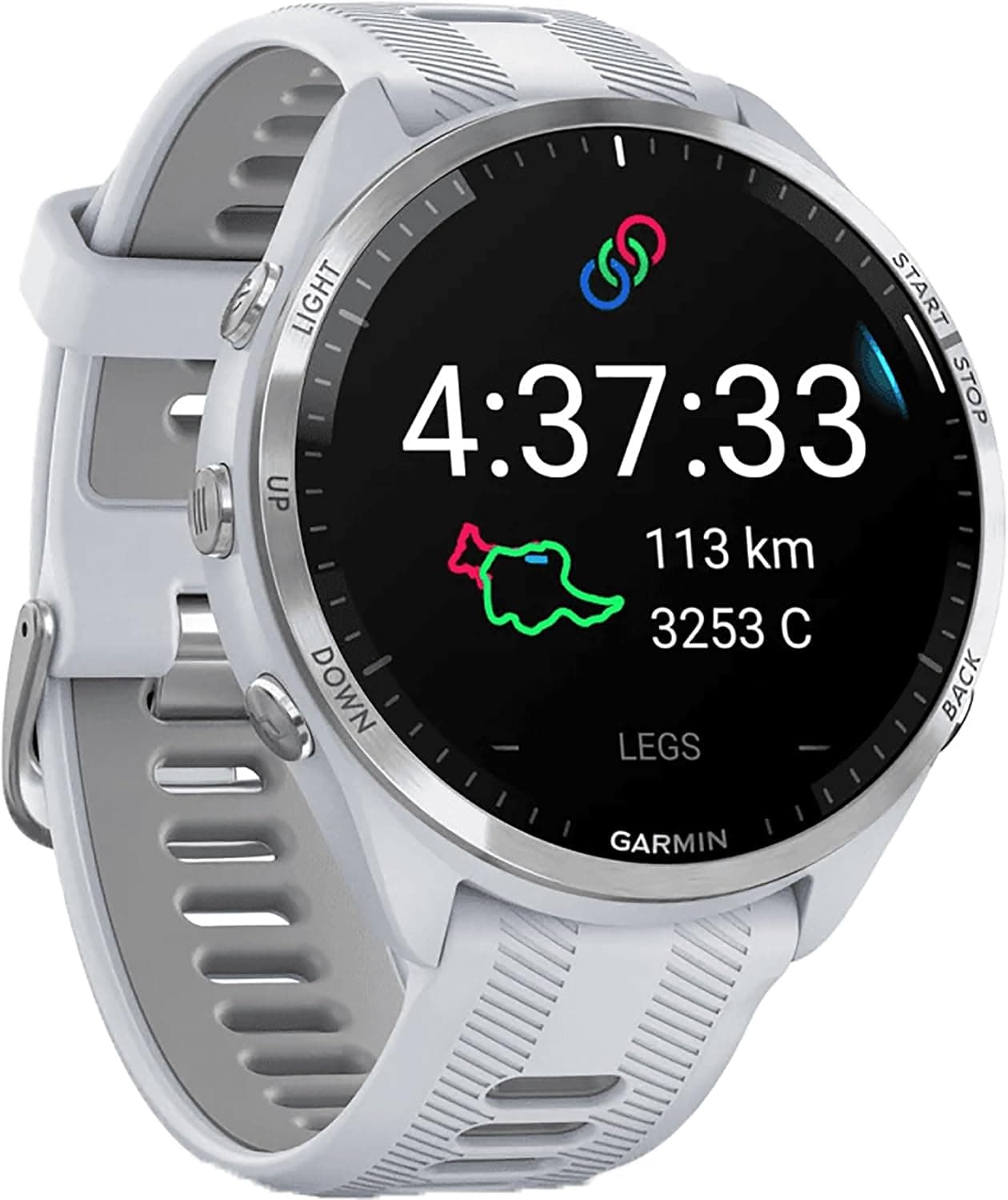
- More training analysis and ecosystem. The Garmin Forerunner 965 sits at a different level of price and features, and is the alternative to consider if the watch is your main training tool and the budget allows it.
- Sleep and temperature without a watch on your wrist. The Oura Ring 4 measures temperature and is worn on the finger, but it requires a subscription and does not record exercise the way a GPS watch does.
- Recovery and strain by membership. The Whoop 5.0 is a screenless band focused on training load and recovery, with a fee.
- More smart features. The Apple Watch Ultra 3, with a bigger budget and the convenience of a full smartwatch.
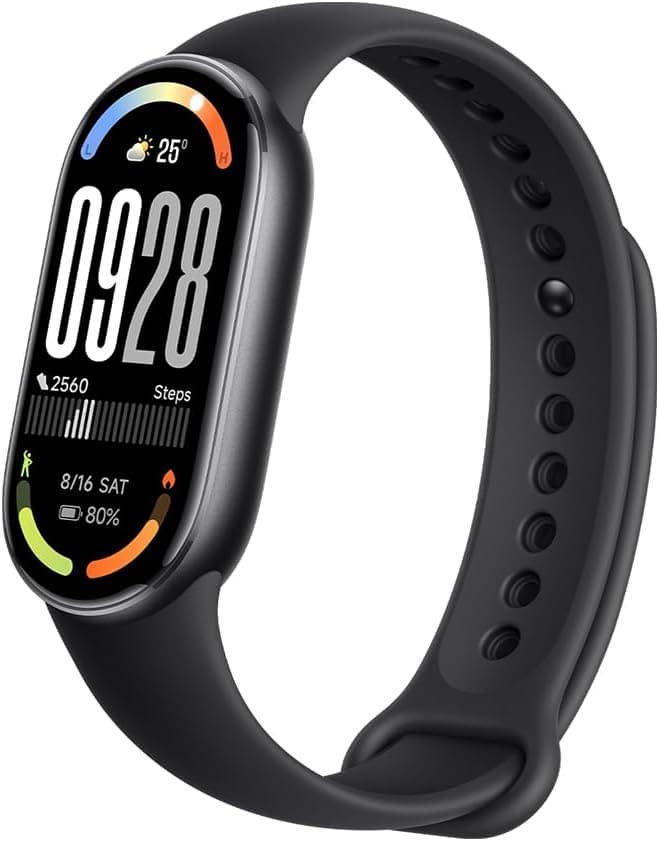
- Cheap entry point. The Xiaomi Smart Band 10 lets you start tracking activity and sleep with a smaller outlay, in exchange for more basic sports features.
Pros, cons and verdict
Pros
- •Stated battery life of up to 19 days of daily use and 41 hours of GPS, at only 32 g with the nylon strap.
- •Records HRV, sleep stages and resting heart rate, with a recovery and training app and no fee mentioned on the product page.
- •Dual-frequency GPS and a 1.2-inch AMOLED touchscreen.
- •Sports-focused ecosystem, with marathon plans and a race predictor.
Cons
- •No independent validation found for sleep or HRV; wrist heart rate accuracy varies with effort.
- •No ECG or skin temperature, and SpO2 confirmed only by third-party sources.
- •No ANT+, no payments or third-party apps, and no full offline mapping according to reviews.
- •No longer the newest model: the Pace 4 Pro offers a bigger display, maps and ECG.
The score of 80 out of 100 reflects a watch that is very well executed on battery and weight, but with limited evidence of accuracy in what matters most to a reader interested in recovery. Our score weighs, in this order, the accuracy of what it measures, software and subscription, battery life and comfort. On accuracy it lands in the middle: there is no independent validation of this model's heart rate, sleep or HRV, and it lacks sensors that other devices do have. On software and subscription it scores high, because we have not found a fee. On battery life and comfort it stands out: the stated figures (up to 19 days and 32 g with the nylon strap) are notable for an AMOLED watch with GPS. Compared with the Pace 4 Pro, the Pace 4 offers a smaller display, less GPS battery life and no ECG, in exchange for 11 g less with the nylon strap; if price weighs in your decision, compare the two on Amazon.es on the day you buy, because we do not give a price figure here that we could not verify.
Veredicto Final del Experto
Coros Pace 4
Runner or endurance athlete who wants a light watch with weeks of battery, HRV and sleep tracking, without paying a fee to see their data.
Coros Pace 4 Pro
If you need a large display, offline maps, titanium or ECG and accept more weight.
Skip it if…
You expect a smartwatch with apps and payments, or you want skin temperature and ECG to track your recovery.