In this article
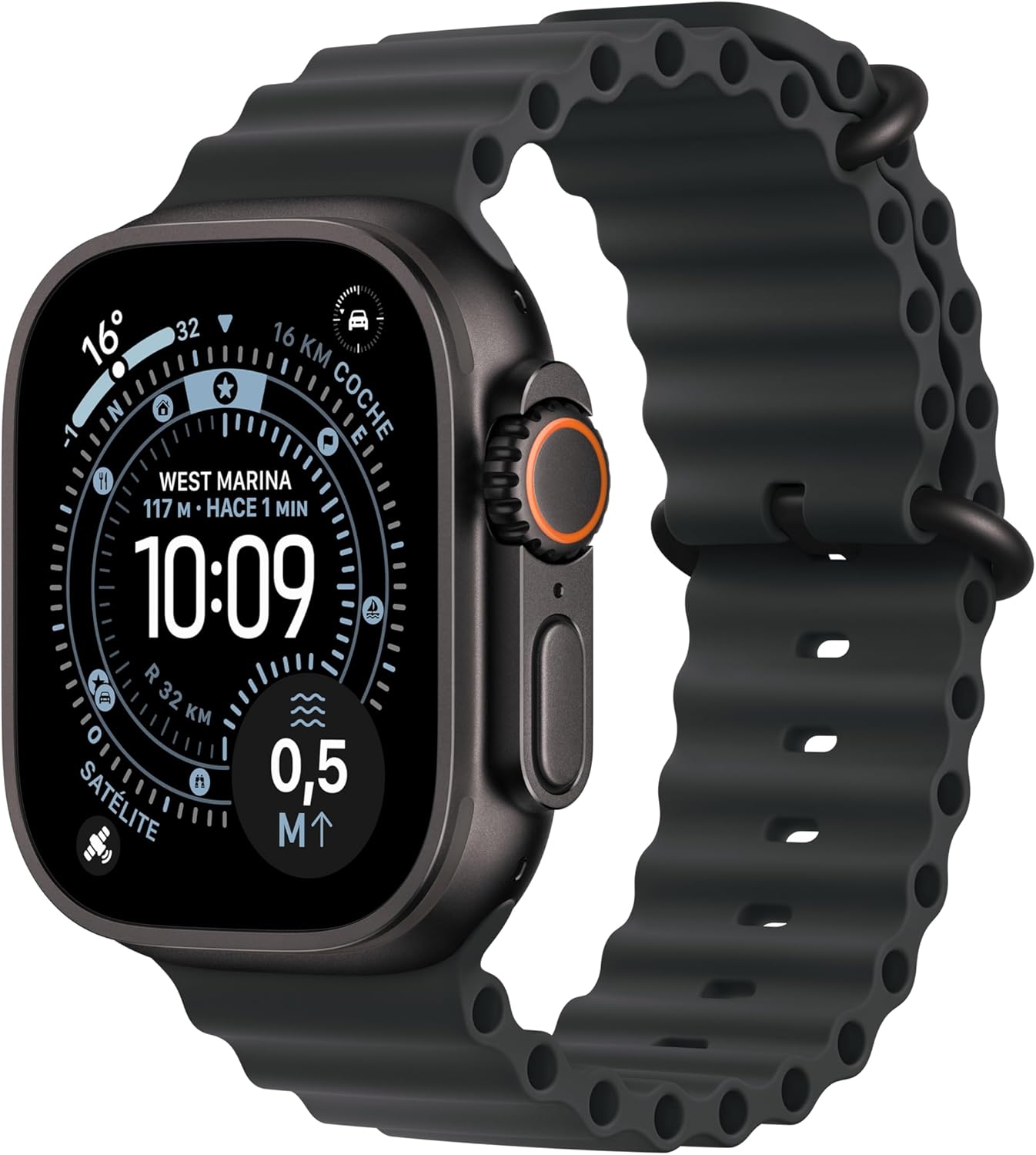
The Apple Watch Ultra 3 is Apple's most complete watch for outdoor sport: a 49 mm titanium case, a display of up to 3,000 nits, dual-frequency GPS, ECG, hypertension and sleep apnea alerts, and cellular connectivity. Its case rests on the ecosystem and GPS reliability; its limit is the battery, which is measured in days, not weeks.
This review brings together the specifications published by Apple, its support pages, tests by specialist media and published studies, and makes clear in each case where each piece of data comes from. It is not based on hands-on testing of the product. It is a consumer device: apart from the specific features that Apple and regulators indicate, it is not a medical device, and its metrics are useful for spotting your own trends, not for diagnosing.
Notice for buyers: the Ultra 3 is no longer the latest generation. According to the specialist press, Apple presented the Apple Watch Ultra 4 on 9 September 2026 and put it on sale on 18 September (Macerkopf). It keeps the same outer dimensions, according to A Blog to Watch, which cites the S11 chip, a battery of up to 50 hours with a redesigned health sensor system and much more frequent heart rate variability (HRV) tracking. Applesfera adds a readiness score (Readiness) as a new feature. We have not been able to check whether the Ultra 3 will receive those features through a software update or how long it will stay on sale: Apple Spain’s Apple Watch page now shows only the Ultra 4 as the Ultra model, without the Ultra 3, so its availability depends on retailers. If you see the Ultra 3 on sale, compare it with the Ultra 4 before deciding.
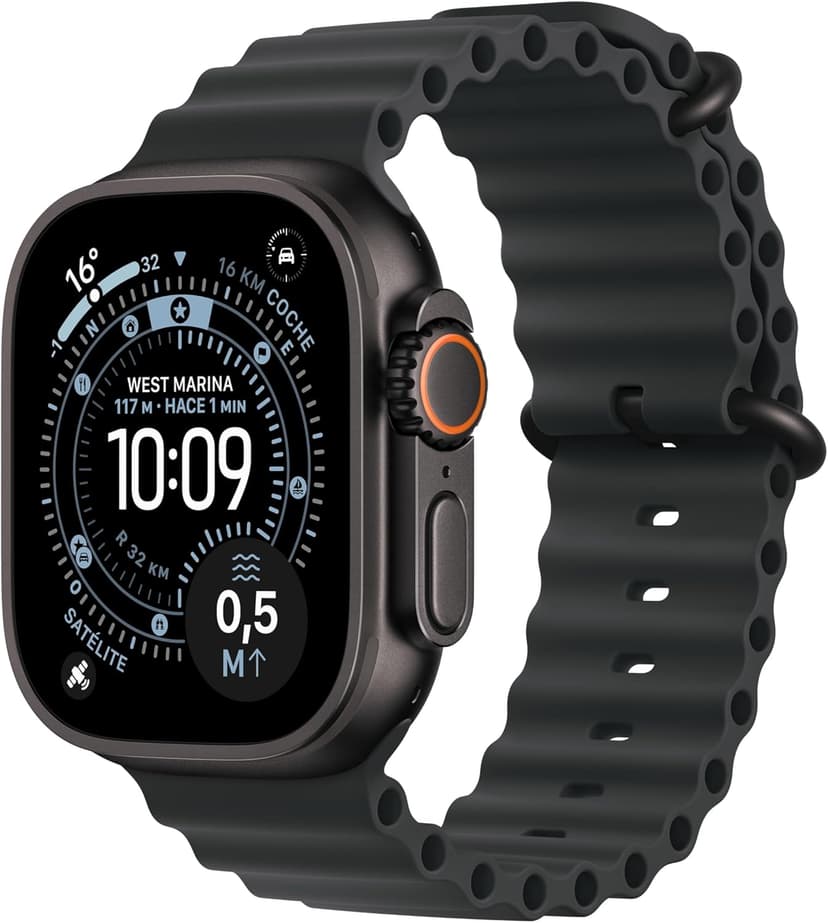
Apple Watch Ultra 3
49 mm titanium watch with dual-frequency GPS, ECG, hypertension and apnea alerts, and up to 42 hours of battery.
Pros
- •Very accurate GPS in one specialist outlet test (exactly 2.0 miles on a 2-mile reference loop) and heart rate within ±1 bpm of a Polar H10 chest strap on average.
- •ECG, hypertension alert and apnea alert with FDA clearance (Apple lists them as available in Spain, although it does not detail which clearance supports them in the EU); the ECG also has a clinical trial from Apple (98.3% sensitivity for atrial fibrillation and 99.6% specificity in sinus rhythm, in classifiable readings).
- •No mandatory fee: data and health features are viewed in the iPhone Health app.
- •Titanium of about 62 g as measured by a specialist outlet and a display of up to 3,000 nits that is legible in full sun.
Cons
- •Short battery for an adventure watch: Apple states 42 hours and a specialist outlet measured 16 hours of continuous GPS.
- •Works only with iPhone, and the sleep, HRV and temperature features have no published validation for this model.
- •It is the previous generation: the Ultra 4 is already on sale with a higher stated battery life and renewed sensors.
- •No Whoop- or Garmin-style daily recovery score was found in Apple’s documentation for the Ultra 3 (there is training load).
What it measures and what has FDA clearance
This is the part that gets confused most, and it helps to separate three levels: what the watch measures, what Apple presents as a feature with regulatory clearance, and what is only a wellness estimate.
ECG. The FDA granted Apple's ECG app a De Novo authorisation on 11 September 2018 (FDA record). According to Apple's support page, the app records 30 seconds of the heart's electrical activity and classifies it (sinus rhythm, atrial fibrillation, high or low heart rate, inconclusive). It works on all Apple Watch Ultra models, is not intended for people under 22 and, in the clinical trial Apple cites (about 600 people), reached 98.3% sensitivity for atrial fibrillation and 99.6% specificity for sinus rhythm, in classifiable recordings. Apple itself warns that it does not detect heart attacks, strokes or hypertension, and that a sinus rhythm result applies only to that recording. Apple's feature availability page lists it as available for Spain, but the clearance cited is the US FDA's: that page lists countries, does not mention the EU as a whole and does not say which European regulatory clearance supports the feature.
Hypertension notifications. Apple introduced them with the Ultra 3 and they received US FDA clearance in September 2025 (Apple’s availability page lists it for Spain with no footnote, although it does not detail the clearance in the EU); according to 9to5Mac, which reports what Apple said, the feature was arriving in more than 150 countries and regions, including the EU. It helps to be clear about what it is: it does not measure blood pressure or give figures in mmHg. It analyses optical sensor data over 30-day periods and alerts you if it sees persistent signs consistent with hypertension. According to the support page, you must be 22 or older, not be pregnant and not have a prior diagnosis of hypertension. It does not alert every person with hypertension: according to 9to5Mac, which reports Apple's figures, it could alert about half of those who have it, with a specificity of 95.3% in the normal category. It is a screening alert and does not replace an upper-arm blood pressure monitor. (The current version of that page warns that the feature may not be available in your region on the Apple Watch Series 12 and the Apple Watch Ultra 4; the warning does not mention the Ultra 3, and Apple's availability page lists the feature for Spain.)
Sleep apnea. Apple obtained US FDA 510(k) clearance on 13 September 2024, according to AASM and Apple's press release. According to its support page, it uses the accelerometer to detect breathing disturbances, classifies them each night as "elevated" or "not elevated" and alerts you when it sees signs consistent with moderate to severe apnea. It requires a minimum of 10 nights of use within 30 days and is intended for people over 18 without a prior diagnosis. Apple’s feature availability page lists it for Spain; it does not detail which regulatory clearance supports it in the EU. It is an alert to talk to a doctor, not a diagnosis; diagnosis still requires a sleep test.
Blood oxygen saturation (SpO2). The blood oxygen app is listed as available for Spain, with Apple's note that it is "for wellness only and not for medical use".
Wrist temperature. Apple uses it to retrospectively estimate the likely day of ovulation and refine cycle predictions. According to its support guide, temperature data appears after about five nights with the sleep focus active for at least 4 hours per night and estimates after about two cycles; the company warns that readings can be affected by environmental or physiological factors and that the app cannot be used to diagnose. We have not found any published comparison of the Ultra 3 sensor against a clinical thermometer, so it cannot be presented as a fever measurement or as an early detector of illness.
Sleep and recovery: what it has and what it does not
For sleep, Apple has offered a sleep score since watchOS 26 that, according to the launch coverage, summarises duration, consistency and time in each stage. Caution is needed on its accuracy: the most cited study, published in Sensors (2024), compared 35 healthy adults aged 20 to 50 against polysomnography and used an Apple Watch Series 8, not an Ultra 3. According to its PubMed abstract, the three devices analysed exceeded 95% sensitivity for telling sleep from wake, but for sleep stages the Apple Watch Series 8 showed a very wide sensitivity range (50.5% to 86.1%). It is a small sample, covering one night and people without sleep disorders. As far as we could check, there is no independent validation of the Ultra 3. Nightly stages should be read as estimates, and what is useful is the trend over weeks.
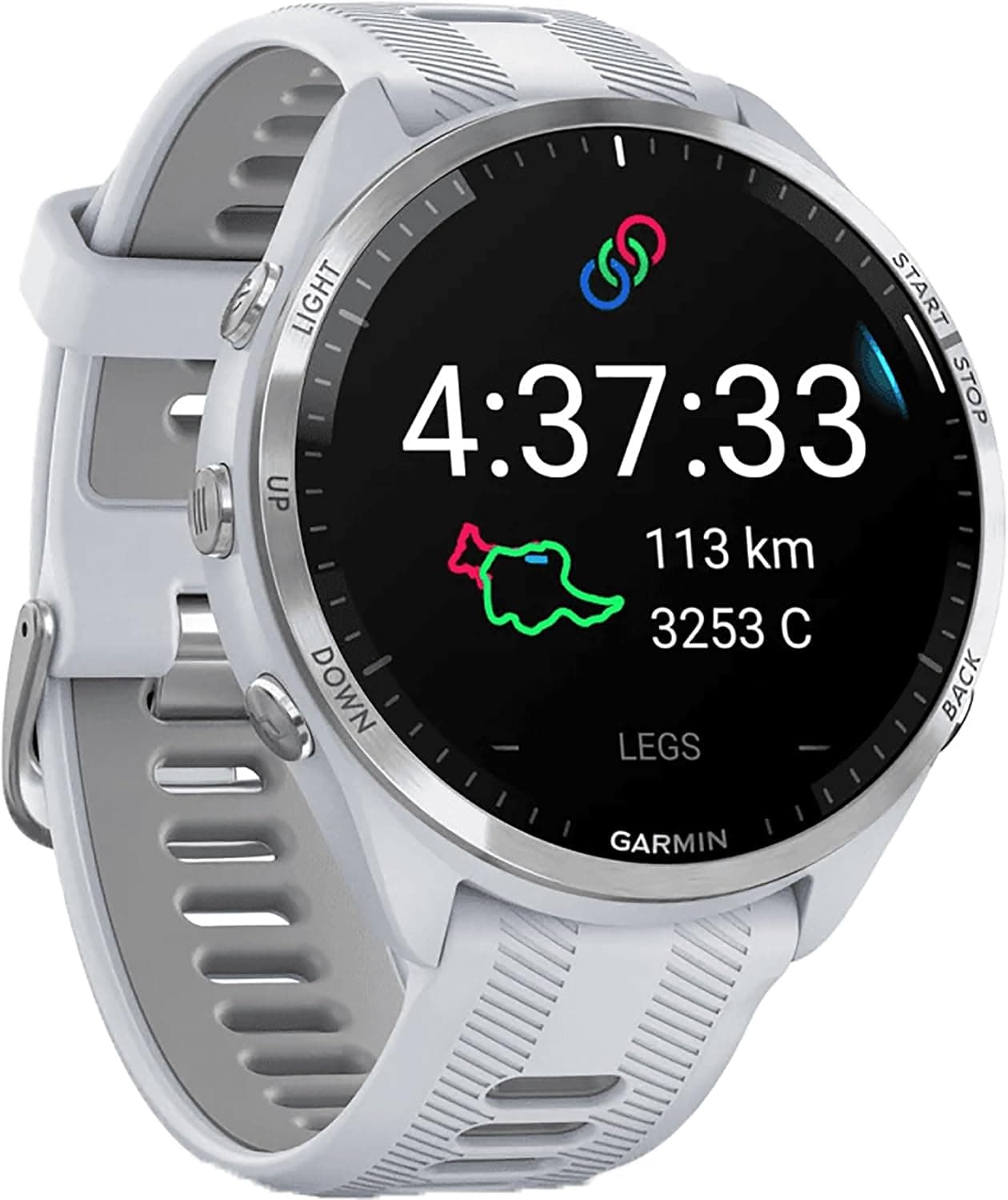
For recovery, the watch records heart rate and HRV, and the Health app displays them, but no Whoop- or Garmin-style daily recovery score was found in Apple's documentation for the Ultra 3. There is training load (Training Load; according to DC Rainmaker, it estimates the effort of each workout and shows the trend, as of watchOS 11; Apple’s pages for the Ultra 3 list it for that model). Applesfera presents Readiness as new in the Ultra 4, and A Blog to Watch says the Ultra 4 measures HRV 60 times more often than the Ultra 3. In other words: if you are looking for a recovery-focused watch, the Ultra 3 falls behind its successor, according to those sources, and behind watches designed for it, such as the Garmin Forerunner 965, which its own review presents with HRV and readiness metrics and no fee. For the Ultra 3's HRV there is no published study giving an error figure; you can use it to see your own trend, not to compare numbers with other devices.
A practical note: to record sleep you have to wear the watch at night, so charging has to fit in at another time of day. According to Apple’s spec sheet, the Ultra 3 reaches 80% in about 45 minutes and 5 minutes of charging is enough for up to 8 hours of sleep tracking. Apple measured those figures with the magnetic fast-charging USB-C cable that comes in the box and a 20 W USB-C adapter that is not included (tests with pre-production units; real-world results vary). A short window before bed may be enough.
GPS and heart rate during training
This is its best card. Apple cites dual-frequency GPS and a display of up to 3,000 nits. In the OutdoorGearLab test, the Ultra 3 recorded exactly 2.0 miles on a 2-mile reference loop and held its signal in forest, narrow canyons and urban routes. In that same test, heart rate was on average within ±1 bpm of a Polar H10 chest strap, with readings that can drop out for a moment during abrupt changes in intensity. These are the results of one tester on one particular route, not a study with a large sample; they serve as a reasonable indication for running or cycling at a steady pace, not as a guarantee in short, explosive intervals.
Two caveats about real-world use. The first: the same review criticises the data screens as barely customisable and says the offline maps do not reach the level of detail of Garmin or Suunto. The second: for strength and gym training, a chest strap remains the reference if you want reliable heart rate in short sets. If you would rather have a screenless watch focused on recovery, there is the Whoop 5.0, which works on a membership basis.
Battery: the weak point
Apple states in its spec sheet up to 42 hours of normal use and up to 72 hours in low-power mode, and an 80% charge in about 45 minutes (with a 20 W adapter that is not included; up to 12 hours of use from 15 minutes of charging), according to its tests with pre-production units. OutdoorGearLab, by contrast, measured 16 hours of continuous GPS recording and about two full days of mixed use, and reached 100% charge in 76 minutes with its own equipment. It rated the battery as the watch's weakest point; in the same test, the Garmin Enduro 3 reached 120 hours of GPS and the Forerunner 970, 25 hours. For most people, 16 hours of GPS covers a marathon or a half Ironman, but not an ultra lasting more than a day or a trek without electricity.
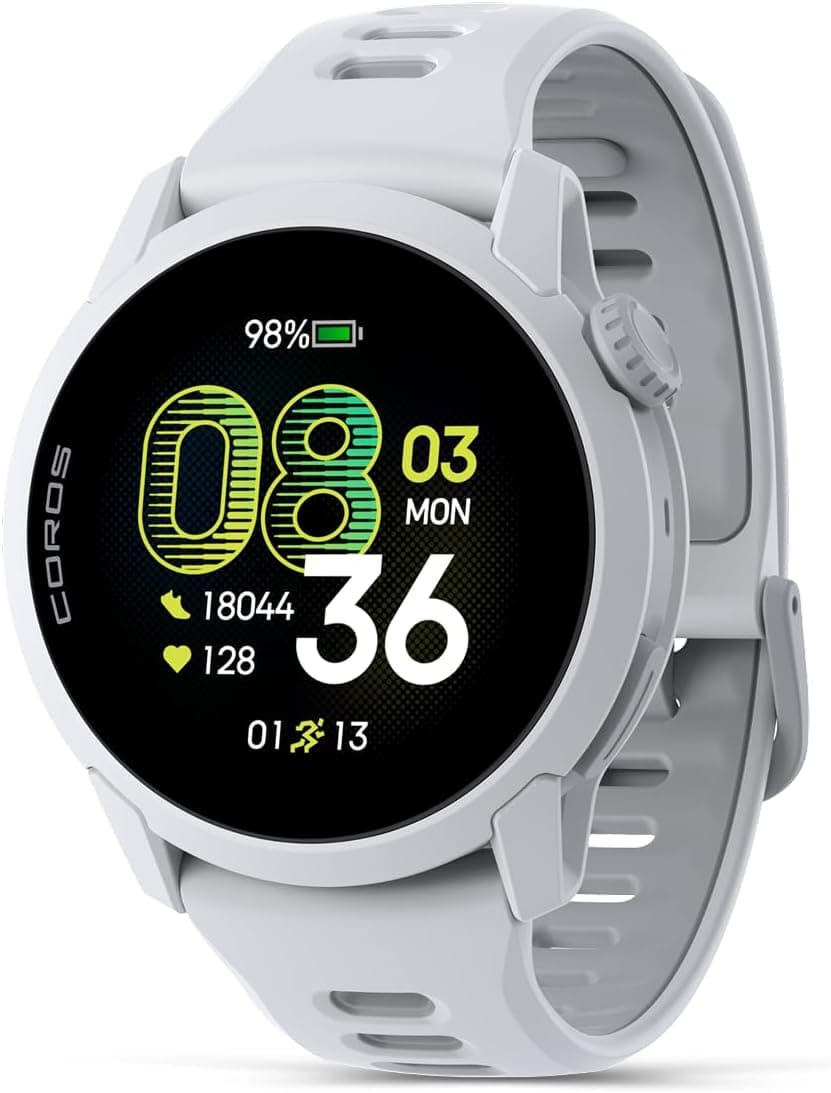
If battery life is the priority, there are alternatives with a different philosophy. The Garmin Forerunner 965, already mentioned, states weeks of battery in daily use, and the Coros Pace 4 is also measured in weeks, in exchange for fewer health and phone features. The Ultra 4, according to the press, states up to 50 hours, somewhat better, but still not at the level of those watches.
Comfort, size and daily use
OutdoorGearLab measured about 62 g for the titanium version and a diameter of 44 mm (49 mm case); thickness and the water resistance rating are not verified here, and should be checked on Apple's spec sheet. That test describes it as comfortable and stable when running and mountain biking, even on a small wrist, and notes that the case is relatively large but has thin edges that make it look less bulky. Sleeping in a watch this size is a matter of taste; as a criterion of this site, if what matters most is tracking sleep without wearing anything on your wrist, a ring such as the Oura Ring 4 handles that case better; the smart ring comparison places them against each other. The other features (notifications, calls, payments, cellular connectivity and satellite messaging, the latter according to Apple, with availability that depends on the country and is not verified for Spain) are those of a full smartwatch, not of a specialised sports watch.
Cost: no fee, but with caveats
Unlike Whoop or Oura, the Ultra 3 does not require a fee to see your health data, which you view in the Health app. Possible recurring costs are optional: a data plan if you want the cellular version in real use, Fitness+ (which requires a subscription) or third-party apps. Prices are not written here because they vary: the buy button leads to the current amount on Amazon.es. It also works only with iPhone: Android users should look at other options.
Who it is for and who it is not
- A good buy for people who have an iPhone, run or ride outdoors, want a single watch for sport and everyday use, and value having ECG and alerts with FDA clearance.
- Not a good buy for people who need days of battery, who use Android, who want the best sleep measurement (in our view, a ring is less intrusive at night) or who want a daily recovery score. Nor does it replace an upper-arm blood pressure monitor or a medical consultation.
Verdict
The Ultra 3 is a very complete watch, and its GPS and heart rate come out well in the tests cited. Its strengths are the health features with FDA clearance and the absence of a fee; its weak points are the battery and the fact that it is already the previous generation. For sleeping, the site's view is that a ring is less intrusive.
The score of 82 out of 100 follows the site's methodology, which weighs, in this order, the accuracy of what it measures, software and subscription, battery life, comfort and value for money. Accuracy is good for GPS and heart rate according to one specific test and solid for ECG thanks to Apple's trial, but with no published validation of this model for sleep, HRV or temperature. Software scores high for not requiring a fee. Battery life drags the score down, comfort is good and the price is assessed at the buy button.
Veredicto Final del Experto
Apple Watch Ultra 3
iPhone user who trains outdoors and wants accurate GPS, ECG and health alerts with FDA clearance, with no fee.
Garmin Forerunner 965
Someone who prioritises weeks of battery and recovery metrics, and does not need smartwatch features.
Skip it if…
You do not have an iPhone, need more than two days of battery or want to track sleep with something you will not notice wearing.