CES 2026: sleep, focus and longevity gadgets, with caution

In this article
Every January, the Las Vegas CES fills the press with health devices and big promises. Almost everything shown at the fair is a manufacturer's claim: a demo, a prototype or a press release, not a proven product. This piece reviews three CES 2026 launches (January 2026) related to longevity, sleep and focus, documented in specialist media coverage, and separates three things in each case: what it is, what the manufacturer claims and what independent evidence exists.
There are only a few, but all are backed by published coverage. Other devices that circulate in fair round-ups with no source to confirm them (needle-free monitoring patches, "invisible" circadian-light glasses, AI massagers) are not covered here.
What counts as "new" at CES
It helps to set the bar before getting into the products:
- Announced does not mean available. Some CES 2026 devices were prototypes with no price or date; others had a launch date months later.
- FDA-cleared is not the same as "it works". US FDA authorization does not by itself prove health benefits for the person using the device, and it does not apply in Spain, where CE marking is what counts.
- Performance data usually comes from the manufacturer. If a study was run by the company selling the technology, it is a data point to take into account, not an independent validation.
With that in mind, here are the three launches.
Withings Body Scan 2: the scale sold as a "longevity station"
What it is. A connected scale from Withings, presented at CES 2026 and described by the company as an at-home "longevity station". According to TechCrunch (5 January 2026), it has a glass surface and a retractable handle with a display, and it collects more than 60 biomarkers in about 90 seconds. Longevity.Technology adds that it works with electrodes that contact the hands and feet.
What the manufacturer claims. Withings lists, among other things:
- Impedance cardiography and a six-lead electrocardiogram for heart rhythm.
- Pulse wave velocity, which the brand uses to estimate arterial stiffness and a "vascular age".
- An AI glycemic-regulation model that, according to the company, looks for early dysregulation and does not diagnose diabetes.
- Hypertension risk notifications, which TechCrunch highlighted as a first for a home scale.
- Bioimpedance spectroscopy to estimate active cell mass and a "cellular age".
- A "health trajectory" report that, according to the American Hospital Association, tries to predict how daily habits may affect life expectancy.
The company also maintains that it detects imbalances "years before symptoms appear". That is a manufacturer's marketing line; the published coverage cites no independent validation study to support it.
What independent evidence exists. None is on record. The derived figures ("vascular age", "cellular age", "health trajectory") are proprietary indices whose calculation the coverage does not detail. An impedance measurement from the feet and hands also does not replace a blood test or a medical consultation. Nor is it on record as a diagnostic device: the company talks about notifications and risk.
Regulatory status and availability. In January, Longevity.Technology and Athletech News reported that the launch was pending FDA clearance for certain metrics, with release expected in the second quarter of 2026. The German outlet Macerkopf reported on 9 June 2026 that it was already on sale in Withings' online store in Europe and that Amazon and other retailers would add it "shortly". As of October 2026, sales in Spain and a listing on Amazon.es are not confirmed; before buying, check the status of each feature in your country, because authorizations in one region do not automatically carry over to another.
Cost of keeping it. Athletech News says it syncs with the Withings+ app, which includes a free first month and is paid annually afterwards. It is not on record which metrics depend on that subscription in Spain, so it is a point to check before deciding.
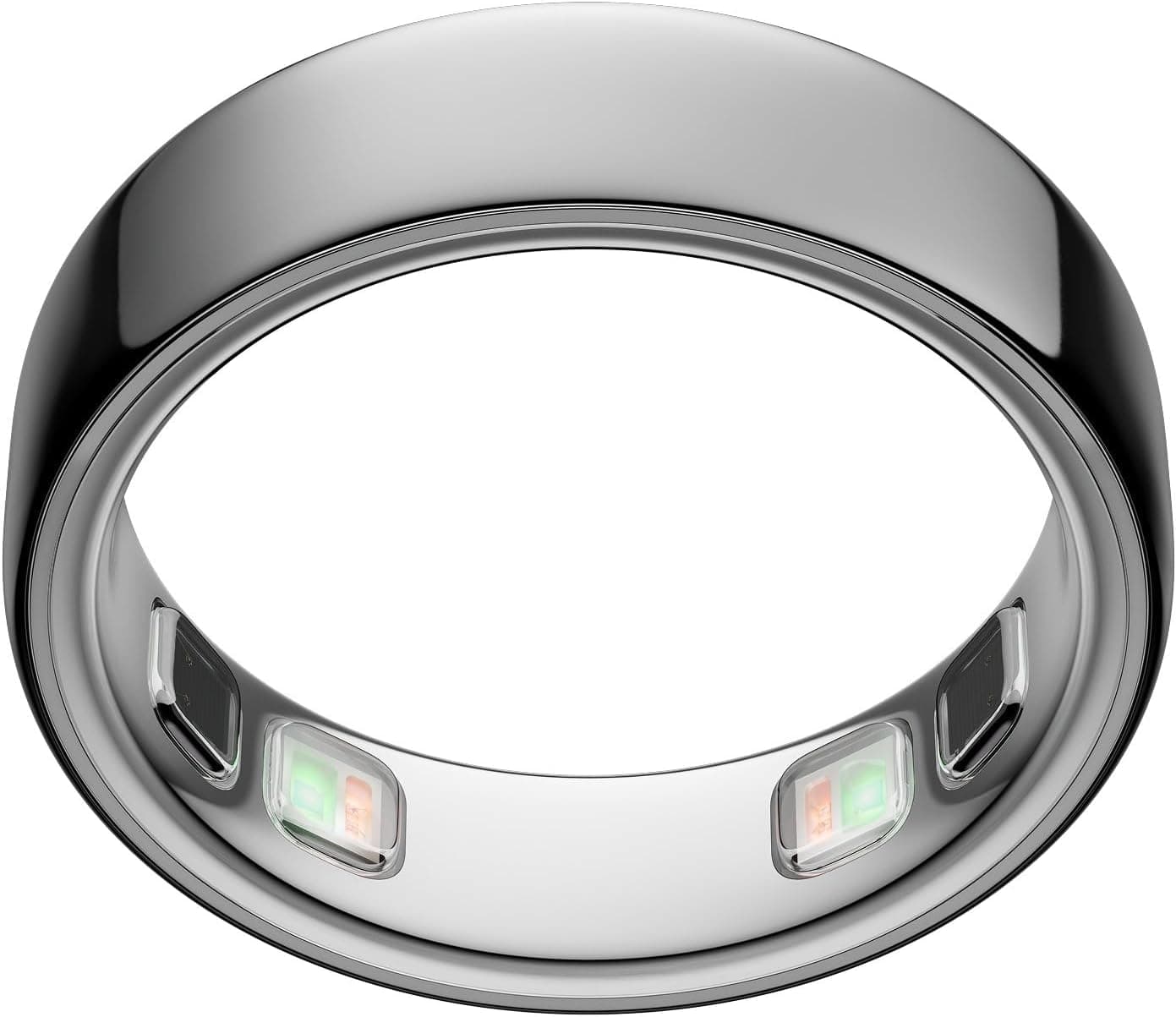
If what you want is to measure sleep and recovery on the wrist or finger, rather than body composition and cardiovascular health, the territory is smart rings, such as the Oura Ring 4. They are different products answering different questions: the scale gives a one-off snapshot every morning; a wearable gives continuous data overnight.
Naox: EEG earbuds, one clinical and one for consumers
What it is. The French company Naox Technologies presented two products at CES 2026 with EEG electrodes in the silicone tips of earbuds:
- Naox Link, aimed at healthcare professionals. According to Clinical Research News and Diagnostics World News, it received FDA 510(k) clearance and records EEG signal over long periods at home and during sleep, for a neurologist to interpret.
- Naox Wave, a non-diagnostic consumer platform designed to be built into wireless earbuds from other brands.
What the manufacturer claims. On Wave, Diagnostics World News reports that its app would turn EEG biomarkers into summaries of alertness level, focus, relaxation and "brain aging". These are product claims, and the outlet itself notes that consumer use starts as wellness tracking, with no diagnostic purpose.
What evidence exists. There is an important nuance here. According to Clinical Research News, Link's clearance was based on studies of signal performance and usability (whether patients could place it correctly on their own and whether neurologists could identify epileptic spikes and sleep stages from the signal). That supports the sensor in a clinical context. It does not support Wave's focus or "brain aging" summaries: the coverage only mentions FDA clearance for Link, not for Wave. Diagnostics World News specifies that Link is not cleared to identify seizures or sleep stages by itself: interpretation is up to the neurologist. An author at Neurotech Digest makes the same distinction: clearance validates the sensor, not the health results attributed to it.
Availability. According to Diagnostics World News, Link is used in three French hospitals, and its next regulatory goal was CE marking for Europe, which the company expected around three months after CES; it is not on record that it has been obtained. Wave and the first consumer earbuds with that technology were expected "toward the end of 2026", with no price or specific models in the published coverage. No sales in Spain are on record.
For anyone already using home neurofeedback, the current point of comparison is the Muse 2, a consumer EEG headband whose review details what it measures and what it does not. The difference with Naox is the context: Link is a clinical product; Wave, for now, a promise.
HyperX and Neurable: a gaming headset that reads "cognitive performance"
What it is. HyperX presented, together with the neurotechnology company Neurable, a gaming headset. According to SoundGuys, which tried a working prototype, it has EEG sensors in the ear cushions and shows "cognitive speed" and fatigue metrics during play.
What the manufacturer claims. Neurable and HyperX maintain that the technology helps prepare the mind before playing and maintain focus and accuracy. SoundGuys reports a preliminary Neurable study with semi-professional esports players that reportedly observed average improvements of about 43 milliseconds in reaction time.
What independent evidence exists. None. SoundGuys describes it as a preliminary study by Neurable, the company selling the technology, and gives no sample size, method or peer review. It is not on record that the study had a control group; without one, an improvement after a priming session cannot tell the effect of neurofeedback apart from that of a simple warm-up. Nor is it on record whether the effect lasts beyond the session. The improvements the SoundGuys writer saw in his test are an anecdote from a single person in a trade-show setting.
Availability. SoundGuys describes it as a development collaboration, not a launch: no commercial name, date or price. So there is nothing to buy in Spain, or anywhere else.
The underlying question for focus remains open: whether a headset can read brain activity reliably while the player is moving. Only independent studies will answer it.
Other names that came up at the fair
Neurotech Digest reports that IDUN Technologies showed EEG earbuds and that Elemind was present with its acoustic-stimulation sleep headband. In the second case, presence should not be confused with novelty: according to Sleep Review, the headband launched in June 2024, is a wellness product and not a medical device, and the source cites a registered trial (NCT05743114) that, according to the text, shortened the time to fall asleep in 76% of participants. Sleep Review adds that the company's two sleep studies covered 112 subjects, but it does not say how many of them that 76% refers to, who sponsored the trial or whether there was independent review. They are not covered in depth here because there is no press release of their own for either tied to CES 2026.
If you want to measure sleep today with something already available, the comparison of Sleep² and the Polar H10 strap shows another route based on products that are already on sale. And if you are just starting to decide what to measure, the biohacking guide and the smartwatch, ring or band comparison help set priorities before looking at devices that do not yet exist in stores.
How to read CES announcements
A useful checklist for any health gadget that shows up at a trade fair:
- Is there a product or just a prototype? Look for a commercial name, a date and a sales channel.
- Who ran the study? If it was the company, treat it as a hypothesis.
- What exactly does the regulator authorize? Clearance for a clinical use does not extend to consumer features.
- What does it cost to keep? Paid apps and fees change the real cost over a year.
- Is it available in your country, with the right marking? In Spain, CE marking matters, not the FDA.
Veredicto Final del Experto
Withings Body Scan 2
According to Macerkopf, it was already on sale in Withings’ online store in Europe in June 2026; the coverage records no sales of the other two. The derived metrics are proprietary and independent validation is missing.
Naox Link and Wave
Link is a clinical product and Wave, for consumers, was expected toward the end of 2026; the clearance backs the sensor, not the focus or brain-aging summaries.
HyperX with Neurable
A prototype with no name, date or price; the performance data comes from a preliminary study by the company itself.
What to do in the meantime
None of these three devices justifies waiting before you start measuring sleep, recovery or focus with tools that already exist and have reviews. Once any of the launches in this piece has a commercial listing in Spain, real-world usage time and studies from outside the manufacturer, it will be time to review it by the same standard as the rest: what it measures, how reliably, what it costs to keep and who it is worth it for.