Biohacking for Beginners: Habits, Tracking and Fads

In this article
Biohacking is a broad term: the same label covers going to bed at a regular time and buying a red light therapy device. This guide separates the two. It starts with what has solid, inexpensive support, moves on to what measurement technology can genuinely offer, and ends with popular practices whose evidence is weak. Every health claim comes with its source, and where the evidence is limited we say so.
A word of caution first: the consumer devices mentioned here are not medical devices, and nothing below replaces seeing a professional if you have persistent symptoms (chronic fatigue, snoring with breathing pauses, prolonged insomnia).
First, what you don't buy: four habits
Before thinking about hardware, it's worth reviewing four areas. None of them is new, and that is precisely why they are the best documented.
Sleep: duration and regularity
The joint consensus of the American Academy of Sleep Medicine and the Sleep Research Society, produced by a panel of 15 experts after reviewing more than 5,000 articles, recommends that adults sleep at least 7 hours per night on a regular basis. It is a minimum recommendation for adults aged 18 to 60, not a performance target. If your routine doesn't reach that floor, no gadget makes up the difference.
If you want to go deeper into how rest is measured with different formats, we have an analysis of Sleep² and the Polar H10 chest strap, an app that estimates sleep stages from the heartbeats a strap records.
Light: more by day, less at night
A review published in Somnologie summarizes that light is the main cue that synchronizes the circadian clock: morning light advances the clock and bedtime, while late-afternoon and evening light delays it. The authors themselves add nuance: some of the screen studies used long exposures (from four to six and a half hours), and in another study a shorter, two-hour exposure to a tablet altered neither melatonin nor sleep. They also note that in a questionnaire-based study each extra hour outdoors was associated with sleep being about 30 minutes earlier, although physical activity may be a confounding factor.
From this comes a cautious guideline, not a promise: get outside in the morning and reduce bright light late in the evening. For people who wake up with little natural light, a light-based alarm clock such as the Lumie Bodyclock Shine 300 simulates a gradual sunrise, although in our analysis the evidence for its effect comes from small studies. For people who sleep with ambient light, there is the MyHalos sleep mask; its analysis makes clear that there is only a seller listing and studies on other masks, not measurements of this model. On what is hypothesis or mouse trial and what has been measured in humans regarding red light and melatonin, there is a dedicated piece: red light and mitochondrial melatonin.
Movement
The World Health Organization recommends that adults do at least 150 minutes of moderate-intensity physical activity per week, reduce sedentary time, and notes that muscle-strengthening activities benefit everyone. You don't need a watch to meet it: a daily walk already provides a significant part of that figure.
Food
The WHO, in its healthy diet fact sheet, sets for adults at least 400 g of fruit and vegetables a day, free sugars below 10% of daily energy intake, total fat below 30%, and less than 5 g of salt per day. It is a population-level reference, not a personalized diet, but it is a better starting point than any fashionable protocol.
What to measure and when you don't need to
Measurement makes sense when it answers a specific question: am I sleeping regularly? Am I recovering between workouts? What effect does changing a routine have? If you already sleep enough, feel well and train normally, a wearable is unlikely to change your decisions. If, on the other hand, you want to see trends (bedtime, resting heart rate, training load), it can be useful.
How far to trust the numbers
Independent validation tests paint a nuanced picture. An editorial in the journal Sleep summarizes a study of 34 healthy young adults that compared seven devices against laboratory polysomnography: four worn on the wrist (Fatigue Science, Fitbit Alta HR and two Garmin) and three placed on the nightstand or under the mattress (EarlySense, ResMed S+ and SleepScore Max); none of the rings we review. According to the editorial, the best ones detected sleep well (sensitivity of 0.93 to 0.96) but wakefulness poorly (specificity of 0.45 to 0.54), with performance similar to actigraphy (0.39 specificity); sleep stage classification was cruder. It is a study of healthy young people and specific models: it cannot simply be extrapolated to other people or other products, and it is worth looking for validation specific to each device.
As a practical guideline from this site, not the result of a study: it is worth paying attention to the trend over several weeks rather than the figure for a single night, and treating minutes of deep or REM sleep as estimates, given how crude the stage classification is.
The risk of obsessing over data
A clinical article coined the term "orthosomnia" to describe patients preoccupied with perfecting their tracker data. It describes three clinical cases, not a study with a sample: in all of them, the attempt to increase recorded sleep led to spending more time in bed, which could worsen insomnia. The authors point out that validation of trackers for sleep stages and wake detection is scarce and that their algorithms are not transparent. If the numbers make you anxious, it is reasonable to stop looking at them.
Which format to choose
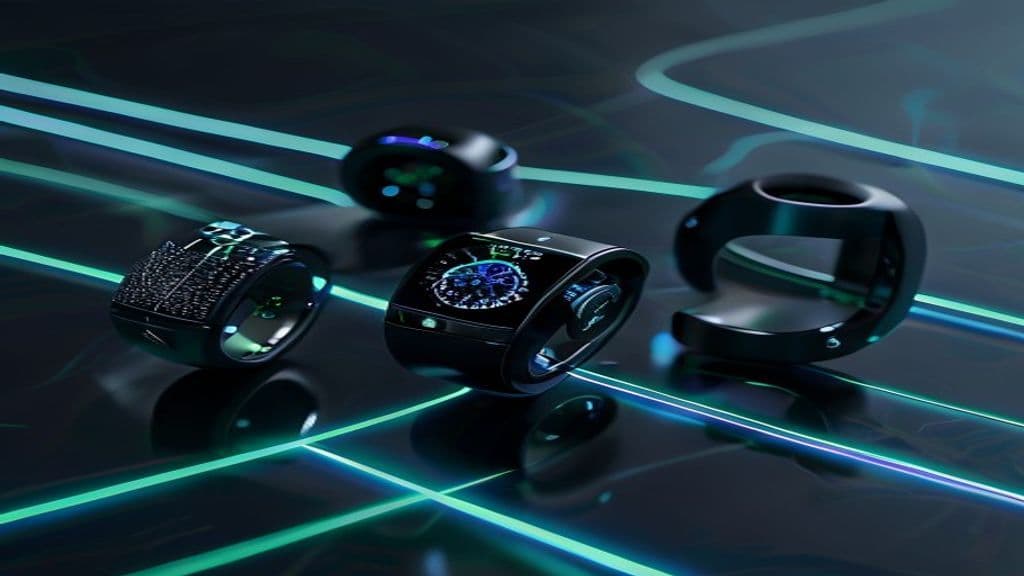
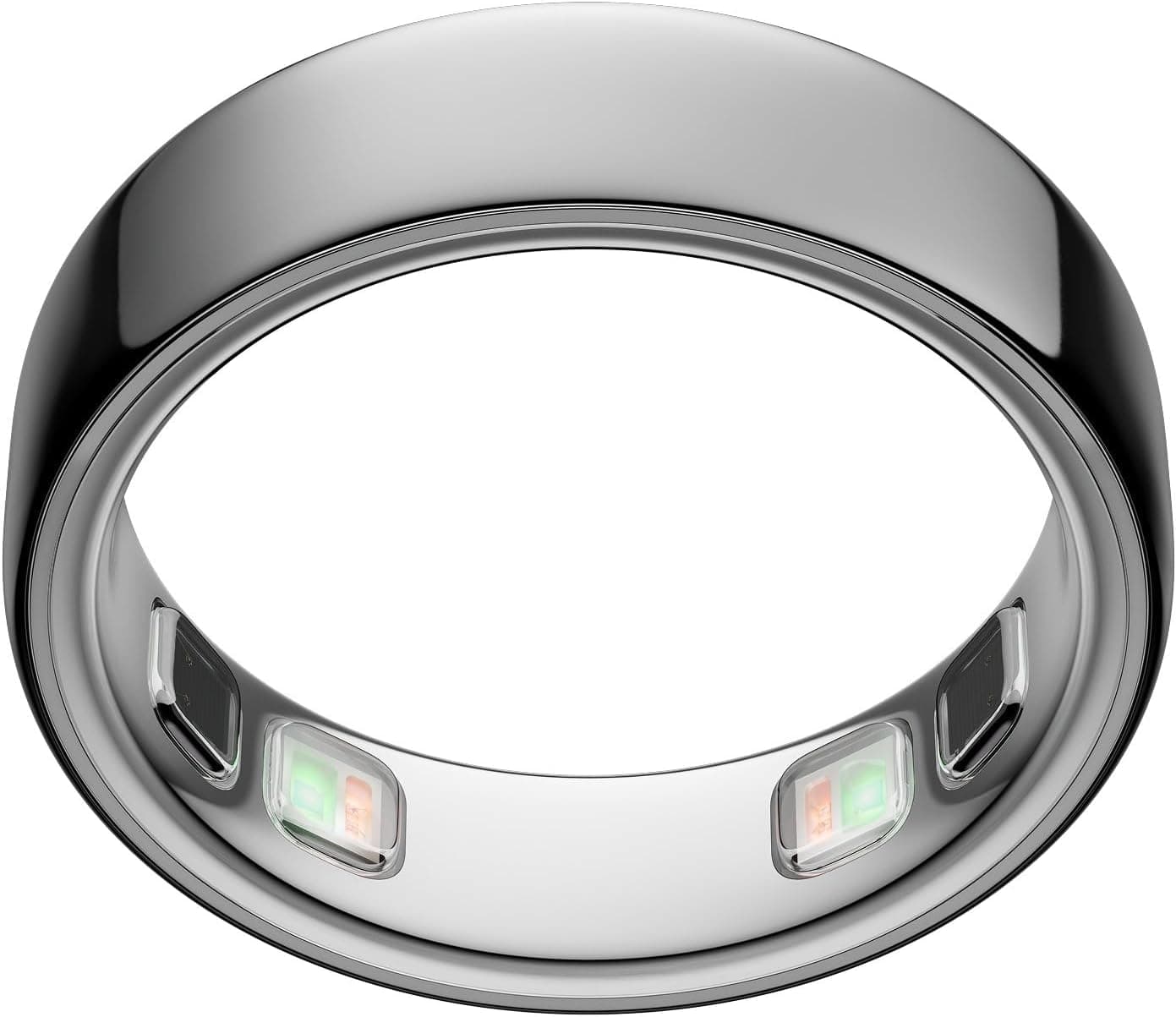
- Ring: discreet for sleeping and oriented toward rest. We have analyses of the Oura Ring 4 and the Oura Ring 5, and a smart ring comparison. Watch out for subscriptions: it is a recurring cost worth checking before you buy.
- Screenless band: focused on recovery and strain, with a mandatory membership (you can't buy the hardware alone); the Whoop 5.0 is the case we review.
- Sports watch or band: the usual choice if you train with GPS or want a screen.
- Chest strap: an alternative to the wrist and the finger, combined with an app such as Sleep², mentioned above.
To decide between formats, our piece smartwatch vs smart ring vs band compares the three by what each measures, battery life and fees.
Measuring brain activity: a separate case
EEG headbands such as the Muse 2 are aimed at meditation and consumer neurofeedback; according to our analysis, they are not designed for sleep, and the evidence that this neurofeedback works is limited. What they display is not a diagnosis.
Recovery after exercise
Recovery drives a lot of spending on devices, and the evidence is uneven. In our piece on muscle recovery we separate what has support from what adds little. Pneumatic compression, for example, has its own analysis covering the evidence, such as the one on the Normatec 3. The foundation, once again, is sleeping, eating enough and managing training load.
Popular practices with little support
Intermittent fasting
According to the Cochrane press release on the review, it pooled 22 randomized trials with 1,995 adults with overweight or obesity and found no clinically relevant effect on weight compared with standard dietary advice or no intervention. The press release states that the evidence is limited, that adverse effects were recorded inconsistently, and that there are few long-term trials; it adds that results may vary by sex, age, illness or eating disorders, and that a case-by-case approach will be needed. On that basis, there is no reason to present fasting as superior to other approaches. As this site's advice, not the source's: it is worth discussing it beforehand with a professional if there is diabetes, pregnancy or a history of eating disorders.
Grounding (contact with the earth)
A 2023 integrative review in Biomedical Journal, written by a single author, considers grounding "promising" but with limited evidence: small samples, lack of controls in several studies and a possible placebo effect. The examples it includes range from studies with 10 participants to others with around 50. Walking barefoot on grass is harmless and pleasant, but attributing effects on sleep or stress to it goes beyond what has been demonstrated.
Blue-light blocking glasses
The 2023 Cochrane review included 17 trials with between 5 and 156 participants each. Lenses that filter blue light may make no difference to short-term eye strain (low certainty), and the evidence on sleep is inconclusive (very low certainty: of six trials with 148 participants, three found improvement and three did not). Most of the trials had a high risk of bias. If you still want to try them, you can see our analysis of the red-lens blue-light blocking glasses, which covers the product listing and the evidence.
Gadgets that promise to "optimize" without a specific question
A useful rule: if you can't say what decision the data or the device would change, you probably don't need it yet. When something promises a physiological effect, look for the primary source and check three things: the number of participants, whether the control was realistic, and whether the authors or the study depend on the manufacturer.
A sensible order to get started
- Set a bedtime and wake-up time that lets you sleep at least seven hours.
- Get natural light in the morning and lower the light intensity at night.
- Add movement until you approach 150 minutes of moderate activity per week.
- Adjust your food to the basic WHO references before trying protocols.
- If after a few weeks you still have specific questions, consider a wearable and choose the format based on use, recurring cost and whether you need a screen.
Habits first, measurement second, and fads only with the source in front of you.