In this article
A bioimpedance scale does two very different things behind the same display. Weighing is easy, and load cells do it well. Saying how much of that mass is fat, muscle or water is another matter: the scale does not measure it, it calculates it from how hard it is for a tiny electrical current to pass through the body. The Xiaomi Body Composition Scale S400 is the brand's current model for Spain, with an official Xiaomi product page, and it promises 25 indicators from a single step.
This review brings together the specifications published by Xiaomi, what validation studies against DEXA (the low-dose X-ray scan used as the reference for body composition) say, what it costs to run, and the limitations users report. It is not based on physically testing the product: it is a documented reading of the manufacturer's product page, the scientific literature and buyer reviews on Amazon.es.
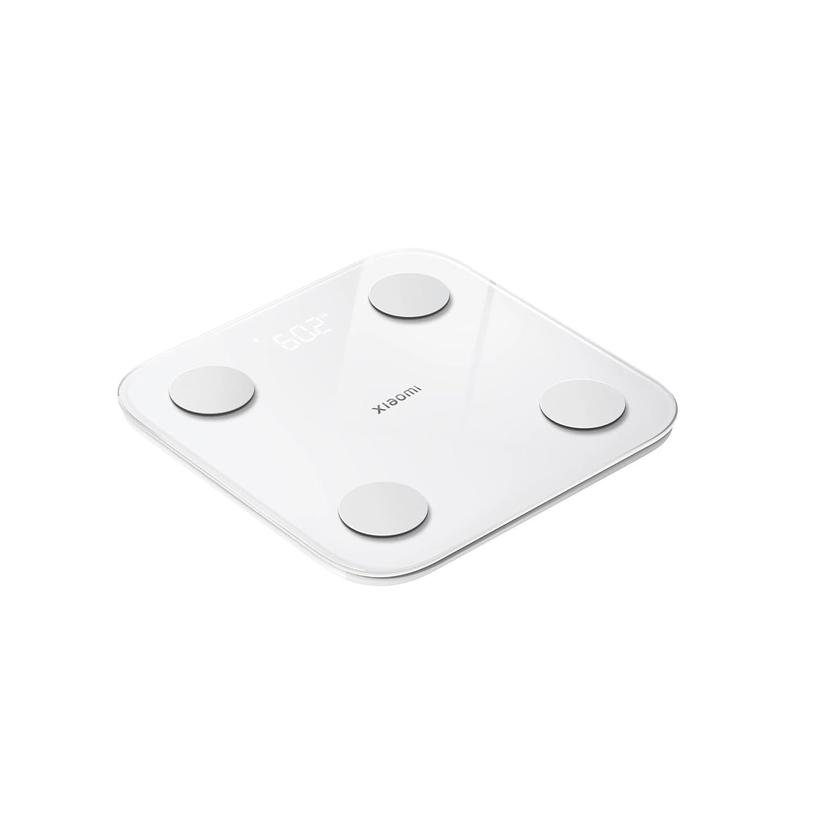
Xiaomi Body Composition Scale S400
Dual-frequency bioimpedance scale with 25 indicators, up to 36 users, a display and three AAA batteries with up to 180 days of battery life according to Xiaomi.
What it is and what the official spec sheet includes
According to Xiaomi Spain's product page, the model is the MJTZC01YM, with a 300 × 300 × 24.55 mm platform made of reinforced glass and engineering plastic. It weighs from 0.1 to 150 kg with an accuracy of 0.1 kg and works between 0 and 40 °C. It connects over Bluetooth Low Energy 5.0 and runs on three AAA alkaline batteries (4.5 V). Xiaomi advertises up to 180 days of battery life, a figure with test conditions that are detailed below, in the battery section.
What it advertises as its differentiators:
- Dual frequency. It uses a low-frequency and a high-frequency current. According to Xiaomi, the 50 kHz one is used to measure extracellular fluid and the 250 kHz one intracellular fluid. The brand presents this as a way to refine the estimate compared with single-frequency scales.
- 25 indicators. Among them are body fat, muscle mass, water, bone mass, visceral fat, BMI and an overall score. The indicators are derived from the same raw impedance reading plus the height, age and sex you enter in the app; they are not 25 sensors.
- Resting heart rate. Xiaomi states that it measures it after the body composition reading, and that it can be turned off in the device settings in the app.
- Up to 36 users. According to Xiaomi, the scale stores data for up to 36 people: the main account, five Xiaomi accounts the device is shared with, and five virtual users for each of those accounts. According to Xiaomi, if two profiles have weights within ±2 kg of each other, the scale cannot identify them automatically and the profile has to be chosen manually in the app.
- Usage ranges. Body composition is measured from age 6 to 80, at a weight of 20 to 150 kg and a height of 90 to 220 cm, according to Xiaomi's FAQ. Children under 6 and people over 80 can only be weighed, and Xiaomi notes that data for teenagers is for reference only because they are still growing.
- Compatibility. It requires Android 8.0 or iOS 12.0 at minimum and the Mi Home/Xiaomi Home app (version 8.7.703 on Android or 8.7.204 on iOS, or later), according to Xiaomi Spain's product page.
What a bioimpedance scale really measures
Bioimpedance measures one number: how much the body resists the passage of a current. Tissues with more water and electrolytes, such as muscle, conduct better; fat and bone conduct worse. From that resistance the device deduces, using equations calibrated on specific populations, the fat-free mass and, by subtraction, the fat. It is an indirect estimate.
There are two practical consequences. The first: anything that changes the body's water changes the reading. A consensus guideline from the European Society for Clinical Nutrition and Metabolism (ESPEN) concludes that the technique works well in healthy people or those with stable water and electrolyte balance if a validated equation for their age, sex and race is used, and warns that the clinical use of bioimpedance in people with abnormal hydration or at the extremes of BMI cannot be recommended as a routine assessment without further validation, and that tracking over time is possible in adults with a BMI between 16 and 34 kg/m² and no abnormal hydration, but should be interpreted with caution. That guideline concerns clinical use and does not address home scales, but it explains the logic: the technique depends on the body's water being what the algorithm expects.
The second: the device applies a generic equation. If your body departs from the average profile it was calibrated on (athletes with a lot of muscle mass, very elderly people, pregnant women, bodies retaining fluid), the error may be larger and systematically in one direction.
Accuracy against DEXA: what the evidence says
It is worth separating what Xiaomi says from what independent research says.
What Xiaomi says. On its product page it states that the S400 has a correlation coefficient of 0.93 or higher with DEXA for key data such as body fat percentage and fat mass. The footnote attributes the figure to a test report (no. BSU20220389) from the China Institute of Sport and Health Science at Beijing Sport University. This is a manufacturer claim: the report is not published on the product page, so the sample size, the mean bias and the individual margins of error are not known. A high correlation indicates that the two measurements rise and fall together, not that they give the same figure. A device can correlate very well with DEXA and still always read four points of fat lower.
What studies on consumer scales say.
- A 2008 study in Obesity Facts compared several consumer bioimpedance devices with whole-body magnetic resonance imaging and DEXA in 106 healthy adults of normal weight, overweight and with obesity. Three of the four devices agreed well with the reference methods, but the three foot-to-foot ones (the kind you stand on barefoot, with electrodes only under the feet, and single-frequency) showed a systematic bias in body fat percentage that the tetrapolar device did not. The individual limits of agreement were −6.6 to +4.6 points of fat for the tetrapolar device and reached −14.5 to +8.6 for the foot-to-foot ones. Its authors concluded that foot-to-foot devices are suitable for estimating group averages, and recommended tetrapolar ones for individual use. It is a nearly two-decade-old study with devices from another generation, and it does not include the S400.
- A 2025 study in the Journal of Exercise and Nutrition compared six bioimpedance devices with DEXA in 77 adults (42 men and 35 women). According to the study's abstract, multifrequency devices performed better than single-frequency ones, but reliability was moderate in four devices (intraclass correlation coefficients of 0.66 to 0.73) and poor in the other two (0.25 and 0.43). Even the best profile had a mean bias of −2.2 points of fat and limits of agreement of −9.9 to +5.5, so in an individual person the reading may be far from the real one.
- A 2015 study in BioMed Research International evaluated four commercial bioimpedance devices (among them a single-frequency foot-to-foot one, a dual-frequency one with hand grips and an eight-electrode multifrequency one, also with hand grips) against DXA in 255 Chinese children and adolescents aged 9 to 19. Only the multifrequency device reached moderate agreement in both sexes, the limits of agreement were wide in all of them, and the authors concluded that none is interchangeable with DXA for measuring an individual's body fat or tracking their changes. The population is pediatric and does not carry over directly to adults, but it reinforces caution with individual readings.
None of the above specifically validates the S400. We have not found an independent study of it against DEXA, nor of a previous Xiaomi model that could be extrapolated. With that gap, the honest approach is to read the results as the typical behavior of this family of devices: they work well for seeing trends and poorly for giving an absolute figure that decides something important.
How to use it so the data is worth something
Given the above, the value of this scale lies in comparison with yourself, not in the number of the day. The approach is simple:
- Same conditions every time. Same time of day, before eating and training, after going to the bathroom, with dry feet and barefoot. The body's water changes with food, exercise and hydration, and bioimpedance reads that as changes in composition.
- Look at the weekly average, not each weigh-in. A single data point can vary for reasons that are neither fat nor muscle.
- Ignore absolute figures. A 22% fat reading on the scale is not the same as 22% on DEXA. If the same device says 22% today and 21% four weeks from now, the interesting part is the direction, and even then with caution.
- Do not make health decisions with it. A home device is not a medical device. If your doctor or nutritionist needs body composition, there are reference tests.
In the Amazon.es reviews (as of November 2026: 4.6 out of 5 across 2,958 ratings), the summary generated on the product page itself says that, of the 85 customers who mention measurement accuracy, 53 do so positively and 32 negatively. An example of what happens when an estimate is presented as a diagnosis: a 4-star review with 34 helpful votes says its body fat percentage comes out 4% lower than on the reviewer's previous Xiaomi scale and that the app asks them to lower their fat further for their age, as if the calculation did not take it into account. It is a single review, not a data point.
Contraindications and manufacturer warnings
According to Xiaomi Spain's product page, the product is not recommended for people with pacemakers or cochlear implants. The same page says the current it uses does not cause injury to the human body, but that pregnant women should use it with caution. It adds that with a fever, a cold, gastroenteritis or other illness, significant errors may occur in the body composition indicators, and that the product is not a medical device: its data is for reference only and should not be used as the basis for a diagnosis or treatment. Before using it with any implanted device or during pregnancy, the right thing to do is to consult the manual that comes in the box and your doctor.
The small current that passes through the body is the reason for this restriction. One practical consequence: anyone with a pacemaker at home, even if they are not the usual user, should know not to step on it. This piece is general information and does not replace medical advice.
App, ecosystem and what happens with your other devices
The S400 pairs with the Mi Home/Xiaomi Home app. According to Xiaomi's FAQ, it can only be paired with Mi Home/Xiaomi Home and is not compatible with Mi Fitness or any other app. This has a concrete consequence for anyone who already uses the Xiaomi Smart Band 10, which only works with Mi Fitness: there is no single dashboard with weight, body composition and sleep. The scale's data lives in one app and the band's in another.
In the Amazon.es reviews, the product page summary shows mixed opinions on connectivity: as of November 2026, of 57 customers who mention it, 29 do so positively and 28 negatively. Complaints include that it will not pair with the phone, that it does not sync with Zepp Life (the Amazfit app, which one buyer had used with earlier models), or that a unit always reads 0.0 kg or warns of empty batteries with new ones; praise includes good syncing with Xiaomi Home on iPhone and easy connection. It is a synthesis of reviews, not a test. The FAQ on Xiaomi's own product page covers what to do if the scale does not appear when you add it (reset it by holding the reset button for 7 seconds) and if no body fat result is obtained (clean your feet and the surface and make sure both feet touch the electrodes), which suggests these are known issues. To sync without your phone nearby, Xiaomi offers a Bluetooth gateway that is sold separately.
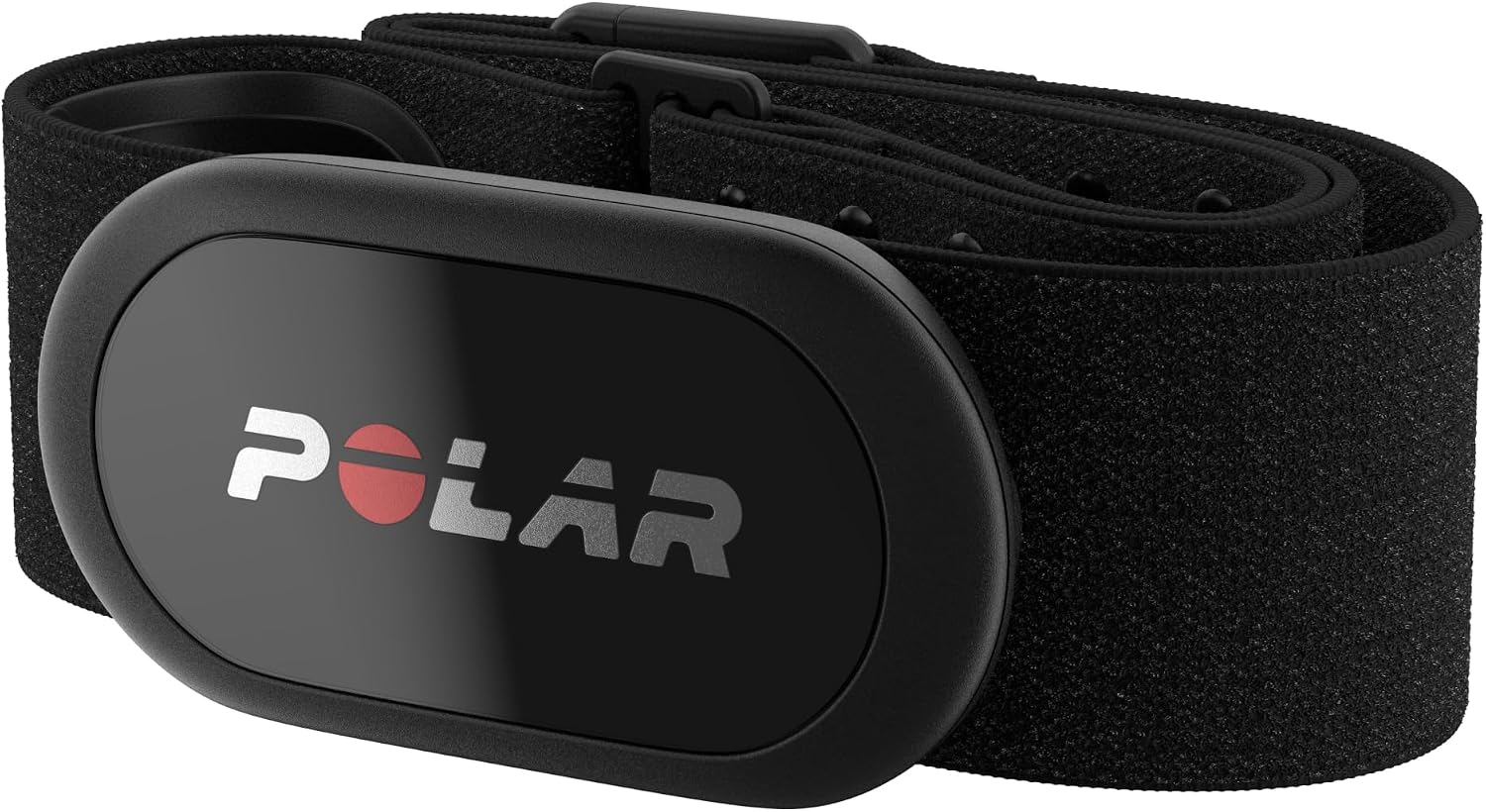
This matters for readers who already measure with wearables. A watch such as the Garmin Forerunner 965, a chest strap such as the Polar H10, the Whoop 5.0 membership or the Oura Ring 5 ring focus on heart rate, sleep, recovery or activity. The scale does not compete with them: it provides a different data point, body composition, and it is the one that depends most on conditions staying constant.
Battery and running costs
This is its strongest point. Xiaomi advertises up to 180 days of battery life on three AAA alkaline batteries, and there is no subscription: the app is free and the 25 indicators are not behind any fee. According to the product page itself, that figure comes from the laboratory of Yunmai (the device's manufacturer) in a test at 25 °C with three weigh-ins a day of about 45 seconds each, and it is the longest life observed, not a guarantee. Real battery life depends on how many times a day you weigh yourself and how many people use it; there is no independent measurement. Compared with Whoop or Oura, which require a membership, here the cost of use is the cost of the batteries.
One design detail: the S400 uses disposable batteries, not a rechargeable one. For anyone who prefers charging over USB it is a drawback; for anyone who weighs in daily without thinking about it, it avoids having to remember to charge it.
Who it is for and who it is not for
It fits if:
- You want a weight and composition trend from an inexpensive device with no fees.
- You live in a household with several people and need separate profiles.
- You already accept that the fat figure is approximate and will read it over weeks.
It does not fit if:
- You have a pacemaker or another implanted medical device.
- You are pregnant and have not discussed it with your doctor, following the precaution the manufacturer indicates.
- You need reliable absolute values of fat or muscle (for example, for a treatment or to monitor a disease). Clinical tests exist for that.
- You want everything in Mi Fitness, with the band and sleep in a single dashboard.
- You expect the scale to tell you whether you are healthy. No home scale can do that.
Alternatives
Among bioimpedance scales, the useful comparison is between foot-to-foot and tetrapolar models. The S400 is used barefoot with both feet on the electrodes, according to Xiaomi's instructions, which points to a foot-to-foot design; the product page does not state this explicitly or say how many electrodes it has. If individual accuracy is the priority, the 2008 study points to tetrapolar models, which add electrodes for the hands. If you want a fat figure with no room for doubt, the test is DEXA at a medical center, and it is done once, not every morning.
Compared with a simple scale that only weighs, bioimpedance adds the possibility of seeing whether a change in weight comes with a change in the fat-to-muscle ratio. With the caveats above, it is indicative information, not a diagnosis.
Pros and cons
Pros
- •No subscription: the app is free and the cost of use is that of three AAA batteries, with up to 180 days of battery life according to Xiaomi.
- •Dual frequency: in the 2025 study of six devices, multifrequency ones did better than single-frequency ones, although reliability against DEXA was only moderate at best.
- •Up to 36 profiles and resting heart rate, designed for a household with several people.
- •Official spec sheet with model, range, compatibility and warnings published by Xiaomi.
Cons
- •There is no published independent validation of this model against DEXA: the 0.93 correlation is a manufacturer figure (the page applies it to body fat percentage and fat mass; the footnote cites fat mass only), with no bias data.
- •An estimate, not a measurement: studies show wide limits of agreement with DEXA in the individual person.
- •It does not link with Mi Fitness, so the data stays separate from that of the Xiaomi Smart Band 10.
- •Contraindicated with pacemakers and other implants, and to be used with caution in pregnancy, according to Xiaomi's page.
How we score this scale
Our score weighs, in this order, the accuracy of what it measures, the software and subscription, battery life, comfort and value for money. On accuracy, the S400 stays within what the technique allows: a reasonable estimate of trends and the manufacturer's own validation, with no independent study of the model. The software does the job, with repeated complaints and no Mi Fitness integration, but it charges no fee. The advertised battery life is excellent, the comfort is that of an ordinary scale with a display, and given the range of home use it covers, the value for money is very good. The score, a 71, rewards the zero running cost and the usefulness for tracking trends, and is held back by the fact that the reliability of the main data point has not been demonstrated for this model.
Verdict
Veredicto Final del Experto
Xiaomi Body Composition Scale S400
Anyone who wants to follow the trend in their body composition over weeks, under the same conditions, with no fees and with profiles for the whole household.
Clinical measurement with DEXA
Anyone who needs absolute fat and muscle figures for medical or sporting reasons: the reference test is done at a center, not at home.
Avoid if…
You have a pacemaker or another implant, or you expect a home scale to tell you whether you are healthy or to help you decide on a treatment.
What we could not verify
As far as we have found, there is no independent study of the S400 against DEXA, and the studies cited used other devices. The 0.93 correlation with DEXA is manufacturer data: Xiaomi cites the test report but does not publish it, and there is no independent check. The product page does not state the type of measurement (foot-to-foot) or the number of electrodes either, and the 180-day battery life is a laboratory figure from the manufacturer, with no independent measurement. The number of users, the usage ranges, the warnings and the app compatibility are those on Xiaomi Spain's product page; the buyer opinions are a synthesis of the Amazon.es reviews as of November 2026, not a test of our own.