Whoop vs Oura: what they really cost to keep
In this article
Anyone torn between a Whoop and an Oura usually starts with the wrong question: how much the device costs. In both cases, the device is not the only expense. What decides the real cost is the fee you have to pay to use it, what happens if you stop paying one day, and whether you can buy the hardware without tying yourself to anything. This comparison puts that upkeep cost front and center and, from there, goes over what each one measures and which profile each suits.
The two models compared are the Whoop 5.0 band and the Oura ring, in its two generations on sale: the Oura Ring 5 and the Oura Ring 4. Neither is presented as a medical device: they are for spotting trends in your own body, not for diagnosing anything. This piece is based on the manufacturers' documentation, on our reviews of each product, and on the published validation studies, with their limits. It is not based on hands-on testing of the devices.
What could be verified and what could not. Oura's fee was checked on November 10, 2026 in its official help center. The prices and contents of Whoop's three plans come from the membership page of Whoop Spain, checked on November 10, 2026. Everything else we say about Whoop's membership comes from our Whoop 5.0 review, with the sources that text cites, and is flagged as such. Prices can change: always check the fee in force in Spain before paying.

Whoop 5.0 (with membership)
Screenless band focused on recovery, strain and sleep, acquired as part of a membership.
Oura Ring 5
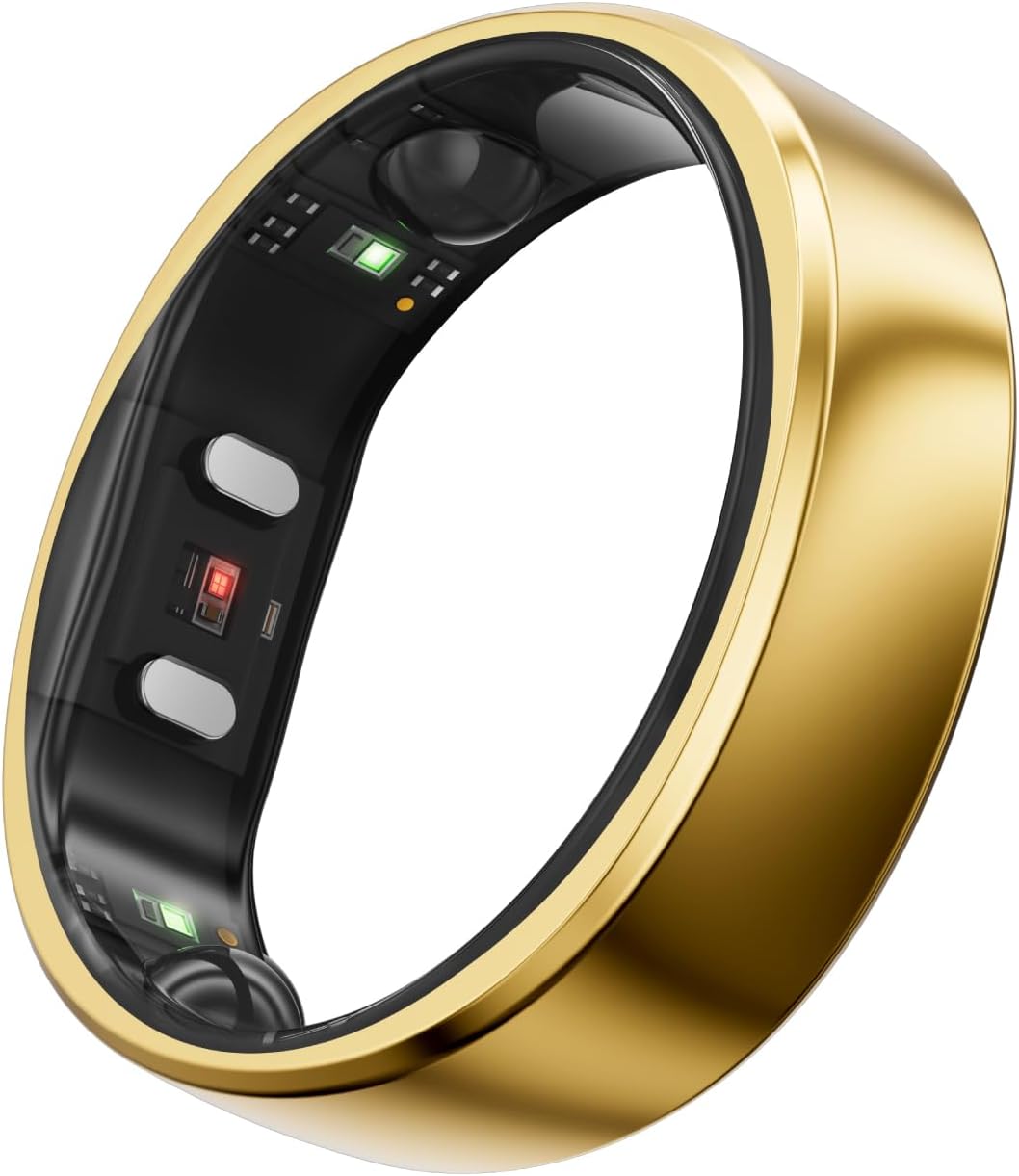
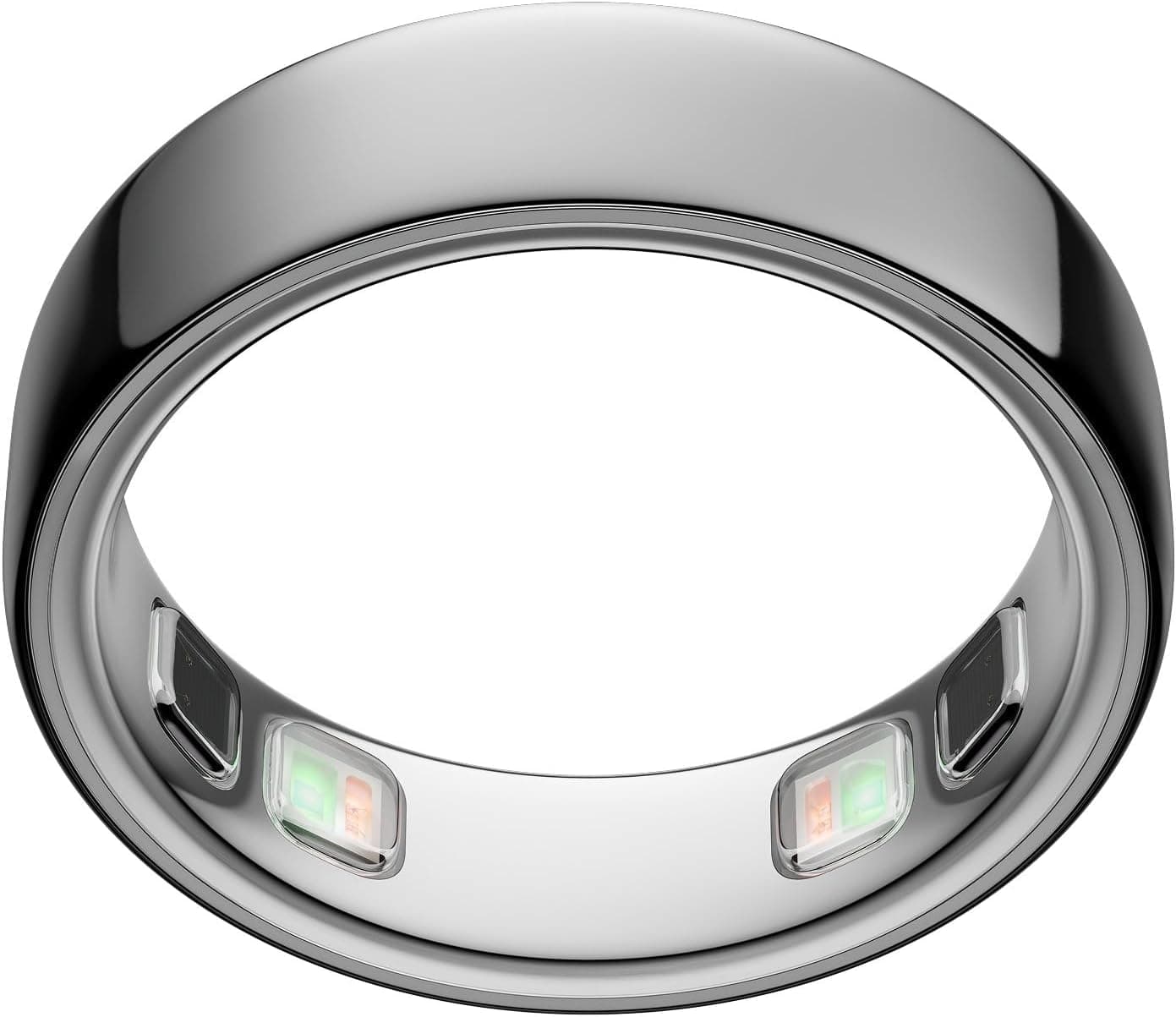
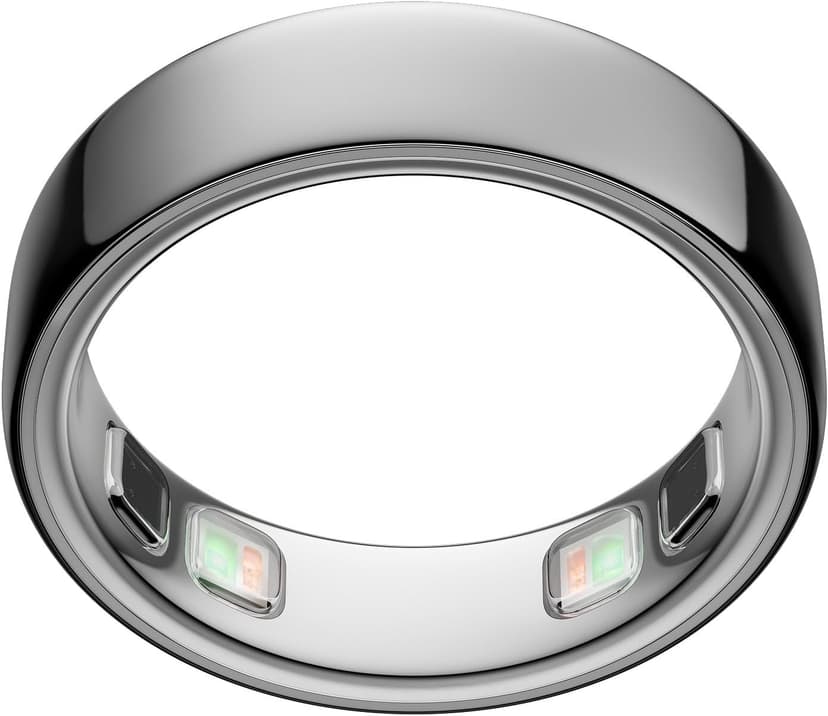
Titanium ring 6.09 mm wide that measures sleep, HRV, temperature and SpO2, with a subscription app.
The core difference: two ways of charging
Both brands live off a fee, but the structure is different, and almost everything else follows from that difference.
- Oura sells a ring and, separately, a membership. You buy the hardware once and pay for the full app every month or every year. In other words, there are two separate bills: the ring and the fee.
- Whoop sells a membership that includes the band. According to our review, you cannot buy the hardware on its own, and there is no pay-once-and-forget option. The band is part of the plan.
The practical consequence is that with Oura you can compare ring prices between stores and decide when to start paying the fee, whereas with Whoop you choose a plan and the device comes with it. With Oura you can also keep the ring if you stop paying (even though it is almost useless, as we will see). With Whoop, according to the official forum thread cited in our review, when the membership ends the company stops collecting and analyzing your data.
What an Oura costs to keep
According to the Oura help center (page checked on November 10, 2026), the membership costs €5.99 per month or €69.99 per year in the European Union. That page does not expressly mention the Ring 5 or the Ring 4; as noted in the Ring 5 review, the US press gives an equivalent fee in dollars for the Ring 5 and there is no sign that it differs between models. These are amounts Oura can change, and it is worth checking the one in force for Spain in the app or on the website at the time you sign up.
What that same help page says about the terms:
- Trial month. New members get one month included, starting when the ring is paired with the app. That month cannot be paused or restarted once it has begun, and nothing is charged until it ends.
- No minimum commitment. The page does not mention any mandatory minimum period. It says you can change or cancel the plan at any time, although plan changes take effect at the end of the current billing cycle.
- Cancellation. If you cancel before the trial month ends, there is no charge. If you cancel afterwards, access continues until the end of the period already billed.
- Refunds. According to that page, there are no partial refunds on annual plans canceled after the free month. That is why, if you are unsure whether you will keep using the ring, the monthly plan is a more flexible way out, although it costs a bit more per month.
- No pausing. Oura does not offer a way to pause the membership: you keep it or you cancel it.
A simple calculation with the published prices: paying 12 single months adds up to €71.88, versus €69.99 for the annual plan. The difference is under €2, so the annual plan is only worth it if you are sure you will use the ring all year. Over three years, the annual fee adds up to about €210 (€69.99 times three), on top of the price of the ring. The ring's current price is whatever Amazon shows on the listing, and it is not written here.
What you get with the fee and what you lose without it
With an active membership, according to Oura, the following are unlocked: detailed sleep analysis, 24-hour heart rate, SpO2, daytime stress, advanced temperature, cardiovascular and metabolic health features, resilience, women's health, periodic reports, and integrations with third-party apps such as Strava.
Without it, that same help page says you only see the three daily scores (Sleep, Readiness and Activity), the battery level, basic profile information, settings and Explore content. API access is lost, although you can download your data from the Membership Hub. According to our Ring 4 review, your data is kept as long as you do not delete the account and comes back if you reactivate the subscription.
The conclusion is the one our reviews keep repeating: without the fee, little more than three numbers remain, so it is not a realistic way to use it. Buying an Oura is, in practice, committing to the fee for as long as you use the ring.
What a Whoop costs to keep
Whoop Spain's membership page (checked on November 10, 2026) shows three plans, each with its price per year and the device included:
| Plan | Price shown on the page | Device | What it includes | | :- | :- | :- | :- | | Whoop One | €199 per year | Whoop 5.0 | Sleep, Strain and Recovery insights, personalized coaching, VO2 max and heart rate zones, and women's hormonal insights. | | Whoop Peak | €264 per year | Whoop 5.0 | Everything in One, plus Healthspan and pace of aging, health monitor with alerts and real-time stress monitor. | | Whoop Life | €399 per year | Whoop MG | Everything in Peak, plus daily blood pressure insights, a heart screener with ECG readings and arrhythmia notifications. |
What follows comes from our Whoop 5.0 review, with the sources it cites.
- Health caveats on the Life plan. Whoop says the ECG is cleared by the US FDA, which does not amount to validation for use in Spain and does not replace a cardiology consultation; blood pressure is in beta, and the FDA sent Whoop a warning letter in July 2025 for treating it as an unauthorized medical device, something Whoop disputes. We have not checked how this has stood since then.
- The hardware is included. According to our review, there is no one-time purchase of the device.
- Charger. According to the sources cited in our review (it does not appear in what the membership page shows), the Peak plan includes the wireless PowerPack, which lets you charge with the band on; the basic charger that comes with the One plan means taking it off for about 150 minutes. If you want to log every night without gaps, that difference can weigh on your choice of plan.
- What happens when you cancel. According to a thread on the official Whoop forum, cancellation takes effect at the end of the contracted period, there is no renewal, and Whoop stops collecting, uploading and analyzing your data. That thread does not detail refunds or what happens to the band.
- Watch out for refunds on bundled plans. A user reported on the same forum that requesting a refund of an annual charge canceled their entire account, including the 12 months that came with an MG (Whoop community). It is an isolated case, but it is a good reason to ask in writing what consequences each request has.
What remains unverified (the page does not show it): whether there is monthly payment or only annual, whether there is a minimum commitment, whether there is a trial period, refunds and warranty in Spain, what happens to the band when you cancel, and whether the prices include taxes or shipping costs. Before paying, check all of that on Whoop's website for Spain. The Amazon.es link in our review leads to a listing titled "WHOOP One, suscripción de 12 meses, wearable de salud y forma física 5.0", that is, the One plan with 12 months of membership and the band. What exactly the package includes and when the year starts counting must be checked on the listing itself.
What it adds up to over three years
Because Whoop's page shows the price per year and the hardware is included in the plan, the three-year calculation can be done, assuming the price does not change (the calculation uses the annual price the page shows; if Whoop offers monthly payment, the total could differ, and that is not stated):
- Whoop One: €199 × 3 = €597.
- Whoop Peak: €264 × 3 = €792.
- Whoop Life: €399 × 3 = €1,197.
- Oura (fee only): €69.99 × 3 = about €210, plus the price of the ring, which is not written here because Amazon shows it. Oura also includes a free month when you pair the ring, according to its help page.
The break-even point is expressed as a threshold: Oura comes out cheaper over three years if the ring costs less than about €387 (597 − 210) compared with Whoop One, or less than about €582 (792 − 210) compared with Whoop Peak. Compare with the price Amazon shows on the day you buy. Above those thresholds, the math flips.
Two caveats for reading the numbers. First, Whoop One and Oura do not measure or include the same things: One brings personalized coaching, heart rate zones and VO2 max, while Oura's fee unlocks detailed sleep analysis and advanced temperature, among other things. Compare what each plan includes, not just the price. Second, Whoop's accessories, such as the bicep band or Any-Wear clothing, are bought separately.
Changing models costs too
Both ecosystems have had friction when renewing hardware. With Whoop, according to TechRadar, the upgrade policy from the 4.0 caused a strong user backlash at launch and the company changed it after the criticism.
With Oura, sizing changes between generations. According to Oura, the Ring 5's sizing is slightly different from the Ring 4's and the old sizing kit does not work; in addition, the Ring 5 covers sizes 6 to 13, versus 4 to 15 for the Ring 4. Anyone whose finger falls outside that range cannot buy the Ring 5.
What each one measures and how reliably
Both record heart rate, heart rate variability (HRV), skin temperature, respiratory rate and movement, and turn them into their own scores. That is where the similarity ends.
Oura focuses on sleep and daily readiness. Its three scores (Sleep, Readiness and Activity) are proprietary algorithms relative to your own baseline. The temperature is from the skin of the finger and is useful for seeing relative changes, not as a clinical thermometer, and SpO2 is an approximate estimate.
Whoop focuses on the relationship between load and recovery: the Strain scale (0 to 21) is calculated from heart rate across the whole day, and Recovery rests mainly on HRV, resting heart rate, breathing and sleep compared with your baseline. There is no standard to compare it against either.
What the evidence says
- A 2025 study in Physiological Reports (Validation of nocturnal resting heart rate and heart rate variability in consumer wearables) compared the Whoop 4.0 and the Oura Gen 3 and Gen 4 against a chest strap over 536 nights in 13 healthy adults. The Whoop 4.0 showed good agreement on resting heart rate and HRV, somewhat below the study's Oura Gen 4, which the paper does not expressly identify as the Ring 4. It is a small sample, with healthy participants and proprietary algorithms.
- On sleep, a 2022 study in Sensors with the Whoop 3.0 observed moderate agreement across the four stages against polysomnography. For Oura, a 2024 study in Sensors with the Gen3 (35 healthy adults, one night, funded by Oura) found a per-stage sensitivity of between 76.0 and 79.5%.
- Neither validates the current model. There are no independent studies of the Whoop 5.0, the Oura Ring 4 or the Ring 5, as noted in our Ring 5 review and in the Whoop one. The accuracy-improvement figures Oura gives for the Ring 5 are its own, with no published methodology.
A prudent reading: at rest and during sleep, both come close to a reference, and in the only study that compares them directly (13 people) Oura fares somewhat better on heart rate and HRV. For sleep stages, both are more reliable at telling sleep from wakefulness than at separating light, deep and REM, so the stages for any single night are estimates and what is useful is the trend over weeks. Neither shows that using it improves sleep.
At a glance: fee, battery life and comfort
| | Whoop 5.0 | Oura Ring 5 | Oura Ring 4 | | :- | :- | :- | :- | | Format | Screenless band (wrist, bicep or clothing) | Titanium ring | Titanium ring | | Hardware alone | No: included in the membership | Yes, the fee is separate | Yes, the fee is separate | | Fee (source) | One €199/year, Peak €264/year, Life €399/year (Whoop Spain membership page, Nov 10, 2026) | According to the US press, in dollars; Oura's help page (EU, Nov 10, 2026: €5.99/month or €69.99/year) does not name the model | €5.99/month or €69.99/year according to the Ring 4 review (Oura help page; the page does not name the model) | | Official battery life | 14 days | 6 to 9 days | 5 to 8 days | | What you lose without paying | Data stops being collected and analyzed (official forum) | Only three scores, battery and settings | Only three scores, battery and settings | | Width / weight | About 26.5 g | 6.09 mm, from 2 g | 7.9 mm, 3.3 to 5.2 g |
Battery life figures are the manufacturer's, and users usually report less. For the Whoop, forums repeat figures of between 5 and 10 days depending on use. For the Oura Ring 5, the media reviews collected in our review speak of roughly a week. Charging is another difference: Whoop's PowerPack lets you charge with the band on, while the rings charge on their base, something many users do for a few minutes every few days.
On comfort, the Whoop avoids the finger problem and offers several ways to wear it, which matters in strength training. The ring, on the other hand, is the most discreet for sleeping; the Ring 5 is, according to Oura, 40% smaller than the Ring 4. The smooth titanium of the ring scratches, and according to specialist reviews scratches are not covered by the Ring 4's warranty.
Who each one suits
Whoop is worth it if you train almost daily, want to decide how hard to push based on your recovery and prefer not to look at screens. Its band can be worn on the bicep or in clothing, which helps in gripping exercises, although no studies measure how much it improves accuracy. In exchange, you accept that the membership is the product and that the fee is ongoing.
Oura is worth it if your priority is sleep and nighttime comfort, you want nothing on your wrist and you accept paying about €70 a year according to the EU fee. It works with iPhone, according to our smart rings comparison, and, according to its official help page, it does not mention a minimum commitment and lets you cancel at any time, although the annual plan is not partially refunded after the trial month.
Neither is worth it if you do not want to pay a recurring fee, if you need medical data or if you want a screen and built-in GPS. In those cases, a ring with no fee (the Galaxy Ring, Android only, as explained in our review) or a sports watch is a better fit. To go over the differences between the three formats, there is our guide to smartwatch, ring or band.
Ring 5 or Ring 4?
If you lean toward Oura, the next question is the generation. According to our review, the Ring 5 is mainly an improvement in size and battery, not in what is measured, and the underlying algorithms are the same. The Ring 4 makes sense if you find good deals or if you need a size outside the 6-13 range. There is no sign that the fee differs between models; confirm it when you sign up.
Verdict: what to choose for your profile
- If you sleep badly and want to understand your nights, with nothing on your wrist: Oura, and generally the Ring 5 if the size range works for you. It is the option with the most predictable cost: the fee is published, there is no minimum commitment in the official help page and you can cancel at any time. If poor sleep is persistent, see a healthcare professional: neither the ring nor the Whoop diagnoses anything.
- If you train daily and want a band that tells you how much to load: Whoop 5.0, in principle with the One plan (€199 a year according to its membership page), which includes the band. Peak adds Healthspan, a health monitor with alerts and a stress monitor, and is only worth it if you want those features. First check Whoop's website for Spain for the commitment period, monthly payment and refund terms, which are not stated.
- If you do strength training with barbells and dumbbells: do not choose a ring. The Whoop with the bicep band may be a better fit than a ring, although no studies measure how much it improves the reading.
- If you use an iPhone and want no fee at all: neither of the two. Look at a sports watch with no mandatory fee.
- If you doubt you will use it for more than a few months: Oura's monthly plan is a more flexible way out, since you can cancel whenever you want, although the help page does not detail refunds for the monthly plan; the annual plan is not partially refunded after the trial month, according to that same help page.
Veredicto Final del Experto
Oura Ring 5
Published fee, no minimum commitment in its official help page, and hardware bought separately. Budget about €70 a year in the EU.
Whoop 5.0
Screenless band focused on strain and recovery, with the device included in the plan: One costs €199 a year according to Whoop Spain (Nov 10, 2026). Check the commitment period and refunds.
Neither
You do not want a recurring fee, you need a screen or GPS, or you are looking for a medical device.