In this article
The RingConn Gen 2 is one of the smart rings most often mentioned when someone is looking for one without a monthly subscription. First, a note on context: it is no longer the brand's newest model. RingConn presents the Gen 3 as its latest release on its website, and its comparison guide (published on May 10, 2026 and updated on October 17, 2026, with specifications checked on that date) still treats the Gen 2 as a current option. This review starts from that listing and, at the end, compares what changes with the Gen 3.
Our sources are RingConn's official documentation, a health body (the NHS) and studies found through Europe PMC. We don't use third-party reviews and we haven't tested the ring physically: this is a documented analysis, and anything we couldn't verify is stated as such.
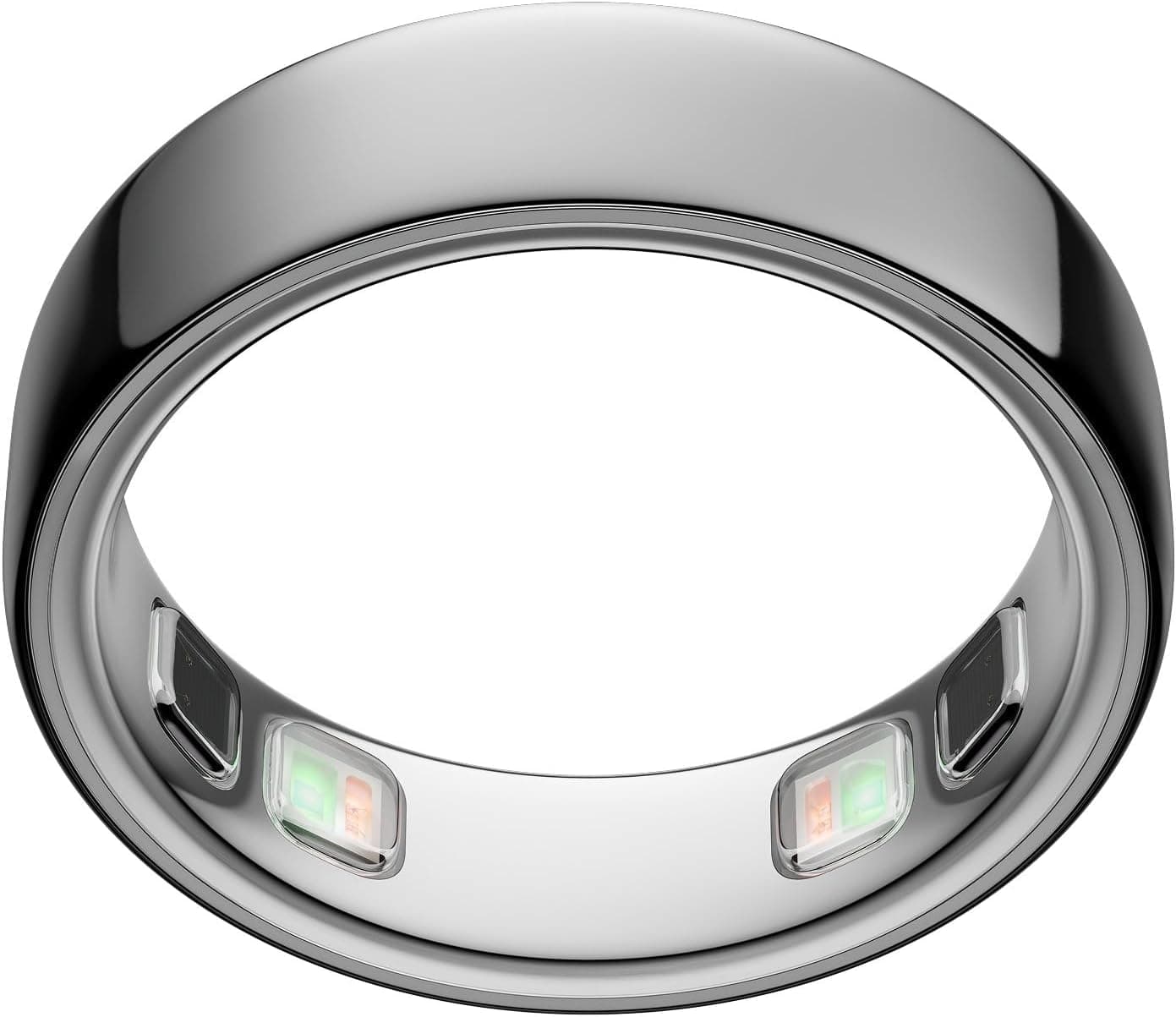
RingConn Gen 2
Titanium ring 2 mm thick, with 10 to 12 days of battery depending on size and no required fee to use the app.
What the RingConn Gen 2 measures
According to the official Gen 2 page, the ring has optical sensors (PPG), a three-axis accelerometer and a temperature sensor. With them it continuously records heart rate, heart rate variability (HRV), blood oxygen, respiratory rate, skin temperature, steps and calories, as well as sleep stages (REM and deep), a stress index and sedentary reminders.
Two important caveats on how to read that data, both from RingConn's own documentation:
- Its app guide asks you to look at several nights together and warns that a stage estimate from a single night can't establish a sleep disorder.
- The stress information uses physiological signals such as HRV and, according to that same guide, it doesn't measure emotions or diagnose anxiety.
All of this is estimates from a wellness device. Temperature is taken on the skin of the finger and is useful for spotting deviations from your own usual values, not as a clinical thermometer. If you want to place the ring against other formats, we have a comparison of smartwatch, smart ring and band.
How accurate is it: what exists and what doesn't
This is the section that weighs most in our score, and the conclusion is cautious.
What the manufacturer states. The Gen 2 page gives these figures: heart rate accuracy above 98%, a mean absolute HRV error below 3.5 ms, a mean blood oxygen saturation error below 1.9%, a mean respiratory rate error below 1 breath per minute, sleep time accuracy above 99% and step accuracy above 95%. The Gen 3 product page reproduces the same figures and presents them as the result of internal testing. We haven't found the protocol, the sample size or who took the measurements on either page, so these are the manufacturer's data from its own tests, not a validation.
What exists that is independent. A search for the ring's name on Europe PMC returns, among the results related to the Gen 2, a single work that compares it with a reference: a 2026 preprint in which the RingConn Gen 2 was recorded at the same time as a Polar H10 chest strap in 64 shooting athletes, in a 10-minute recording while seated after training. According to the abstract, heart rate matched very closely (mean bias of -0.42 beats per minute) and HRV showed high agreement (bias of 1.25 ms in SDNN and 1.62 ms in RMSSD, with wider limits of agreement in RMSSD). The authors themselves conclude that this holds for rest with little movement and that its accuracy during workouts, high-movement tasks or competition remains to be tested. It is a preprint: it has not been peer reviewed.
Sleep and apnea, at category level. We haven't located an independent validation of the Gen 2 against polysomnography (the reference sleep study) in peer-reviewed reviews. There is a 2026 systematic review with meta-analysis in the Journal of Translational Medicine covering 11 finger-worn devices compared with polysomnography across 28 articles. According to its abstract, pooled accuracy for distinguishing sleep from wakefulness was around 87%, and it dropped when classifying stages (around 0.65 for light sleep, 0.81 for deep and 0.74 for REM). The authors conclude that these devices may be useful for longitudinal sleep and wake monitoring in healthy adults or as screening for severe obstructive apnea, and that they should not replace polysomnography for mild apnea or for detailed sleep architecture. The abstract doesn't name brands, and we haven't been able to check whether the RingConn Gen 2 is among the 11 devices, so this is a reference about the category and not about this ring.
The practical reading: for seeing your own trends (how you sleep and how your heart beats at rest this week compared with last week) there are reasonable indications. For taking an isolated figure, such as the percentage of deep sleep, as an exact number, there is no specific independent support. It is a limitation shared by almost all rings; in the Oura Ring 4 and the Oura Ring 5 reviews we look at what published validation each generation has, and that is the criterion we use here.
Sleep apnea: what RingConn claims and what it doesn't
RingConn's battery guide names "Sleep Breathing Insights" (information about breathing during sleep) for the Gen 2, with automatic overnight monitoring, and the Gen 2 page describes a sleep breathing analysis. RingConn's guide comparing the Gen 2 with the Gen 2 Air (published on June 28, 2026) calls it "sleep apnea pattern insights" and says the Air doesn't include it. The Gen 2 page counts oxygen drops of 3% or more during sleep, links them to possible breathing irregularities and gives a figure of 90.7% for "sleep breathing analysis accuracy". The footnote that would explain how it was obtained doesn't appear in the text we were able to read, so we can't say with what sample or against what reference it was calculated.
What RingConn says about its scope is clear: the comparison guide describes these functions as wellness information, not medical diagnosis, and the Gen 3 page repeats that it is not a medical device and that its detection of breathing interruptions is not a diagnostic tool. We haven't checked whether any regulatory authority has cleared the feature; given what the manufacturer states, it should be treated as an indicative notice.
The UK's NHS describes sleep apnea by its symptoms (breathing that stops and starts, gasping or choking, frequent waking, loud snoring, daytime tiredness) and explains that a doctor may refer you to a sleep clinic, where a study with breathing and heartbeat monitors establishes whether there is apnea and how severe it is according to the apnea-hypopnea index. A ring alert doesn't replace that path. If you have those symptoms, the decision to see a doctor shouldn't depend on what the app says.
Workouts: automatic and manual tracking
Since October 2025, RingConn has offered automatic workout detection. In its note of October 8, 2025, it introduced automatic workout detection with version 3.11.0 of the app. According to that note:
- It works on the Gen 2 (with firmware FR02.016 or later) and the Gen 2 Air (FR04.007 or later). The Gen 1 doesn't support it because of hardware limitations.
- It detects continuous exercise of at least 10 minutes; if you stop and start frequently, it may not detect it.
- It is turned on manually. The official note gives the path "Me → Settings → Function Management" and the setting "Automatic Workout Detection". Names may vary by app version and language, and we haven't checked how they appear in Spanish.
- In this first phase it covers walking, running and cycling, with more activities planned. Workouts can also be logged manually, with more than 60 activity types.
- It costs on average around one day of battery, and RingConn suggests turning it off on rest days or before very long activities.
- The notification for a detected workout usually arrives 10 to 15 minutes after finishing, you need to open the app within the next two days to sync, and the data can be edited during that period.
What we haven't been able to verify is how many activity types are detected today, because the note spoke of expanding them before the end of 2025, nor the integration with Apple Health and Google Health Connect, which the note gave as planned. Even with automatic detection, a ring measures pulse with an optical sensor on the finger, and the authors of the preprint cited above leave its accuracy in motion as an open question. Until there is data, it's best to treat pulse figures during workouts as indicative.
Battery: how long it lasts according to RingConn
The Gen 3 vs Gen 2 comparison guide details the Gen 2's battery life: up to 10 days in sizes 6 and 7, up to 11 in sizes 8 to 11 and up to 12 in sizes 12 to 14. It adds that Sleep Breathing Insights may increase consumption, and the Gen 2 page mentions more than 150 days in total with the charging case. The Gen 2 case is wireless and size-specific, unlike the Gen 3's universal one.
RingConn's battery guide (June 28, 2026) lists what has an influence: the model, the size, vibration (Gen 3 only), Sleep Breathing Insights on the Gen 2, battery aging, temperature and firmware updates. It also states that it doesn't publish a formula that converts steps, workouts or movement into a battery percentage, so you shouldn't assume a workout causes significant drain. The only thing it quantifies is automatic workout detection, which according to its note costs around one day. These are manufacturer figures, not independent measurements.
To compare with other rings, each one's battery life is in its own review: the Samsung Galaxy Ring and the Oura rings.
Sizes, material and compatibility
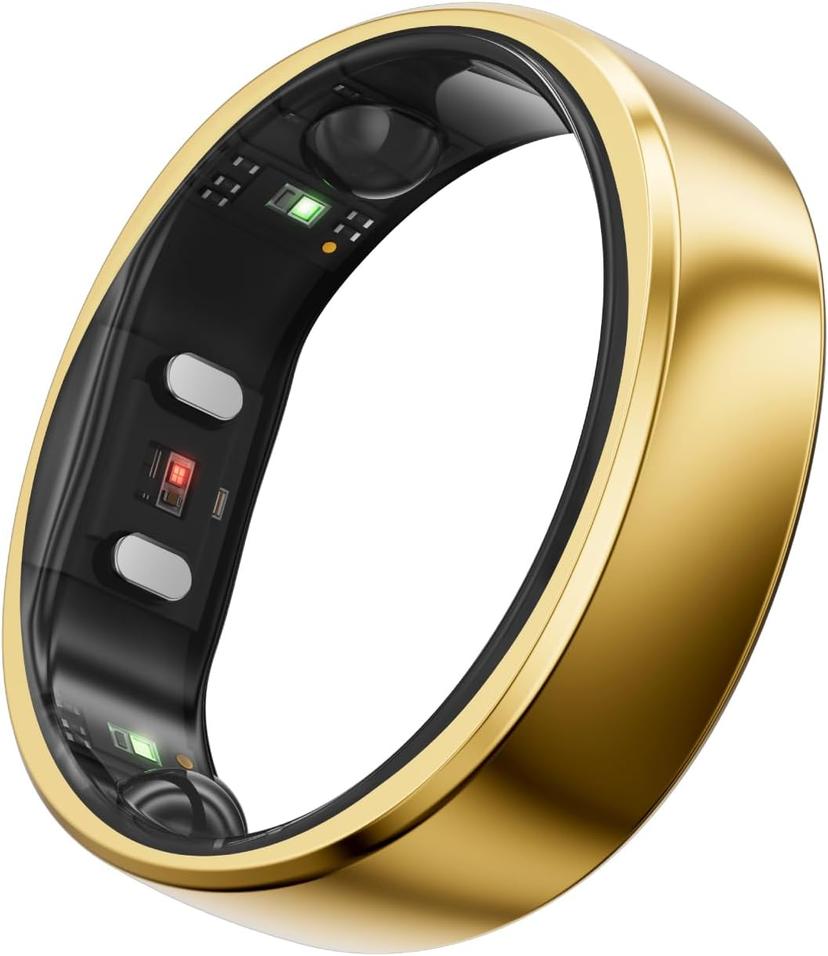
According to the guide comparing the Gen 2 with the Gen 2 Air, the Gen 2 is 2 mm thick and 6.8 mm wide, weighs 2 to 3 g and is made of titanium. The Gen 3 vs Gen 2 guide gives sizes 6 to 14. The Gen 2 page adds that it combines aerospace-grade titanium with medical-grade epoxy resin, in four finishes (silver, gold, rose gold and matte black). The Gen 3 sizes follow a different system (6 to 15), so they are not interchangeable with the Gen 2's.
We haven't found an open source that supports claims about comfort while sleeping, so we don't make them: it is something each person will have to check for themselves.
According to RingConn's app guide, the Gen 3 and Gen 2 pages require iOS 17.0 or later and Android 10.0 or later. The ring needs the app to work and, according to RingConn's documentation, you should open it to confirm that data has synced before interpreting an empty or incomplete chart.
Is there really no fee?
The short answer is that there is no required fee, but with nuances worth separating.
What is included. RingConn's cost guide, published on June 26, 2026, states that current models don't require a recurring monthly fee for the core functions, nor an annual fee for the basic app experience. Its note on RingConn Partner+, from October 26, 2026, answers in its FAQ that no paid plan is needed to use the app.
The paid layer. That same note presents Partner+ as an optional service that multiplies by ten the daily limit of conversations with the AI assistant. According to RingConn, the free plan and Partner+ offer the same conversation functions, and only the limit changes, which is not unlimited. There is a 7-day trial that becomes paid if it isn't canceled at least 24 hours beforehand. The ring's data, therefore, isn't behind a wall, but an optional paid layer already exists within the app. The app guide adds that the AI assistant was listed as "coming soon" on the features page and that this doesn't imply it is available for every account.
The caveat. The cost guide speaks of models that are current at the time and of core features, without defining which ones count as core or for how long, and the app guide clarifies that an app without a subscription doesn't promise that any future service will be included forever. We haven't found any commitment to permanence. The risk is that of any ring that depends on its own app: without it, the hardware loses almost all its value.
By contrast, the model of the Oura Ring 4 and the Oura Ring 5 requires a membership for the full app; we have broken down what that means in the comparison Whoop or Oura: what it really costs. On running costs, the RingConn comes out ahead, always with the reservation above.
Availability in Spain
RingConn lists Spain in its shipping policy within the European Union group, with free shipping above a minimum amount that the page itself states and an estimated time of 3 to 5 business days from its European warehouse; for products with little local stock, EU orders may ship from Hong Kong, taking 6 to 10 business days. The page doesn't show an update date (only the 2026 copyright) and we consulted it on November 10, 2026. The ring also has a listing on Amazon.es, which the buy button links to. On Amazon, size and color are variants of the listing, so it's worth confirming the size before buying.
Gen 2 vs Gen 3 and vs other rings
According to RingConn's comparison guide, the Gen 3 adds vascular health trends (which RingConn presents as trends, not as a blood pressure measurement) and vibration alerts on the ring, and shares the same sensors and sleep functions with the Gen 2. It is somewhat thicker and heavier (2.3 mm and 2.5 to 3.5 g, versus 2 mm and 2 to 3 g), states 10 to 12 days with vibration and 11 to 14 without it, and uses a universal case. If those two functions matter to you, the current listing is the Gen 3. If not, the Gen 2 covers the essentials; in its listing, the difference isn't in the sensors.
Compared with the rest:
- Oura Ring 4 and 5: Oura requires a membership and has a longer published validation track record; we review the details in their reviews. If ongoing cost weighs more, the RingConn has the advantage.
- Samsung Galaxy Ring: also avoids the fee, but is designed for Android phones; the Samsung Galaxy Ring has its own review. With an iPhone, the decision is simpler.
- Big picture: you can see how they fit together in the smart ring comparison.
Verdict and score
Our score weighs, in this order, the accuracy of what it measures, software and subscription, battery life, comfort and value for money. The RingConn Gen 2 gets a 74.
- Accuracy (greatest weight): the manufacturer's own figures without a published method, a favorable but limited preprint covering seated rest only and no independent validation of sleep or apnea on this model. That is why it doesn't score high.
- Software and subscription: no required fee stated and with automatic workout detection, but with an optional paid plan in the app and no commitment to permanence.
- Battery life: 10 to 12 days according to the manufacturer, a strong point compared with other rings, with the caveat that it is a stated figure.
- Comfort: with no open source, we score it neither for nor against.
- Value for money: we don't write prices; compare the Amazon listing with those of the alternatives.
The score falls below that of rings with more published studies on their generations and somewhat below the Galaxy Ring, which shares the absence of a fee but limits its use to Android. Automatic workout detection adds to it, but it doesn't change the demonstrated accuracy, which is what weighs most.
Pros
- •Battery life of 10 to 12 days depending on size, with a charging case that extends it to more than 150 days, according to RingConn.
- •No monthly or annual fee for the core functions, according to RingConn's cost guide.
- •Automatic detection of workouts longer than 10 minutes with app 3.11.0 and firmware FR02.016 or later.
- •2 mm thick and 2 to 3 g, with a titanium body.
- •A 2026 preprint shows good agreement of pulse and HRV with a chest strap at rest.
Cons
- •The accuracy figures are the manufacturer's own, and there is no independent validation of sleep or apnea on this model.
- •The apnea figure (90.7%) has no visible method or sample, and it is not a medical device.
- •Partner+ is already an optional paid layer within the app, and there is no commitment that the free functions will stay free.
- •Automatic detection costs around one day of battery and for now covers few activities.
- •It is no longer the latest generation: the Gen 3 adds vibration and vascular trends.
Veredicto Final del Experto
RingConn Gen 2
Anyone who wants to see sleep and pulse trends with an iPhone or Android, with no required fee, and values battery life over having independent studies of the model.
Oura Ring 4 / Oura Ring 5
Anyone who gives more weight to a published validation track record and to the app than to avoiding the membership.
Skip it if…
You want sleep or apnea figures backed by independent studies of this model, or you are looking for vibration on the ring and vascular trends (Gen 3).