In this article
Mouth tape is an adhesive patch placed over the lips at bedtime to keep the mouth closed overnight. It went viral on social media with the promise that forcing yourself to breathe through your nose improves rest, reduces snoring and prevents dry mouth. It is also one of the few sleep products where a bad purchase decision costs more than money: prudence means starting with the risks, not the promises.
This piece reviews the DreamTape mouth tape that this page links to. The site has not tested it physically: the analysis relies on the product's public information, its image, and the scientific literature and medical-society warnings cited throughout the text. Anything that is not documented is stated as such. A consumer mouth tape is not a medical device and cannot be used to diagnose or treat any condition.
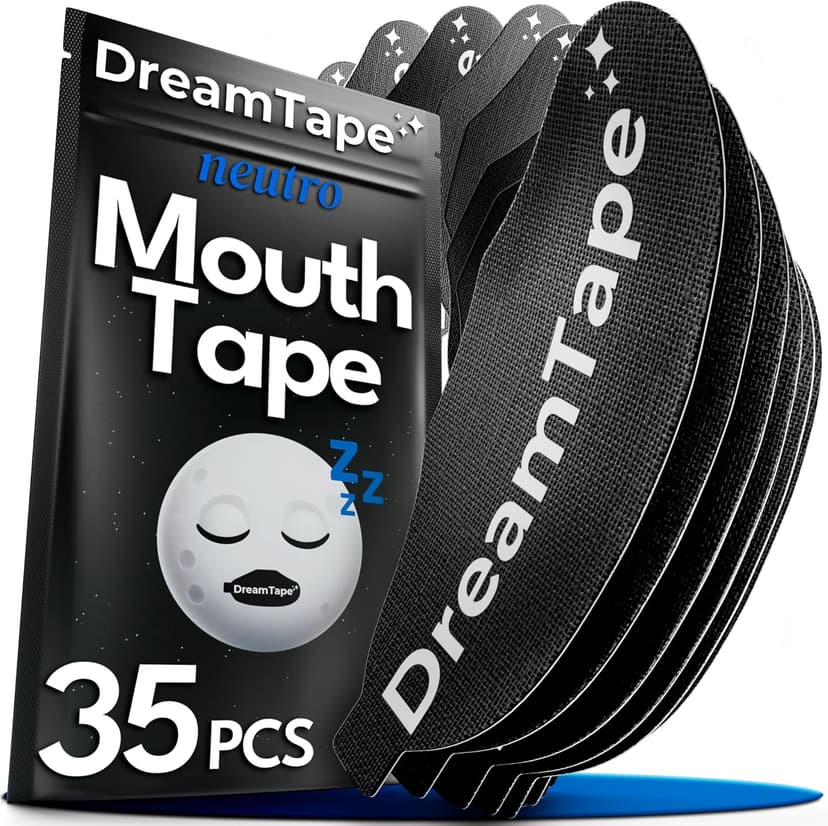
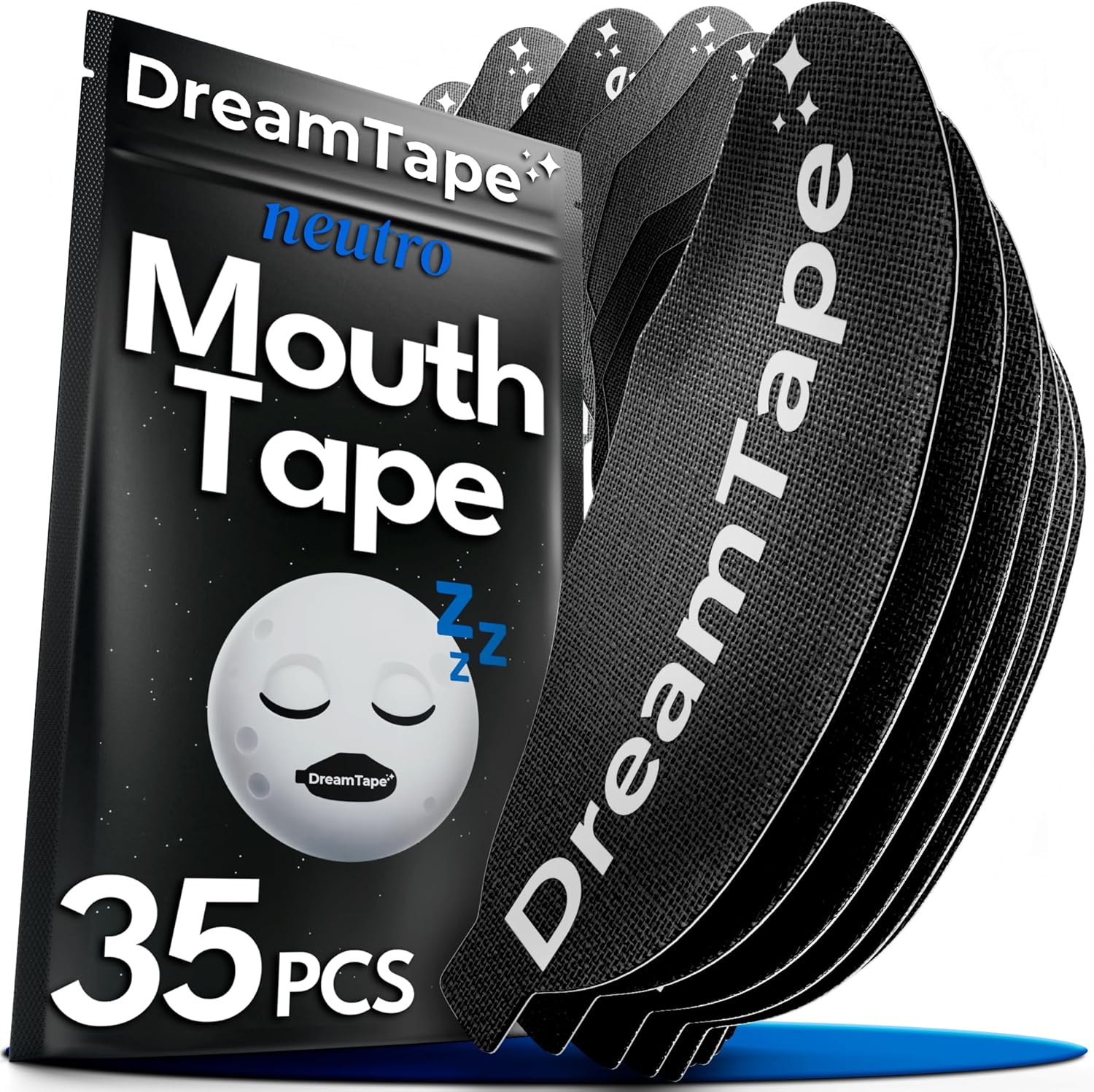
DreamTape Mouth Tape, 35 pieces
Black fabric patches to keep the mouth closed during sleep, in a 35-piece bag, according to the product image.
What exactly is this product
The product this page links to is DreamTape's 35-piece bag in the "neutro" (plain) version, advertised as a sleep mouth tape that "reduces snoring" (a claim examined below). Its image shows a black bag with the DreamTape brand, the word "neutro" and "35 PCS", along with several elongated black fabric patches with a tab at one end.
What we know and what we don't, separately:
- Brand and presentation: DreamTape, a 35-piece bag in the "neutro" (plain) version. This appears in the listing and in the image itself.
- Manufacturer and seller: we could not identify them. We have not found an official brand website with a technical data sheet, so the analysis cannot rely on manufacturer documentation.
- Material and adhesive: it looks like fabric, but we could not verify the composition, whether the adhesive is hypoallergenic or whether the patch has any breathing perforation. If the listing claims any of this, we do not treat it as fact here.
- Variants: we have not checked whether other versions of the brand exist or how they would differ. This review refers only to the linked 35-piece "neutro" variant.
For a disposable patch, not having been able to verify the material is the first serious drawback: what goes on your face and stays on your skin for hours is exactly where you want to know what it is made of. Buyers should know that this information is missing.
What mouth tape promises and what can be checked
The logic of the product is simple: if the mouth stays closed, air comes in through the nose. Supporters of the practice argue that this filters, warms and humidifies the air better, reduces dry mouth on waking and lowers snoring. None of those ideas is absurd in the abstract; what matters is whether there is data showing that a strip over the lips at night delivers them safely.
The data is scarce. In 2025, a Canadian team published the most cited systematic review on the subject in PLOS ONE: Rhee et al., 2025, registered in PROSPERO. It searched for studies between 1999 and 2024 on mouth taping in people with mouth breathing, sleep-disordered breathing or obstructive sleep apnea. After screening, ten studies remained (between 213 and 233 participants, depending on whether you read the abstract or the results of the article). Its conclusions, in summary:
- Low quality: all ten studies were rated "poor" quality on the Newcastle-Ottawa scale. They were small (9 to 71 people), with very different designs, and a meta-analysis was not possible. Only one was a randomized trial.
- Benefit in a narrow group: two studies observed statistically significant improvements in the apnea-hypopnea index (AHI) in people with mild obstructive sleep apnea. Other studies found no differences.
- Risks flagged: several of the studies discuss the risk of asphyxia if the nose is blocked and regurgitation during sleep. And many excluded people with nasal obstruction or significant nasal pathology from the start.
- The authors' conclusion: the available data do not support mouth taping or oral occlusion as a solid clinical intervention for sleep-disordered breathing, and they consider that the risk of indiscriminate use could be serious.
One of the studies with a favorable result is Lee et al., 2022, a preliminary retrospective study at a hospital in Taiwan with 20 adults with mouth breathing and mild apnea. Each participant had a baseline home sleep study and another a week later with the mouth sealed with a hypoallergenic 3M silicone tape; the median AHI fell from 8.3 to 4.7 events per hour and the snoring index improved similarly; 13 of the 20 participants reduced snoring by at least half. It has to be read with care: it is a small, single-arm sample with no control group, with selected patients who tolerated the tape and with one specific medical tape. The authors themselves do not recommend it in moderate or severe apnea. It cannot be extrapolated to a consumer patch or to the general population.
An honest summary is therefore this: there is no solid evidence that mouth tape improves sleep, reliably reduces snoring or helps with apnea; there are weak signs of usefulness in a very specific profile that, in addition, needs a prior medical diagnosis, and there are documented risks outside that profile.
Risks and warnings: when not to use it
This is the part that weighs most in the purchase decision. The warnings gathered by organizations and media that have consulted specialists agree quite closely:
- Nasal congestion or nasal pathology. According to Consumer (Eroski), citing the Spanish society of otolaryngology (SEORL-CCC), people with a deviated septum, frequent congestion, nasal polyposis or allergies may wake up feeling unable to breathe properly. The review by Rhee et al. warns, in general terms, of a potentially serious risk of asphyxia when the nose is blocked. A passing cold counts.
- Sleep apnea, diagnosed or suspected. According to SEORL-CCC as reported by Consumer, it can worsen the problem in people with obstructive apnea and be counterproductive, and Lee et al. do not recommend it in moderate or severe apnea. Loud snoring, breathing pauses that someone else has noticed, waking up gasping or daytime sleepiness are reasons to see a doctor before covering anything: they can be signs of apnea, which needs diagnosis and treatment. A tape does not replace a sleep study or a prescribed therapy (for example, CPAP).
- Reflux and vomiting. Rhee et al. mention the risk that, with the mouth closed, regurgitated contents cannot be expelled.
- Children. The sources consulted advise against its use in minors. A child who breathes through the mouth or snores should be assessed by a pediatrician or an otolaryngologist.
- Anxiety, light sleep or claustrophobia. Consumer notes that the strip can cause discomfort, skin irritation, anxiety and sleep interruptions.
- People with reduced mobility, or who have consumed alcohol or sedatives. If something goes wrong during sleep, removing the tape must be easy and quick. If there is any doubt that you could do it (very deep sleep due to alcohol or medication, for example), it is not an option. This is a reasonable precaution, not the conclusion of a specific study.
A piece of context that helps put the practice in perspective: according to a 2023 survey in the United States reported by Consumer, one in ten people had tried the trend to improve their sleep. John Saito, a spokesperson for the American Academy of Sleep Medicine, said that taping your mouth shut to sleep was "extremely dangerous". It is one specialist's opinion, not proof, but it sets the tone of the medical community.
If any of this sounds familiar, the recommendation is to see a doctor or an otolaryngologist before buying any tape. And if you already use one and you notice shortness of breath, dizziness, intense anxiety or significant irritation, remove it and seek advice.
What to expect from DreamTape specifically
With the product's public information, what can be said without making anything up is little, and it is worth saying it plainly:
- Format. A bag of 35 disposable pieces: for someone using it every night, it covers a little over a month, so it works for an extended trial without having to restock. The real cost of keeping it up is replacing patches; there is no app, battery or subscription. Check the price on the purchase button, because it changes.
- Shape. According to the image, a wide patch with a tab at one end, which normally serves to peel it off easily. That is an inference from the photograph, not a claim documented by the seller.
- What is missing. Manufacturer documentation, skin-irritation tests, studies with this product or a statement of whether it is intended for anything beyond "mouth tape for sleeping". The listing's own claim, "reduce ronquido" (reduces snoring), is a seller's promise with no study behind it. We do not accept it here.
We do not include a synthesis of user opinions on this product: we have not found verified reviews of this product and we are not going to invent them. The only documented information on tolerance is what Consumer reports: the strip can cause discomfort, skin irritation and anxiety.
How to tell whether it is doing anything
If, even so, someone with a clear nose and no signs of apnea wants to try it, the practical problem is how to judge whether anything changes. Two warnings apply here:
- Subjective feeling is misleading. Sleeping "better" depends on expectations, tiredness and that week's habits. A patch you can feel on your face may disturb sleep in a different way, and changing several things at once makes it impossible to know which one matters.
- Consumer devices do not diagnose. Wearables estimate sleep with motion and pulse sensors; none replaces a polygraphy. A smart ring without a subscription can give trends in heart rate, variability and estimated stages, useful for comparing weeks with each other, but they cannot say that the tape "works" or rule out apnea. And if the ring, the watch or your partner detects breathing pauses, the signal is to see a doctor, not to buy more accessories.
A reasonable approach, if you try it, is to change one variable at a time, note how you feel on waking and keep the rest of your habits the same for two or three weeks. And to stop at any sign of breathing discomfort.
Lower-risk environment options
Before covering your mouth, there are environment levers with clearly lower risks. They do not solve snoring or apnea, but they do address the noise and light of a poorly prepared bedroom:
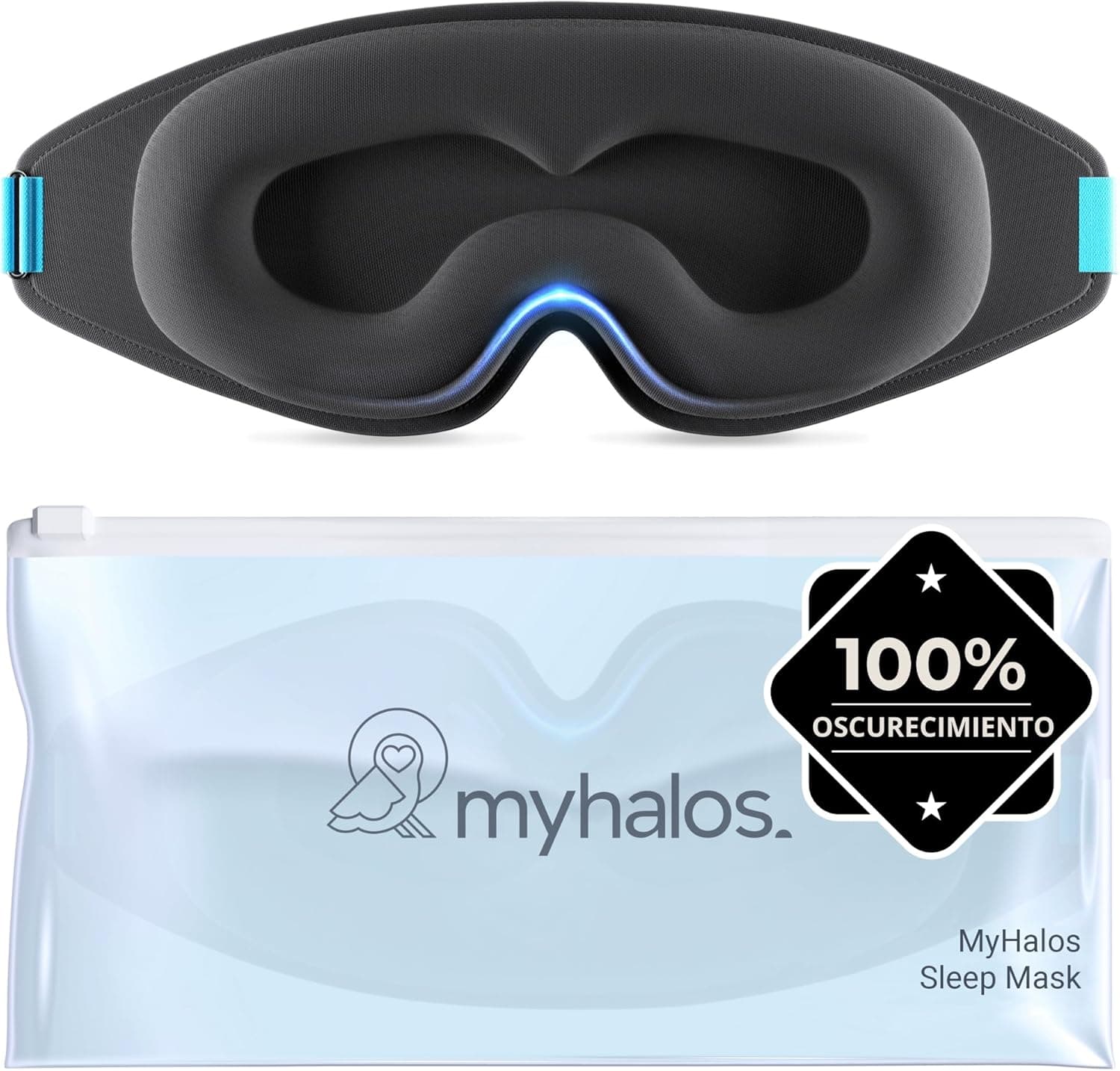
- Darkness. A sleep mask like the MyHalos solves a different problem (incoming light) and is a low-cost accessory with a much lower risk profile.
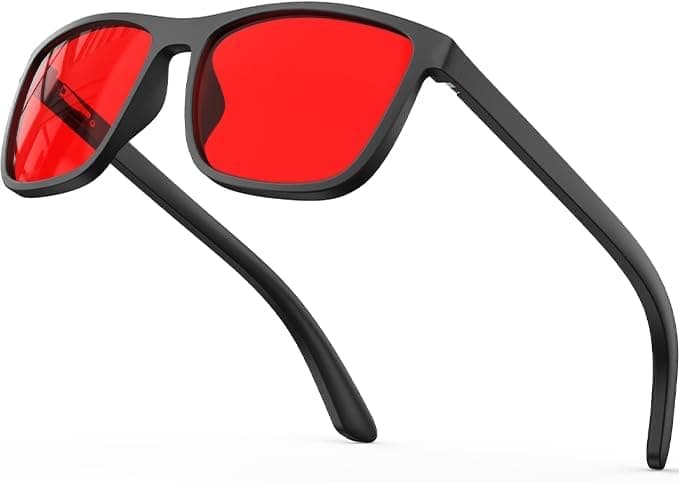
- Light at night. The Bloomoak blue-light blocking glasses are another low-cost option for the hour before bed; their real effect depends on light exposure and timing, and our review treats them with caution.
- Red light and chronobiology. The blog post on red light, mitochondrial melatonin and sleep goes over what the evidence supports and what is speculation.
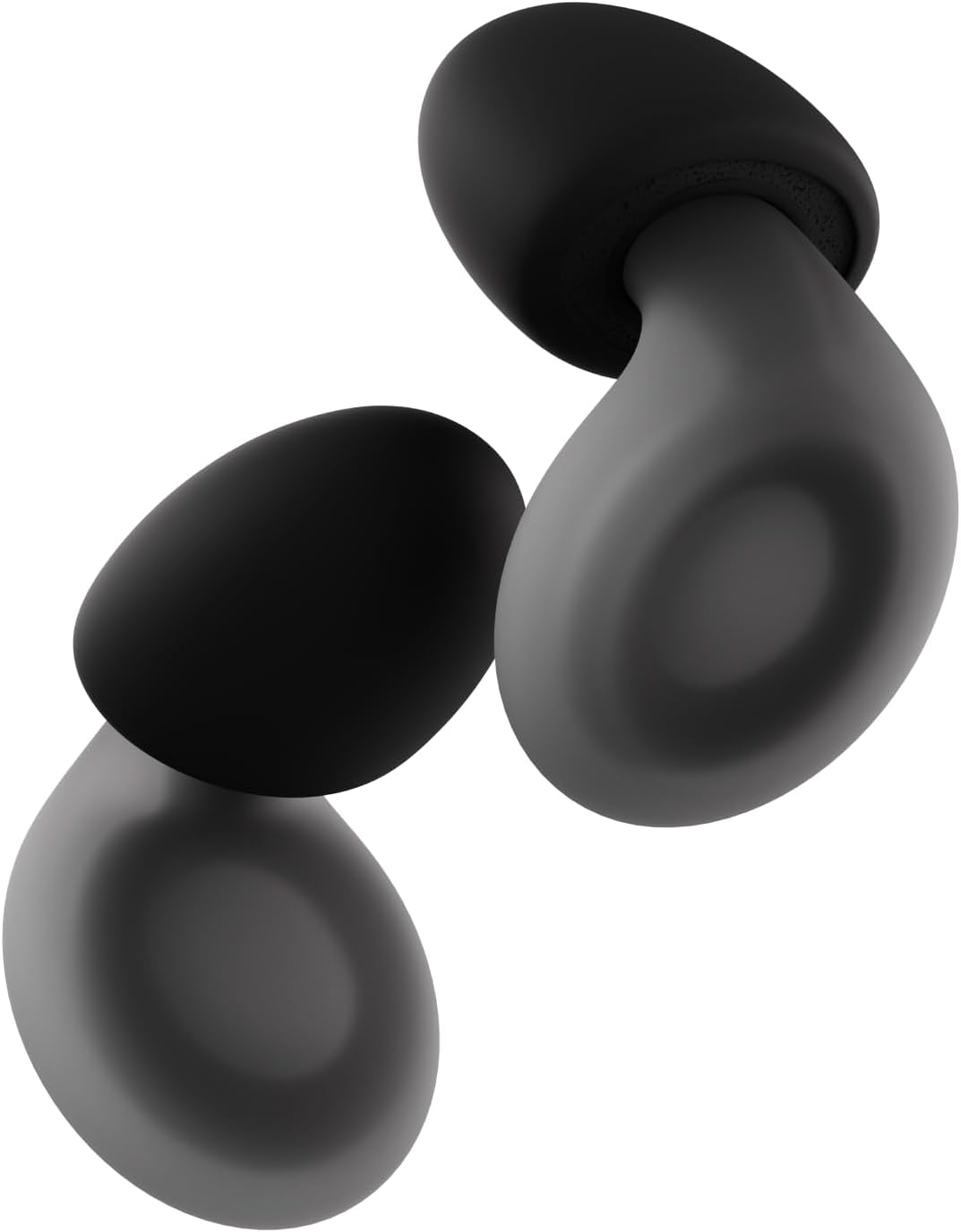
- Noise. The Loop Dream earplugs target bedroom noise, not breathing; the review goes over their evidence and risks.
- Measurement (does not change sleep). The Polar H10 is a chest strap that measures heart rate and HRV: it helps you understand your sleep before changing it, not to improve it by itself, and its use with Sleep² is covered on the blog.
- Nasal breathing and snoring. For people who breathe through the mouth or snore, Consumer notes that specialists suggest considering orofacial myofunctional therapy (tongue and oral muscle exercises to improve lip closure), and that room humidifiers or nasal dilators might help in some cases, always under medical guidance.
Pros and cons
Pros
- •It is a consumable with no electronics: no battery, app or subscription, and the 35-piece bag covers more than a month of nightly use.
- •It allows a short, reversible trial of keeping the mouth closed during sleep, for people with a clear nose who have ruled out breathing problems with a doctor.
- •In a narrow group (mild apnea, no nasal obstruction, with medical tape in small studies) there are signs of less snoring; the same cannot be assumed for this product.
Cons
- •There is no solid evidence that it improves sleep or snoring, and the 2025 systematic review does not support mouth taping as a clinical intervention: all ten studies were of poor quality.
- •Potentially serious risk with a blocked nose (cold, rhinitis, deviated septum, polyps) and possible worsening in undiagnosed apnea.
- •We could not verify the manufacturer, material or adhesive, and there are no tests with this product: the strip may irritate the skin and we do not know what it is made of.
- •It measures nothing and does not let you know whether it works: any improvement is subjective.
How we score this tape
Our score weighs, in this order, the accuracy of what it measures, software and subscription, battery life, comfort and value for money. A mouth tape measures nothing and has no software or battery, so the criteria that weigh most do not score and the weight falls on two things: what can be backed by evidence and the verifiable information about the product. Both are weak. The score (48) goes up because it is cheap to try and requires no fees, and goes down because of weak and mixed evidence, documented risks in a broad profile of people and a product with no verifiable manufacturer or material. It is a deliberately low score: this is not a bad product in itself, but one whose real usefulness, for most people, has not been shown.
Verdict
Veredicto Final del Experto
DreamTape Mouth Tape
A healthy adult with a clear nose, no heavy snoring and no suspected apnea, who wants to experiment with a cheap, reversible patch and is willing to remove it at any discomfort.
Before buying anything
If you snore, breathe through your mouth or wake up tired, a visit to your doctor or an otolaryngologist offers more than any patch, and rules out an underlying apnea.
Avoid if…
You have a blocked nose, apnea (diagnosed or suspected), reflux, anxiety when covering your mouth, or it is for a child. Also if you expect it to treat snoring or improve sleep: there is no solid evidence for that.
What we could not verify
We have not been able to verify the seller, the manufacturer, the patch composition, the type of adhesive, whether it has a perforation or the manufacturer's instructions for use, so none of these are given as fact. The studies cited used tapes and conditions that do not match those of this product. And this piece is general information, not medical advice: if you have any doubt about your breathing during sleep, the right person to ask is a healthcare professional.