Sleep and training gifts: a guide by profile
In this article
Giving something for sleep or training seems easy until you have to choose: most gift lists mix useful accessories with gadgets that promise more than they deliver, and it is not always clear who should not be given them. This guide does the opposite. It sorts seven products that already have their own review on the site by the profile of the person you are giving it to, and for each one it says who it suits, who it doesn't and what catch its review acknowledges. With the late-November sales and Christmas close, it pays to decide with judgment rather than in a rush; this piece promises no deals or discounts, it only helps you pick the right gift.
How it was done. Everything said here comes from our published reviews, which rely on official spec sheets, studies and summaries of user opinions identified as such. No product has been physically tested, and the guide adds no new data: if a review says something could not be verified, the same applies here. None of these products is a medical device or a way to treat a sleep problem: if the person you are giving it to sleeps badly on a persistent basis, the useful step is to see a healthcare professional. The price of each product is the one Amazon shows on its listing; it is not written here because it changes.
Summary: what to give, by recipient
| Recipient's profile | Gift | The main catch | | :- | :- | :- | | Sleeps with light they can't control | MyHalos eye mask | Nobody independent has measured its light blocking | | Sleeps with noise (snoring partner, street) | Loop Dream earplugs | You won't hear alarms or a baby; the attenuation figure is the manufacturer's | | Goes to bed with screens and wants to try something | Bloomoak dark red lens glasses | Limited and mixed evidence; distorts colors | | Runs or does interval training and already has a watch | Polar H10 | Does nothing on its own: needs a watch, phone or app | | Wants to start tracking steps and sleep | Xiaomi Smart Band 10 | No independent validation and no longer the latest generation | | Finds it hard to wake up | Lumie Bodyclock Shine 300 | Evidence from small studies and no published lux figure | | Spends hours sitting or trains without being too demanding | Theragun Relief | Moderate intensity; the evidence on recovery is modest |
The first three gifts are the lowest commitment: no app, no battery, no fee. The next two (heart rate strap and band) require the person to use a phone or a watch. The last two are the "big gift" of the list.
For someone who sleeps with light or noise
This is the clearest profile and the one with the least risk of getting it wrong: someone who complains about the streetlight, the blind that won't close, the partner who snores or the street. Before buying anything, one question: what bothers them, the light or the noise? They are different problems and each accessory tackles only one.
MyHalos eye mask: if the complaint is light

MyHalos sleep mask (black, 1 unit)
Memory foam eye mask with a 3D design meant not to press on the eyes and a flexible nose piece, according to the listing.
Who it suits. Someone who sleeps with light they can't control: travel, shift work, a roommate who reads at night. The listing presents it with 3D memory foam cups that, according to the seller, don't press on the eyes and leave room for false eyelashes, a detail that matters if the person wears them. It has no battery, app or subscription: it is a piece of clothing, which makes it a gift with no complications. In the MyHalos eye mask review you will find the full details of the linked variant (black, one unit).
Who it doesn't. Someone who expects an eye mask to measure or improve sleep on its own: it measures nothing. And someone who needs proven light blocking, because the listing claims it blocks light completely but gives no measurement, and we have not found an independent one either.
The honest catch. The three factors that matter most in an eye mask (how much light leaks in around the nose, how it fits and whether it is warm) could not be verified: the listing only mentions a pull-over-the-head closure, without describing the fit. There is no weight or dimensions in the listing either. As for the effect on sleep, the evidence with eye masks comes mostly from intensive care units and simulations with healthy volunteers, almost always with earplugs at the same time, and is of low or very low certainty, as the Cochrane review on sleep in intensive care reports. A 2022 laboratory study in PNAS with 20 adults associated a night with about 100 lux with a higher nighttime heart rate and more insulin resistance the next day, but it did not test eye masks: it says something about light, not about this product.
Loop Dream earplugs: if the complaint is noise
Loop Dream
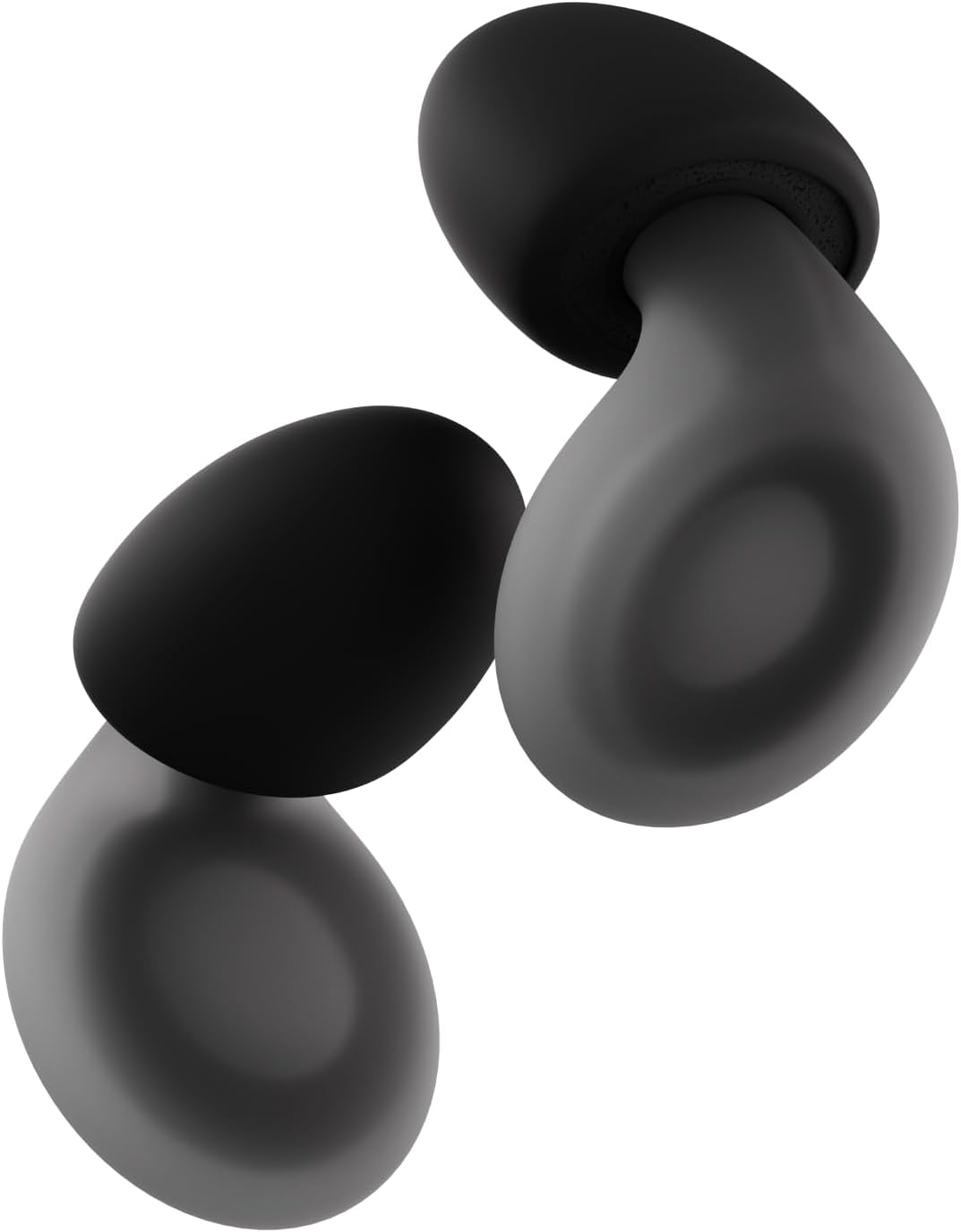
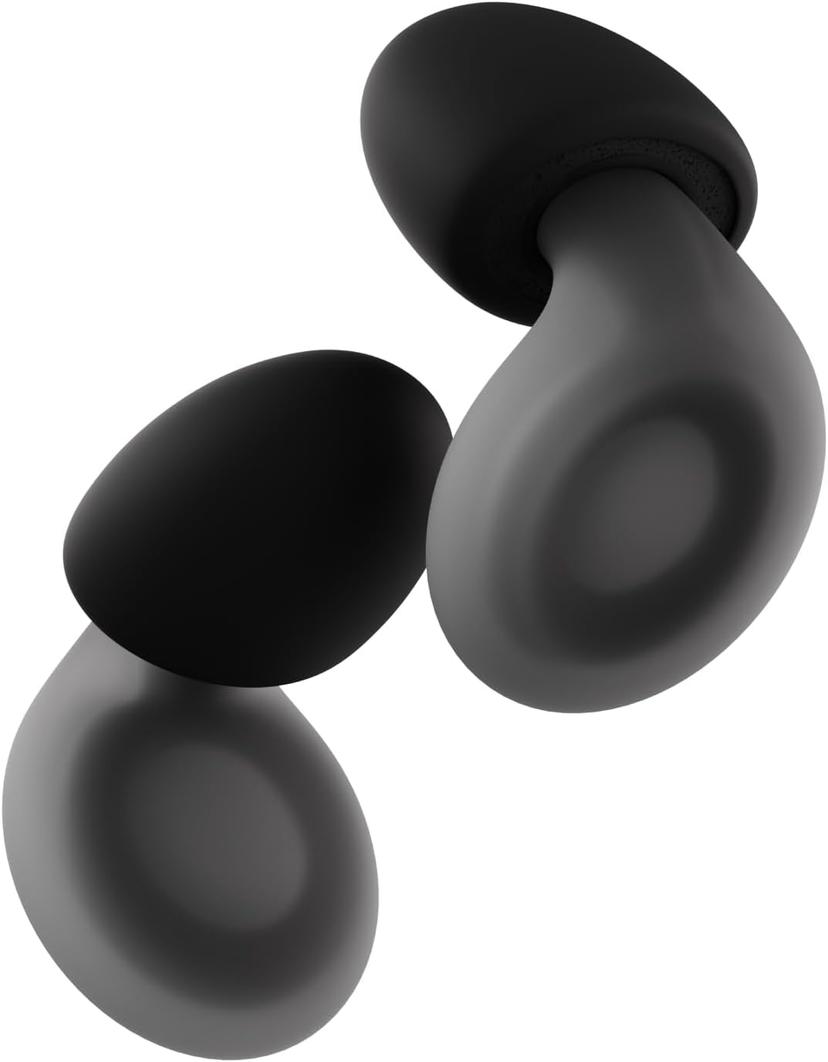
Silicone earplugs with memory foam tips designed for sleeping, even on your side, with 27 dB of attenuation (SNR) according to Loop.
Who it suits. Someone who sleeps on their side with noise they can't control, has already found that they tolerate something in the ear, but can't stand the pressure of foam. Loop presents them as its model specifically for sleeping: small body, low profile, four tip sizes (XS to L) and a dedicated case for the nightstand. They are reusable and have no app or fee. Their features and the nuances of the attenuation figure are in the Loop Dream review.
Who it doesn't. Anyone who needs to hear their surroundings at night: a baby, a dependent person, on-call duty, a smoke detector or an alarm clock. Nor anyone with otitis or frequent earwax buildup, a perforated eardrum or tinnitus, who should talk to a professional first. And it is not a good idea to give them to someone who has never slept with earplugs: to find out whether they tolerate them, disposable foam ones answer the same question with less outlay.
The honest catch. The "up to 27 dB SNR" attenuation is a brand figure, not an independent measurement, and the 91% satisfied users figure comes from an internal Loop test with 55 participants over 10 nights, with no indication of who ran it. Loop's own documents acknowledge that loud snoring may still be noticeable, that wearing them every night may favor earwax buildup and that the tips should be replaced every 100 nights. In the user opinions we were able to summarize, comfort is divided and some consider them less isolating than foam: it is a very personal matter, so the person giving them should know they may not fit. The general evidence on earplugs is the same as for the eye mask: ICU and simulations, low certainty.
If the person suffers from light and noise at the same time, the two gifts complement each other, although in studies they were almost always used together and it can't be said which does what.
For someone who goes to bed with screens
Bloomoak dark red lens glasses: a gift to try

Bloomoak Sleep Master (dark red lens)
Dark red lens glasses with a TR90 frame and anti-reflective coating, aimed at nighttime use.
Who it suits. Someone who has already sorted out their nighttime routine (low lights, schedules, fewer screens) and is curious to try glasses during the hour or two before sleep, which is the use the listing recommends. They need no battery, app or subscription. The details of the linked variant, a dark red lens, are in the Bloomoak glasses review.
Who it doesn't. Someone who expects glasses to fix insomnia on their own, someone who wants them to work at a screen (the dark red lens clearly alters color, so they are no good for design or editing) and someone who wants them against eye strain: according to the 2023 Cochrane review on blue-light filtering lenses, within less than a week there is little or no difference in eye strain (low certainty). If the person needs prescription glasses, the listing does not say whether these can be worn over them.
The honest catch. It is the biggest of the whole list and it should be said plainly: the same Cochrane review notes that it is not known whether these lenses improve sleep compared with regular ones (very low certainty); of six trials with 148 participants, three found improvement and three found no differences. A crossover trial with 14 people with insomnia symptoms and amber lenses was favorable on mostly subjective measures, and it is not known whether a dark red lens behaves the same. In addition, the listing gives two different filtering figures (99% and 100%) on the same page and promises effects, such as helping with jet lag, that we have not seen supported. It is a gift of curiosity and trial, not a solution. If the doubt is between this and an eye mask, the eye mask acts on a different moment: darkness during sleep, not the hours before.
For someone who runs or trains with heart rate
Polar H10: the gift for someone who already has a watch
Polar H10
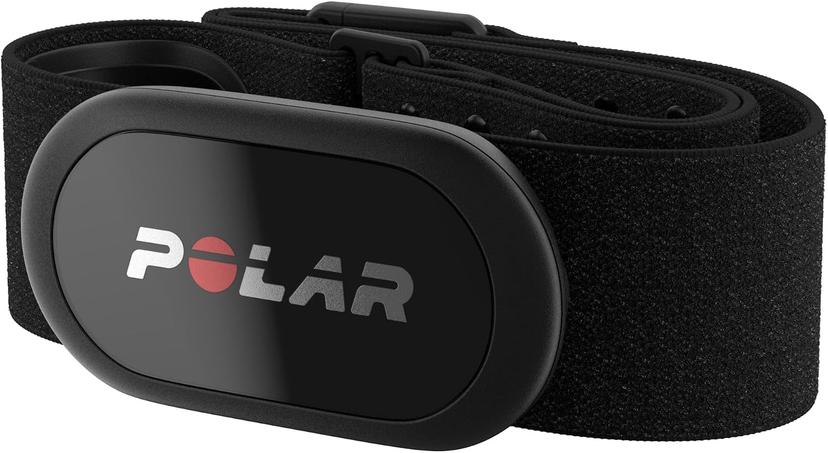
Chest strap with ECG, Bluetooth, ANT+ and GymLink, a replaceable battery of up to 400 hours and internal memory for one session.
Who it suits. Someone who does interval training or short sets, or measures their heart rate variability (HRV) in the morning, and wants a signal backed by studies. The H10 measures the heart's electrical signal with electrodes on the sternum instead of using an optical sensor on the wrist; according to Polar, it uses a replaceable coin cell with up to 400 stated hours, which is roughly a year of one-hour daily training, and there is no fee. It also fits someone who already wears a watch and wants to improve their data, because a strap complements the watch without replacing it. It is all in the Polar H10 review.
Who it doesn't. Someone looking for a single device that records sleep, steps and recovery: the H10 does none of that on its own. Nor someone who can't stand an elastic strap on the chest, or who doesn't know whether their watch or app supports a Bluetooth or ANT+ sensor. Before giving it, find out what the person uses: without a compatible watch, phone or app it shows nothing.
The honest catch. Three nuances from the review. First, the studies are of healthy adults, mostly young and in a laboratory, and say nothing about arrhythmias: it is not a medical product and cannot be used to diagnose. For example, a 2026 study with 43 healthy adults found excellent agreement with laboratory ECG for resting HRV, but that conclusion is limited to that group. Second, in a 2025 test with synthetic signals, the H10's RR intervals were the slowest of the four straps compared (about 2.6 seconds), so in very short sets its advantage is signal quality, not speed. Third, the strap needs wet electrodes before each use, and if you forget to disconnect the module, the battery lasts less than stated. If the person already has a watch that works well for their type of training, the strap adds little. For sleep, the evidence with a chest strap comes from authors linked to the app's company, and is discussed in the article on Sleep² and the Polar H10.
For someone who wants to start tracking
Xiaomi Smart Band 10: the first band

Xiaomi Smart Band 10
AMOLED band with sleep, heart rate and SpO2, up to 21 stated days of battery and no built-in GPS.
Who it suits. Someone who has never worn a wearable and wants to see how much they walk, roughly how much they sleep and how their pulse behaves, without a big investment or charging a device every few days. It records steps, heart rate, blood oxygen saturation, sleep and over a hundred workout modes, with up to 21 days of battery in typical use according to Xiaomi, and works with Android and iPhone through the Mi Fitness app. No fee appears in the sources we have read. The Xiaomi Smart Band 10 review covers the rest.
Who it doesn't. Someone who needs built-in GPS (it relies on the phone for outings), HRV to adjust training load, ECG, skin temperature or data with published independent validation. Nor is it a good idea if the person is going to use the data for health decisions: neither the manufacturer sells it that way nor do the reviews treat it as such. The 21-day figure corresponds to light use; with the always-on display and full monitoring, the listing itself drops to about 8 or 9 days.
The honest catch. There are two, and the second is one of those that matter when giving a gift. The first: we have not found any independent validation of its heart rate, its oxygen or its sleep; what exists are media reviews with short tests, and one of them indicates that its sleep duration estimate tends to be somewhat optimistic. The second: the Band 10 is no longer the latest generation. According to media cited in the review, the Smart Band 11 has been on sale in Spain since October 2026. Before giving it, it is worth comparing the two listings and confirming which model appears on the purchase page. Nor should it be confused with the Smart Band 10 Pro, which is a different model.
The big gift
If the budget stretches further, two devices on the list go beyond the "accessory" format. Both come with a lot more fine print, so it is best to give them to someone who has asked for them or who clearly fits.
Lumie Bodyclock Shine 300: for someone who wakes with difficulty

Lumie Bodyclock Shine 300
Light alarm clock with sunrise and sunset from 15 to 90 minutes, FM radio and 15 sounds, no app.
Who it suits. Someone who finds it hard to get going in the morning and wants to swap the phone beep for a gradual sunrise on the nightstand, with no app or data. According to Lumie's manual, the sunrise lasts between 15 and 90 minutes, has 20 brightness levels, 15 sounds and FM radio with five presets, supports a weekly alarm with different times per day, doubles as a night light and comes with a three-year warranty. It is operated with buttons, not an app. It is reviewed in the Lumie Bodyclock Shine 300.
Who it doesn't. Someone who expects to treat insomnia or seasonal affective disorder on their own (it is a clinical diagnosis that falls to a professional), someone who wants a connected alarm clock with an app or home automation, and someone who needs a published lux figure: Lumie doesn't give one. And a practical limitation should be flagged: it has no battery, so if the power goes out at night, the alarm won't sound.
The honest catch. Studies on sunrise simulation in people who have difficulty waking are small (16 participants in one and 8 in another) and point mostly to a subjective feeling of less sleepiness, with mixed objective results; a 2024 laboratory study with a multimodal system found no clear differences compared with a traditional alarm. None used this model, and without a lux figure it can't be said that it reaches what was used in them. The manufacturer describes it as a class I medical device, but that indicates a regulatory framework, not that the effects are proven.
Theragun Relief: the entry-level massage

Theragun Relief
Therabody's entry-level massage gun: 10 mm amplitude, three speeds and a triangular grip.
Who it suits. Someone who spends many hours sitting and notices stiffness in the neck, back or hip, or who trains at a moderate level and wants a simple tool to use for a few minutes. It is Therabody's entry-level model: it weighs 0.621 kg, has a triangular grip, a single button, three speeds, three attachments, USB-C charging and up to 120 minutes of battery life according to the manufacturer, with no subscription. It is in the Theragun Relief review.
Who it doesn't. Someone who trains with heavy loads and wants a deep massage (several buyer reviews miss power), someone who expects to speed up recovery or improve performance, and, important in a gift, anyone with any of the contraindications Therabody lists: pacemaker or implantable defibrillator, deep vein thrombosis, anticoagulants, uncontrolled hypertension, recent surgery or injury, among others. If you don't know whether the person has any of these conditions, better not to give it; if they do, they should talk to their doctor first.
The honest catch. The evidence on massage guns is modest. The 2023 review on massage guns (11 studies, 281 participants, mostly young men) suggests a possible short-term effect on flexibility and range of motion, and does not recommend using them to improve strength or power. A 2026 meta-analysis on percussion after muscle damage found a possible effect on jumping (low certainty) but no clear difference in maximal strength or soreness. Neither studied the Relief specifically. Buyer reviews, moreover, split across noise, power and battery. If what the person needs is to recover after a lot of leg volume, the guide to compression boots covers another category, also with modest evidence of its own.
What we leave out: the mouth tape
Mouth tape for sleeping has its own review on the site, but it doesn't belong in a gift guide, and the reason is a fundamental one. A gift is given without knowing how the recipient breathes at night, and this is one of the few sleep products where a poor choice can be dangerous. The 2025 systematic review in PLOS ONE rated the ten available studies as poor quality and concluded that they do not support the tape as a clinical intervention; it warns of a potentially serious risk if the nose is blocked. Loud snoring, waking up choking or noticing daytime sleepiness are reasons to see someone before covering your mouth, not to buy a patch. In addition, for that particular product we could not verify the manufacturer, the material or the adhesive. If someone has asked for it specifically, the honest thing is to read the mouth tape review and its section on risks first. It is not a gift to give blind.
How to get it right without knowing the details
Four quick checks before paying, drawn from what the reviews report:
- Which phone and watch they use. The Xiaomi Smart Band 10 works with Android and iPhone; the Polar H10 depends on the person's watch or app supporting a Bluetooth or ANT+ sensor. Asking first avoids a gift that won't connect.
- What actually bothers them. Light, noise and nighttime habits are different problems and each accessory solves one. An eye mask won't help with a partner's snoring, nor will earplugs with the streetlight.
- Whether they have slept with earplugs before. For someone who has never used them, disposable foam ones answer sooner and with less outlay whether they tolerate something in the ear; the Loop Dream makes sense when foam pressure is the problem.
- The exact variant. Amazon listings group colors, sizes and quantities. Several reviews insist on checking the variant before paying: it is especially relevant for the eye mask (color and units), the earplugs (color), the glasses (the listing includes lenses of other colors and percentages) and the band (generation).
And if what you want to give is a sleep tracking system more ambitious than a band, the smart rings with no subscription have their own comparison, with their fees, compatibilities and what is unverified for each. They are not included here because they are another level of commitment, and because it pays to confirm size and phone compatibility before giving one.
What to give, by profile
- Sleeps with light they can't control: the MyHalos eye mask. It is the lowest-risk gift with no dependencies, with the caveat that its light blocking has not been measured.
- Sleeps with noise and on their side: the Loop Dream, if they already know they tolerate earplugs. If not, disposable foam ones to start.
- Goes to bed with screens and wants to experiment: the Bloomoak glasses, as a trial and not a solution, knowing the evidence is limited.
- Runs or trains with heart rate and already has a watch or app: the Polar H10, after checking compatibility.
- Wants to start tracking without a big investment: the Xiaomi Smart Band 10, comparing it first with the Smart Band 11 and without expecting data with independent validation.
- Finds it hard to wake up and the budget stretches further: the Lumie Bodyclock Shine 300, knowing it is a light alarm clock, not a treatment.
- Spends hours sitting or trains moderately: the Theragun Relief, after checking the manufacturer's contraindications.
- You don't know what is going on with the person: any of the three accessories without electronics is safer than a gift that depends on a phone or a diagnosis.
Veredicto Final del Experto
MyHalos eye mask
No app, battery or fee, for someone who sleeps with light they can not control. Its light blocking has not been measured by third parties.
Polar H10
It measures heart rate with chest electrodes and has validation studies in healthy adults, for someone who already has a compatible watch or app. It does nothing on its own.
Glasses and light alarm clock
They are trial gifts with limited evidence, not solutions for insomnia.